Product Filters

Liquid Handling Accessories: Pipette Tips, Reagent Reservoirs, and Tip Racks


Liquid handling accessories are the consumables that determine the accuracy and contamination control of every pipetting workflow: standard and filter/barrier pipette tips (0.1–1,000 µL, lot-certified RNase-free and DNase-free for molecular biology); polypropylene and polystyrene reagent reservoirs (5–300 mL, SBS footprint) for multichannel and 96-channel workstation aspiration; SBS-format 96-well tip racks; and reload inserts. MBP stocks liquid handling consumables for labs across the United States and Canada.

Contact customerservice@mbpinc.net to request pricing, compatibility guidance, or bulk ordering options for liquid handling consumables.

Liquid Handling Accessories
Per Page:
Sort By:
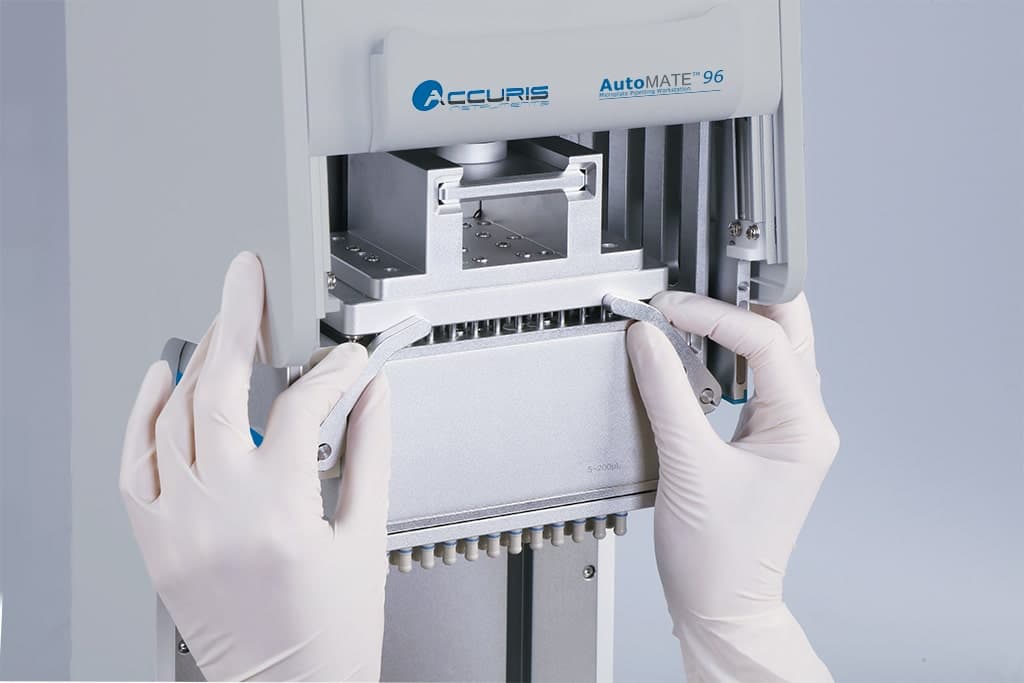
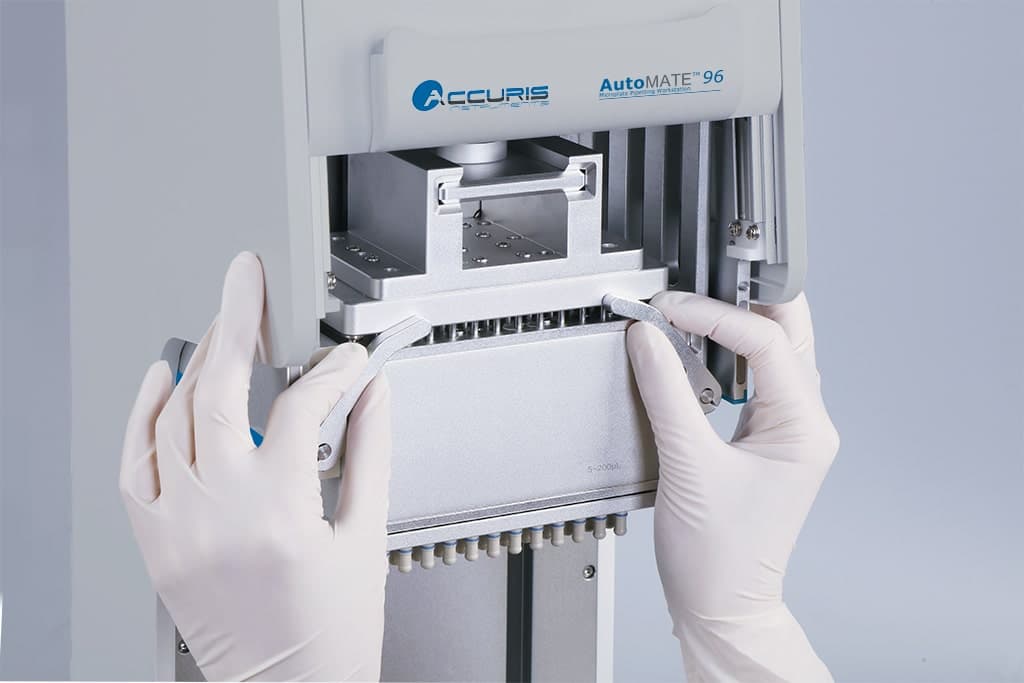
Pipetting head for AutoMATE™, 1-20ul
List Price:
USD10,970.37
Online Price:
USD7,835.98
Your Price:
Pipetting head for AutoMATE™, 100-1000ul
List Price:
USD12,328.36
Online Price:
USD8,805.97
Your Price:
Pipetting head for AutoMATE™, 5-200ul
List Price:
USD10,970.37
Online Price:
USD7,835.98
Your Price:

Showing 1 to 3 of 3 results

What Are Liquid Handling Accessories?


Liquid handling accessories are the consumable and supporting components that influence accuracy, reproducibility, and contamination control in manual and automated pipetting workflows. These include disposable pipette tips, reagent reservoirs, tip racks and reload systems, and pipette stands or holders.

Accessory quality directly affects performance in liquid handling systems, as poorly fitted tips or inappropriate reservoirs can reduce accuracy and increase variability regardless of instrument capability.


What you will find:


  • Pipetting heads (1–20 µL): for low-volume precision dispensing

  • Pipetting heads (5–200 µL): for varied liquid handling tasks

  • Pipetting heads (100–1000 µL): for higher volume applications


How to Choose Liquid Handling Accessories


Tip Type Selection
Standard tips are suitable for routine aqueous transfers. Filter tips are recommended for PCR, RNA work, and biohazardous samples to prevent aerosol contamination. Low-retention tips are ideal for viscous or low-volume applications where sample loss must be minimized.

Volume Range and Compatibility
Always match pipette tips to the pipette’s specified volume range. Incorrect sizing can lead to poor sealing and reduced accuracy. Ensure compatibility with your pipette brand where required for calibrated performance.

Reagent Reservoir Selection
Polypropylene reservoirs are preferred for chemical resistance and solvent compatibility, while polystyrene reservoirs are suitable for aqueous applications requiring clear visibility. Low dead-volume designs improve reagent efficiency in high-cost assays.

Sterility Requirements
Use sterile or gamma-irradiated consumables for cell culture, molecular biology, and any workflows where contamination control is critical. Non-sterile options are suitable for general laboratory use.

Quality and Certification
For molecular biology applications, choose accessories certified RNase-free, DNase-free, and pyrogen-free. Always verify certificates of analysis for regulated or high-precision workflows.


Specifications Context


Liquid handling accessories are manufactured to meet standardized SBS/SLAS dimensions for compatibility with manual pipettes and automated liquid handling systems. Proper selection of tips, reservoirs, and consumables ensures consistent liquid transfer performance across different platforms.

Using high-quality, application-matched accessories helps reduce variability, improve reproducibility, and maintain reliable performance in research, clinical, and biotechnology workflows.

Start getting reliable results using MBP liquid handling accessories. Contact now with expert team of Molecular Biology Products Inc. (MBP) and book yours today.

FAQ

Liquid handling accessories are the consumables and add-on components that support manual and automated pipetting workflows: disposable pipette tips (standard, filter, extended-length, wide-bore, and low-retention formats in 0.1–1,000 µL ranges), reagent reservoirs and troughs (for multichannel and 96-channel workstation aspiration), tip racks and reload inserts, pipette stands and holders, and specialized tips such as gel-loading tips. These accessories directly affect pipetting accuracy, contamination control, and throughput—tip quality and reservoir design are the primary variables in automated liquid handling system performance.
Standard polypropylene pipette tips provide no barrier between the sample and the pipette barrel, allowing aerosols from volatile or viscous samples to enter the pipette shaft and cause contamination in subsequent samples—cross-contamination and carry-over are the primary risks. Filter tips (also called barrier tips) incorporate a hydrophobic aerosol filter barrier inside the tip body, physically blocking aerosols, liquids, and vapors from reaching the pipette piston or air cylinder. Filter tips are required for RNA work, PCR setup, infectious samples, and any application where carry-over would compromise results or create a biosafety concern.
A reagent reservoir (also called a reagent trough or solution basin) is a rectangular polypropylene or polystyrene container in SBS footprint format, available in volumes from 5 mL to 300 mL, designed to hold bulk reagent for aspiration by multichannel pipettes (8-, 12-, or 96-channel) or automated liquid handlers. The rectangular geometry allows all tips in a multichannel array to submerge simultaneously, ensuring equal aspiration from every channel. V-shaped or pyramid-bottom designs minimize dead volume (residual reagent that cannot be aspirated), and spout or pour-off features allow unused reagent to be recovered.
Pipette tips for molecular biology applications (PCR, RT-PCR, qPCR, NGS, RNA work) should be certified RNase-free, DNase-free, pyrogen-free, and PCR inhibitor-free—these certifications confirm lot testing for the absence of nucleases and inhibitors that would degrade RNA/DNA or interfere with amplification. Many brands also specify human-DNA-free certification for forensic and clinical applications. Certifications should be documented by lot number; filter tips providing these certifications add aerosol containment for RNA and BSL-2 work on top of molecular purity.
Laboratory pipette tips are manufactured in four primary volume ranges: 0.1–10 µL (for gel loading, μL-volume PCR reagents, and capillary sampling); 0.1–200 µL (the most commonly used range, covering most molecular biology and ELISA protocols); 1–1,000 µL (general-purpose, high-volume transfers for cell culture, aliquoting, and large-volume dispensing); and wide-bore or large-orifice tips (0.5–5 mL, for viscous samples like glycerol, serum, or cell suspensions where standard narrow-bore tips would generate excessive shear stress). Match the tip volume range to the pipette's volume range for accuracy; using a 200 µL tip on a 1,000 µL pipette introduces significant volume error.
Reagent reservoirs are available in individually sterile-wrapped format and bulk non-sterile format. For cell culture workflows in a biosafety cabinet, individually gamma-sterilized reservoirs are preferred to avoid introducing contaminants into the media or reagent. For ELISA wash buffer dispensing and non-sterile biochemical assays, bulk non-sterile reservoirs offer the same dimensional performance at lower cost per unit. Reservoirs made from 100% virgin polypropylene (PP) offer better chemical compatibility than polystyrene (PS)—PP resists most organic solvents and acidic reagents, while PS is optically clearer but has limited solvent resistance.
Tip racks for a 96-channel pipetting workstation (such as the Accuris AutoMATE 96) must conform to the SLAS/ANSI SBS standard 96-well footprint so the motorized platform positions them correctly. The tip seating in the rack must hold each tip firmly enough to maintain vertical alignment during motorized loading but release cleanly during ejection—loose tips misalign during loading and cause volume inaccuracy; tips seated too tightly resist ejection and may jam the motorized tip eject mechanism. Reload inserts (refill towers that fit into empty racks) reduce cost per tip and generate less plastic waste than single-use fully loaded racks.
Polypropylene (PP) reagent reservoirs are chemically resistant to most organic solvents, acids, and bases used in laboratory workflows—DMSO, ethanol, methanol, PBS, and most cell culture media—making them the material of choice for automated liquid handling. Polystyrene (PS) reservoirs are optically clearer, making it easier to see the liquid level and any air bubbles in the reservoir, but are attacked by organic solvents including DMSO. For drug discovery and any workflow involving organic solvents, specify polypropylene. For purely aqueous applications where visual monitoring of the reagent level is a priority, polystyrene is acceptable.
We provide the highest quality of products and anytime customer service.
Featured Categories
    online payment
    online payment
    fast delivery
    fast delivery
    technical support
    technical support
    24/7 support
    24/7 support
    copy right
    2026 All Right Reserved