Rollers & Rotators for Gentle Sample Mixing and Long-Term Incubations
Rollers & Rotators covers laboratory tube roller mixers that continuously roll tubes and bottles along their long axis, and end-over-end rotator mixers that invert tubes through a full 360° rotation, both providing gentle continuous mixing without the foaming or shear of higher-speed agitation. Key applications include blood sample homogenization before testing, antibody-bead incubations for immunoprecipitation, hybridization of nucleic acid probes, and long-duration incubations where gentle continuous mixing is needed. Academic and core laboratories sourcing rollers and rotators can benefit from guidance when selecting mixing speed, tube capacity, and rotation format for their specific workflows.
Need a roller or rotator for your application? Contact customerservice@mbpinc.net to compare platform capacities, rotation styles, and speed ranges and find the right solution for your laboratory mixing requirements.
Rollers & Rotators

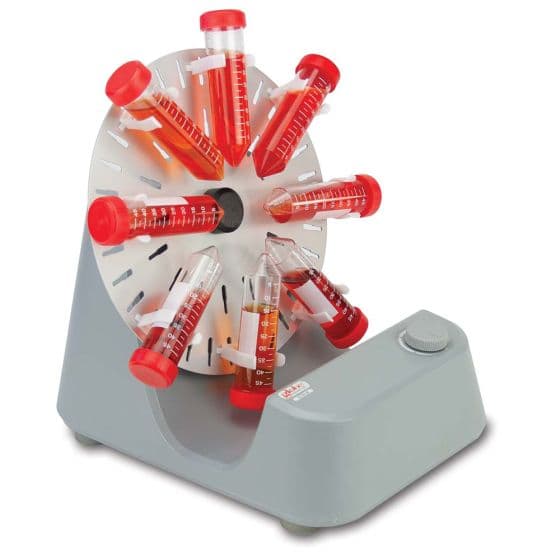
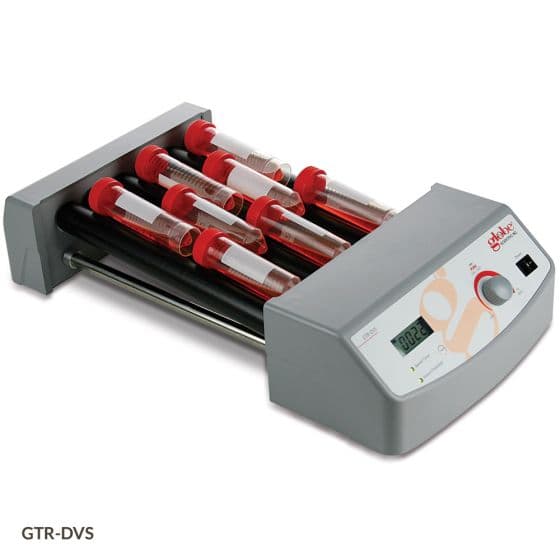
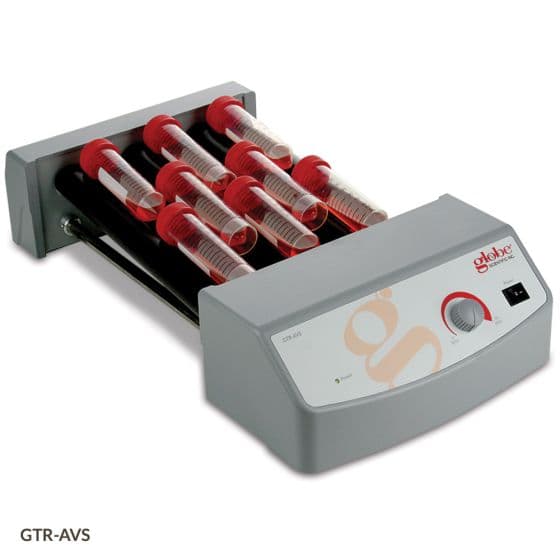
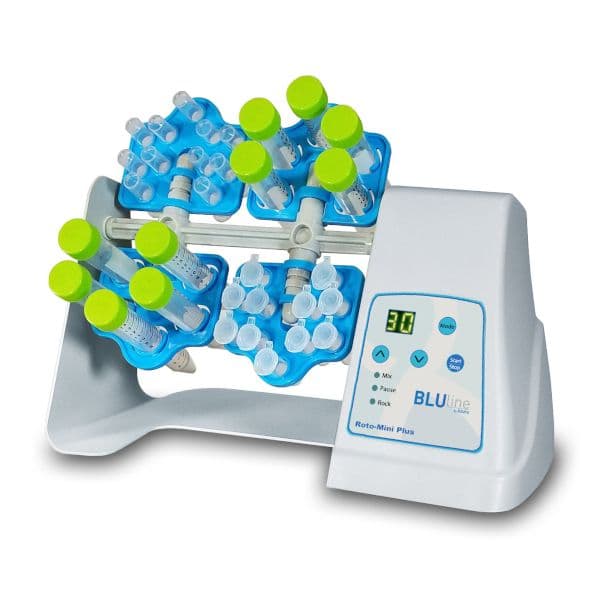
Showing 25 to 30 of 30 results
What are tube rollers and rotators?
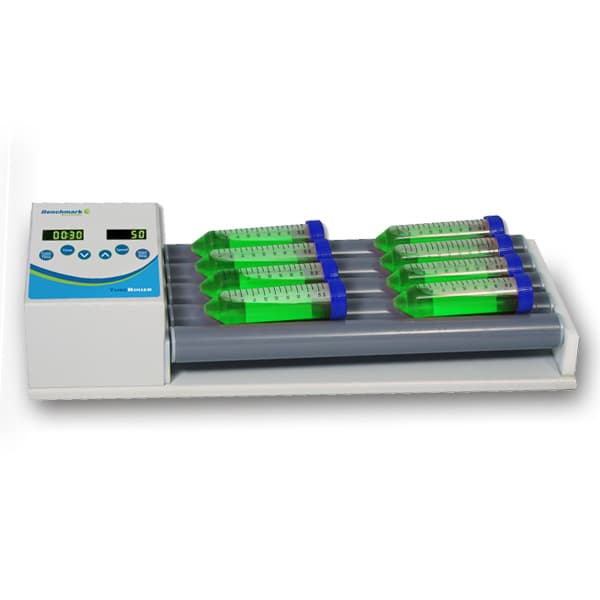
Tube rollers and rotators are low-speed mixing instruments that provide gentle, continuous agitation of tubes and bottles through rolling or inversion motion rather than high-speed shaking. A tube roller operates by rotating horizontal rollers that the tubes or bottles rest on, causing them to roll along their long axis in place, creating slow, even mixing of the tube contents without introducing air bubbles. A rotator (end-over-end mixer) clamps tubes in a wheel or drum that rotates at 5–30 rpm, inverting the tubes repeatedly through a full circle for thorough but gentle mixing.
What you will find:
-
Mini & Digital Rotators: Compact benchtop rotating mixers and programmable units designed for smooth, continuous sample inversion.
-
Multi-Roller Tube Rollers: High-capacity 5-roller, 6-roller, and 10-roller systems engineered for uniform rolling of culture bottles and blood tubes.
-
Temperature-Controlled Rotators: Special incubated models that combine steady sample rotation with precise temperature management.
-
Platform Rockers: Basic single-platform shaking and rocking systems optimized for blot washes and gel staining procedures.
- Interchangeable Tube Holders: Snap-on racks and clips designed specifically to accommodate 1.5ml, 2.0ml, 15ml, and 50ml laboratory tubes.
How to choose rollers and rotators
Choose a tube roller for blood collection and clinical tube mixing
Tube rollers are the standard instrument for homogenizing anticoagulated blood collection tubes before clinical testing, operating at 5–20 rpm to ensure even mixing of blood and anticoagulant without hemolysis from excessive speed. The roller format also suits other tubes and bottles that are too long for end-over-end rotation to work effectively in the space available.
Choose a rotator for antibody-bead incubations and immunoprecipitation
End-over-end rotators invert tubes through a full 360° cycle, ensuring that beads settled at the tube bottom are continuously resuspended and that the bead surface is uniformly exposed to the solution throughout the incubation. This complete inversion is essential for immunoprecipitation, pull-down assays, and antibody-coupling incubations where beads must stay in suspension for efficient binding.
Consider the tube capacity and format each instrument accommodates
Tube rollers hold a fixed number of tubes of defined diameter on the roller surface; rotator wheels typically accommodate a defined set of tube positions for specific tube formats. Confirm that the instrument handles the tube diameter, length, and quantity you work with most commonly, and that accessories are available to accommodate additional formats.
Evaluate speed range against your mixing requirement
Blood sample homogenization requires gentle speed of 5–12 rpm to avoid hemolysis, while antibody-bead incubations can use faster rotation of 10–30 rpm for more active suspension maintenance. A variable-speed rotator provides flexibility across applications; a fixed-speed roller set at the correct blood mixing speed is adequate for dedicated blood handling.
Confirm whether incubator-compatible models are needed for your workflow
Rotator and roller incubations often require 37°C for antibody binding or hybridization reactions. Models designed for incubator interior use have compact profiles and materials that tolerate incubator humidity and temperature, while standard bench models are not always rated for this environment.
Specifications context
Tube rollers used for blood sample mixing are typically operated at a fixed or low-speed range of 5–12 rpm, a range established from clinical literature showing that this rotation speed adequately homogenizes anticoagulated blood without inducing hemolysis from mechanical stress. As of 2026, compact benchtop tube rollers that fit inside standard incubators and cold rooms without taking up significant shelf space remain popular in clinical and research labs for routine sample preparation.
If you’re unsure which rotation style or capacity fits your current workflow, the MBP team is here to help—contact us today for a custom quote.
FAQ