3D Rockers for Uniform Multi-Directional Mixing and Incubation
3D Rockers covers rocking platforms producing motion on more than one axis, creating multi-directional liquid flow. Unlike 2D rockers that tilt only back and forth, 3D rockers combine tilting with lateral movement or a wave pattern, ensuring liquid reaches all platform areas including corners where single-axis rocking leaves unmixed zones. Applications include blot incubations needing more uniform coverage than 2D rocking, hybridization, and tube mixing with holders. Academic and core labs get motion-type guidance plus competitive pricing.
Contact customerservice@mbpinc.net to explore 3D rocker configurations for hybridization, blot processing, and uniform sample mixing applications.
3D Rockers


Showing 13 to 23 of 23 results
What are 3D rockers?
3D rockers are laboratory rocking platforms that produce motion in multiple planes simultaneously — combining the basic back-and-forth tilt of a 2D rocker with a simultaneous lateral tilt, wave motion, or orbital component — creating a complex, three-dimensional liquid flow across the platform surface. This multi-axis motion ensures that liquid reaches every part of a flat container or membrane, including corners and edges that single-axis rocking can leave as dead zones with reduced agitation. Some 3D rockers (sometimes called nutators or wave mixers) produce a gyrating or teeter-totter-plus-wave motion rather than a strict two-axis tilt.
What you will find:
- Labnet Gyrotwister 3D Shaker: Adjustable tilt angle and a non-slip platform for consistent sample mixing.
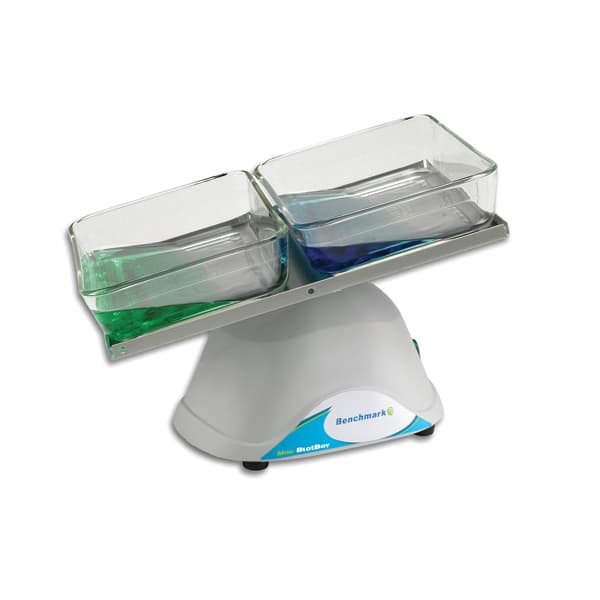
- Mini BlotBoy™ 3D Rocker: Ideal for small-scale blotting and gentle mixing
- BlotBoy™ 3D Rocker: Larger area for reliable blot processing, staining, and washing.
- BioMixer™ 3D Nutating Shaker: Designed for smooth, thorough mixing of biological samples.
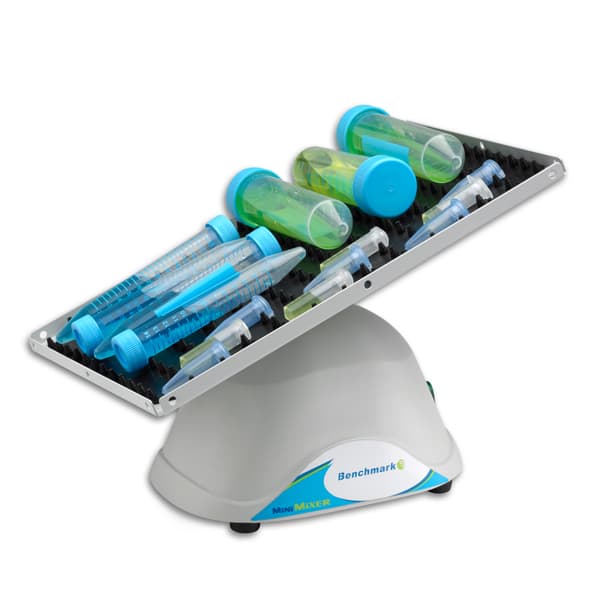
- Tube Rocker 3D Motion: Used for efficient and uniform mixing of various tube sizes.
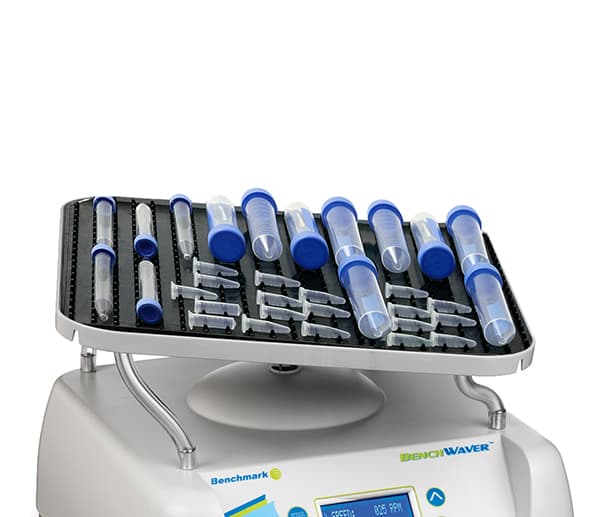
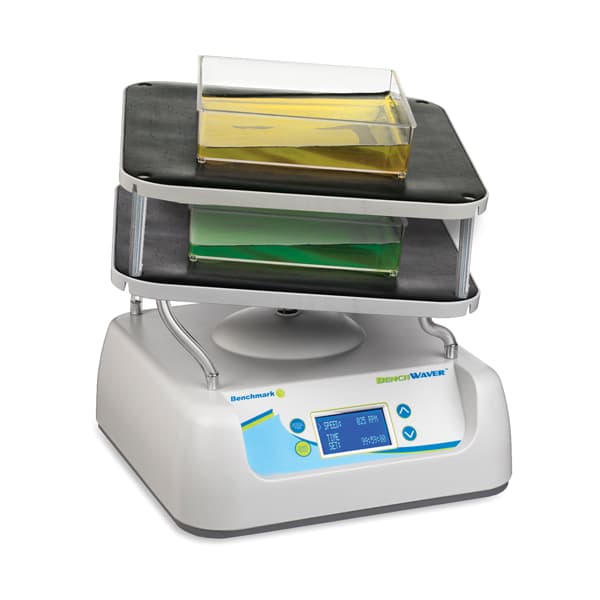
- BenchWaver™ 3D Rocker: For stable and consistent sample agitation.
How to choose a 3D rocker
Understand the specific motion type of each 3D rocker model
The term "3D rocker" covers different motion patterns: true dual-axis tilt (simultaneous tilt on both X and Y axes), wave-motion platforms that combine tilt with a propagating wave, and nutator-style platforms that produce a gyrating circular-tilt motion. Each produces a different liquid flow pattern, and checking the manufacturer's description of the platform motion helps in predicting how liquid will move in your specific container type.
Choose a 3D rocker when corner coverage in flat containers is important
In flat containers like square or rectangular blot boxes with right-angle corners, single-axis 2D rocking may leave residual unmixed volumes in corners on each sweep. A 3D motion that alternates between both tilt axes or produces a wave ensures liquid reaches all corners on each mixing cycle, producing more uniform washing and incubation.
Use a 3D rocker with tube holders for gentle multi-directional tube incubation
Many 3D rocking platforms accept tube holder accessories that fix microcentrifuge, 15 mL, or 50 mL tubes on the platform, providing a multi-directional mixing motion for tube contents without requiring a separate dedicated tube rotator. For gentle incubations where end-over-end rotation is not required, this is a convenient multi-use configuration.
Verify speed range and tilt angle against your application requirements
3D rockers operate at lower speeds and tilt angles than orbital shakers, typically 5–25 rpm with tilt angles of 10–30°. Confirm that the rocker's speed range and tilt angle are appropriate for your specific incubation — gentle cell culture rocking requires lower speed and shallower tilt than more vigorous blot washing.
Consider platform size relative to your largest container
As with 2D rockers, the platform must accommodate the largest container you intend to use, with the additional consideration that in a 3D motion platform, a container positioned asymmetrically relative to the motion center may experience less uniform agitation at its extremes.
Specifications context
The nutator-style 3D rocker uses a tilting platform driven in a slow circular path rather than a strict two-axis tilt, producing a smooth gyrating motion that keeps liquids in continuous gentle motion without the periodic deceleration of back-and-forth rocking, and is a common format used for gentle hybridization and tube mixing applications in molecular biology. As of 2026, compact 3D rocking platforms with programmable speed and timer are standard in molecular biology labs handling multiple blot and hybridization incubations simultaneously.
Contact the MBP team today to request a quote and find the right 3D rocker for your lab.
FAQ