ELISA, Incubation & Storage Sealing Films
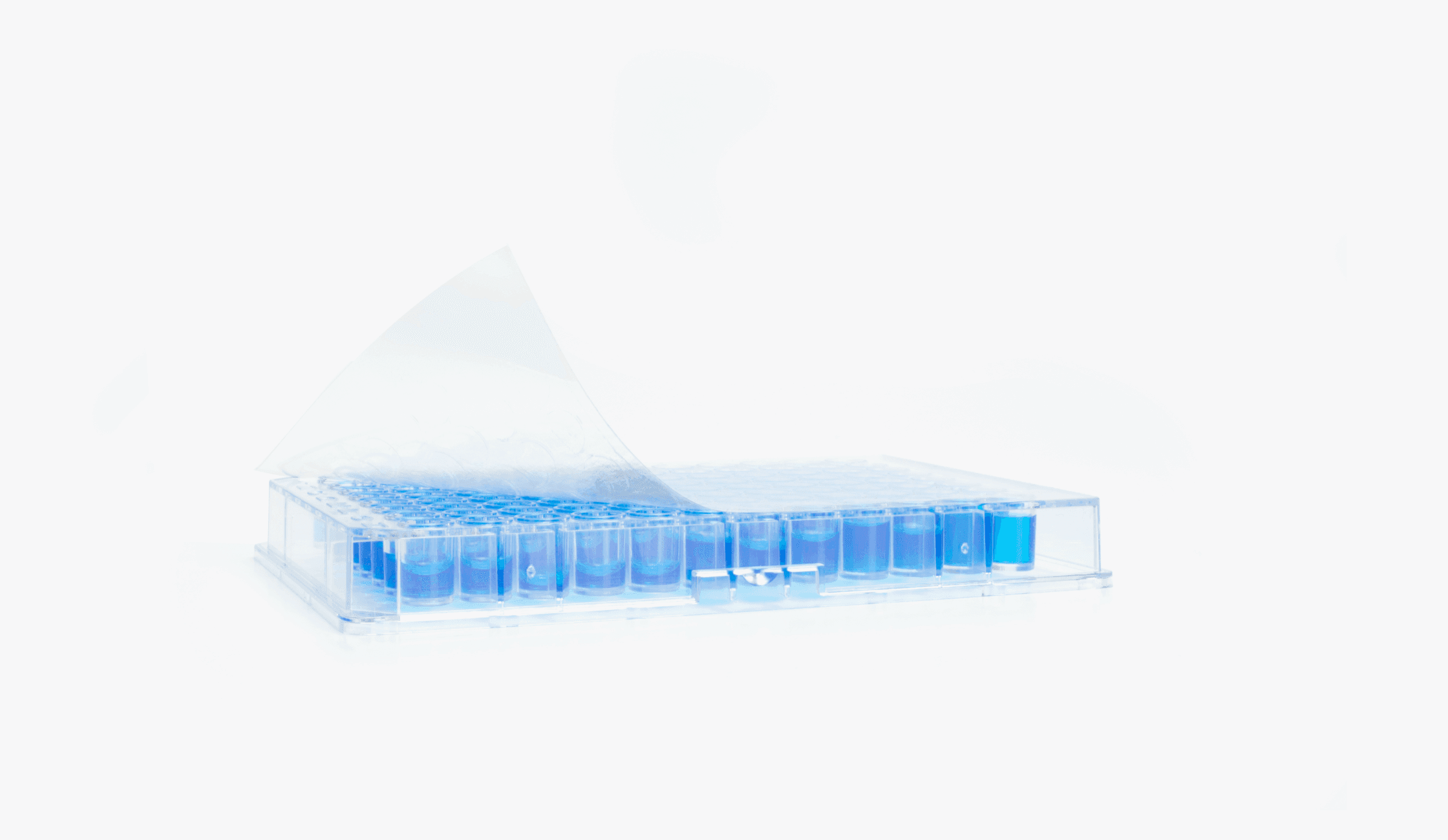
ELISA, incubation, and storage sealing films are non-pierceable polyester or polypropylene covers that seal every microplate well to stop evaporation and eliminate the edge effects that distort ELISA and EIA absorbance readings. They hold a seal from about −40 °C to +120 °C and come sterile or non-sterile, DNase- and RNase-free, in sheets, rolls, or mini-strips.
Researchers running plate-based immunoassays get application-matched films and direct specialist support from MBP to confirm the right format. Request a quote by contacting customerservice@mbpinc.net
Elisa/Incubation/Storage Film
Showing 1 to 1 of 1 results
What are ELISA, incubation, and storage films?
ELISA, incubation, and storage sealing films are adhesive polyester (PET) or polypropylene (PP) sheets applied over 96- and 384-well plates to seal each well during enzyme immunoassays, incubation, and short-term sample storage. By securing every well rather than loosely covering the plate, they eliminate evaporation-driven "edge effects" that skew optical density readings at the plate's perimeter. Most are non-pierceable, certified DNase- and RNase-free, and available sterile or non-sterile. Buy from this category for plate-based immunoassays and benchtop incubation where a secure, residue-clean seal matters more than gas exchange or a freezer rating.
What you will find:
-
ELISA plate sealing films for immunoassay workflows
-
Incubation films for controlled laboratory reactions
-
Short-term storage films for microplate protection
-
Adhesive sealing films for secure plate closure
-
Optical clear films for absorbance and fluorescence detection
-
Non-pierceable barrier films for contamination control
-
Heat-stable films for incubation conditions
-
Low-evaporation films for improved assay consistency
How to choose ELISA and incubation films
Match the film to your plate resin
Polyester films seal both polystyrene and polypropylene plates; polypropylene films offer superior barrier properties and pair best with PP plates for lower evaporation during longer incubations.
Confirm sterile vs non-sterile
Choose sterile films for cell-containing or biohazard-containment work and non-sterile films for routine ELISA; both are commonly certified DNase-/RNase-free for molecular compatibility.
Pick the format for how you access wells
Full sheets seal whole plates; 1×8 and 2×8 mini-strips seal one or two rows when you need to protect or access wells selectively; pre-scored rolls are economical for high-throughput sealing.
Check the temperature range
Standard polyester films hold a seal from roughly −40 °C to +120 °C, covering incubation and short-term storage, but not −80 °C archival freezing; for that, use a cold storage film
Specifications context
A typical sheet measures about 79.4 × 146.1 mm with a 50 µm polyester base and a 25 µm acrylic adhesive; thinner 25 µm films are clearer and marginally pierceable for sample recovery. Non-pierceable films give the most secure barrier for incubation. For sensitive immunoassays, DNase-/RNase-free certification prevents background interference. Some sheets include perforated end tabs that can be removed or wrapped over the plate edge for extra hold during longer incubations.
For specifications, compatibility details, or bulk supply options, connect with the MBP team and get the right sealing solution matched to your ELISA and incubation workflow.
FAQ