Cold Storage Sealing Films for -80°C Plates
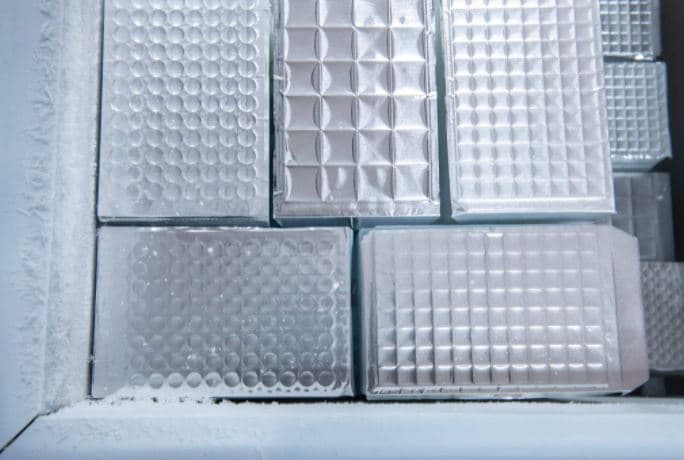
Cold storage sealing films are aluminum-foil and foil-laminate covers built to keep microplate wells sealed through long-term freezing, typically down to −80 °C, for sample archiving and compound libraries. The conformable foil lets you confirm the seal around each well visually, resists DMSO and solvents, and can be pierced by pipette tips or robotic probes for automated retrieval.
Lab and biobank teams managing frozen sample sets get application-matched films and direct specialist support from MBP, which ships worldwide from Houston, Texas. Request a quote by contacting customerservice@mbpinc.net
Cold Storage Film


Showing 1 to 3 of 3 results
What are cold storage sealing films?
Cold storage sealing films are aluminum-foil or foil-laminate seals applied to microplates and deep-well storage plates to maintain an airtight barrier through long-term freezing, commonly rated to −80 °C and sometimes lower. Foil blocks light and gases, resists DMSO and organic solvents, and conforms to each well so the seal is visible and verifiable. Many are pierceable by pipette tips, needles, or robotic probes, and some heat-seal foils are autoclavable. Buy from this category for biobanking, compound-library archiving, and any sample set that must survive months at ultra-low temperature.
What you will find:
-
Cold storage sealing films for freezer and refrigeration use
-
Aluminum foil barrier films for long-term sample protection
-
High-performance adhesive films for evaporation control
-
Low-temperature resistant films for -20°C to -80°C storage
-
Pierceable films for post-storage sample access
-
Chemical-resistant sealing films for reagent stability
-
Microplate sealing films for cold chain workflows
How to choose cold storage films
Confirm the low-temperature rating
Choose a film with a stated seal-integrity range that reaches −80 °C; some foils hold from −80 °C to +110 °C, covering both freezer archiving and limited thermal steps.
Decide pierceable vs permanent
Pierceable foils let robotic probes or pipette tips access wells without removing the seal — essential for automated biobanks; permanent heat-seal foils give a tamper-evident, near-irreversible barrier for long-term archiving.
Check chemical resistance
For DMSO compound libraries and solvent-containing samples, confirm the foil is rated DMSO- and solvent-resistant so the seal and adhesive survive storage.
Match the application method
Pressure-sensitive foils apply with a hand roller; heat-seal foils need a benchtop plate sealer and a compatible hot-melt adhesive, and will not bond with standard pressure-sensitive adhesives.
Specifications context
Cold storage foils are defined by temperature range, adhesive type, chemical resistance, and whether they are pierceable. A foil rated −80 °C to +110 °C covers freezer archiving and limited thermal cycling, while DMSO resistance matters for screening libraries. Heat-seal foils require a matched sealer and hot-melt adhesive, whereas pressure-sensitive foils are applied by roller. Because foil is opaque, plates are identified by a label on the foil or by position in the rack rather than read through the seal, so a clear labelling convention matters for retrieval.
Protect your samples with confidence. Request product options, specifications, or bulk supply details. Contact the MBP team and get the right sealing solution tailored to your cold storage workflow.
FAQ