Product Filters

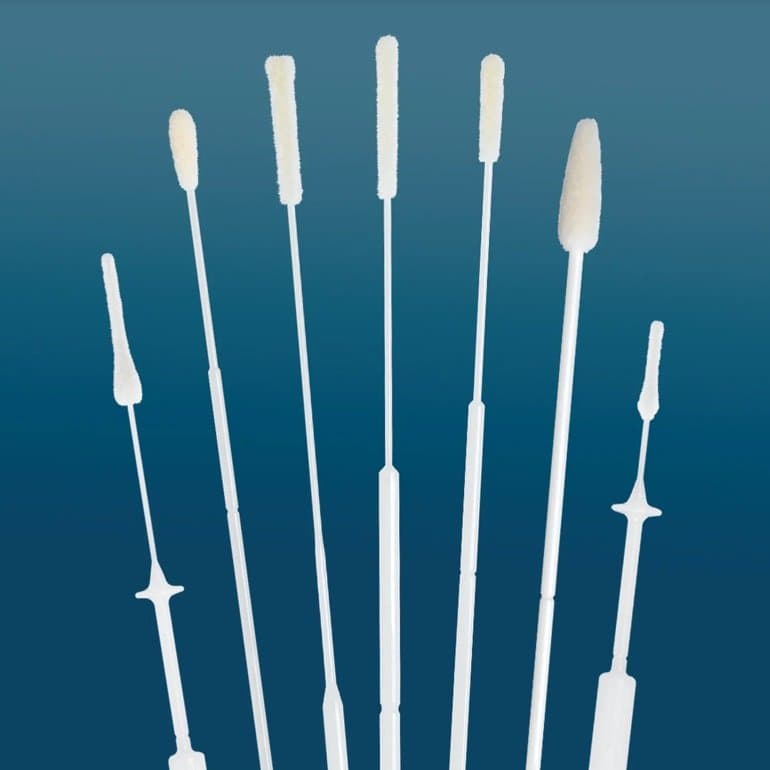
Specimen Collection Swabs: Flocked Nasal, NP, Foam


Specimen collection swabs are sterile, single-use devices with a synthetic-fiber tip on a plastic or wire shaft, used to acquire material from a patient's nasopharynx, anterior nares, oropharynx, wound, or environment for clinical diagnostics or microbial culture. Flocked nylon and polyester variants release roughly 97 % of the collected specimen into transport medium on vortex — versus about 33 % for traditional wrapped-fiber rayon or polyester swabs — and they pair with viral or universal transport medium for respiratory virus PCR.

MBP carries MedSchenker FDA-cleared swab options with specialist support. Contact customerservice@mbpinc.net to request a quote today!

Swabs
Per Page:
Sort By:
Anterior Nasal swab
List Price:
USD3,038.00
Online Price:
USD2,170.00
Your Price:
Copan FLOQSwabs
List Price:
USD959.50 - USD1,145.76
Online Price:
USD685.36 - USD818.40
Your Price:
Flexible Minitip Flocked Swab with Liquid Amies Medium
List Price:
USD935.33
Online Price:
USD668.09
Your Price:
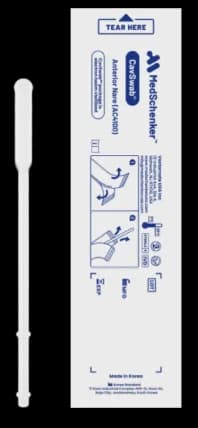
MedSchenker Nasal Swab
List Price:
USD1,492.96
Online Price:
USD1,066.40
Your Price:
Single Regular Size Nylon Flocked Swab with 80mm Breakpoint packaged with 1 mL Liquid Amies Medium
List Price:
USD823.98
Online Price:
USD588.55
Your Price:

Showing 1 to 5 of 5 results

What are specimen collection swabs?


Specimen collection swabs are sterile, single-use devices with a fiber tip on a plastic or wire shaft, used to acquire material from a patient's nasopharynx, anterior nares, oropharynx, wound, skin, or environment for diagnostic testing or microbial culture. Modern flocked swabs replace yards of wrapped fiber with perpendicular nylon or polyester fibers attached to the applicator, giving roughly 97 % specimen release on vortex versus about 33 % for traditional rayon or polyester. Buy from this category whenever specimen acquisition feeds a downstream culture or PCR — the swab determines whether the assay sees the analyte at all.


What you will find:


  • Sterile flocked swabs for high-efficiency sample collection and release
  • Polyester and rayon swabs for general microbiology sampling
  • Nylon flocked nasopharyngeal and/or oropharyngeal swabs
  • Dry swabs for direct plating or molecular testing workflows
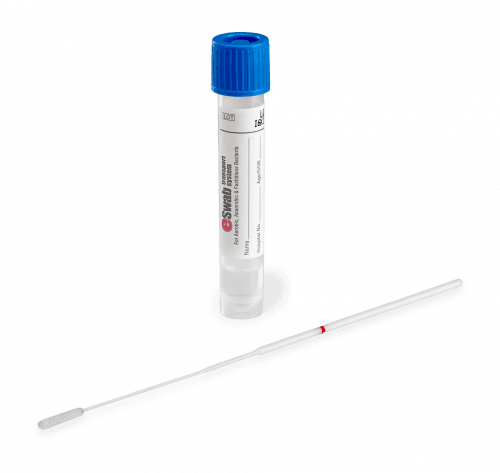
  • Swabs with transport tubes for stabilized sample transfer
  • Breakpoint swabs for easy release into collection vials


How to choose specimen collection swabs


Match the collection site
Nasopharyngeal swabs use long flexible shafts (~150 mm) and small flocked or molded tips designed to reach the posterior nasopharynx. Anterior nares swabs are shorter and gentler. Oropharyngeal and wound swabs come in foam or flocked variants depending on the target organism.

Choose tip material for the assay
Flocked nylon or polyester is the default for respiratory virus PCR. Cotton, calcium alginate, and wood-shafted swabs are excluded by CDC guidance because cotton contains PCR-inhibitory fatty acids and calcium alginate inhibits PCR directly. Foam suits some bacterial cultures and rapid antigen tests.

Verify the breakpoint and the shaft
A predetermined breakpoint at a defined distance from the tip (commonly 100–101 mm for nasopharyngeal swabs) lets the operator snap the shaft into the transport tube; shafts should be plastic or wire, never wood.

Confirm sterility and FDA listing
Single-use sterile peel pouches are the clinical standard. Swabs are FDA Class I exempt devices; verify the manufacturer's FDA registration and listing on the certificate of conformity.


Specifications context


Diagnostic swabs are characterized by tip material, shaft material, total length, breakpoint distance, and sterility status. Nasopharyngeal flocked swabs commonly measure about 150 mm overall with a breakpoint near 100 mm and a flexible plastic shaft; the MedSchenker CavSwab uses Allium™ flock technology on a 153 mm shaft with a 101.3 mm breakpoint. Specimen release ranges from roughly 33 % for traditional rayon/polyester up to about 97 % for flocked nylon. As of 2026, these sit in a low-to-mid price tier per swab and are typically sold in case quantities of 100 or 500. 


For swab selection, material compatibility, and sample collection formats, the MBP team can guide you to the most suitable option based on your testing method and workflow setup.

FAQ

A specimen collection swab is a sterile, single-use device with an absorbent fiber tip on a plastic or wire shaft, used to acquire biological material from a patient or environmental surface for laboratory testing. Modern clinical swabs use flocked synthetic fibers — nylon or polyester — applied perpendicular to the shaft, which absorb more specimen by capillary action and release roughly 97 % of it on vortex for downstream PCR or culture.
A flocked swab carries perpendicular nylon or polyester fibers attached to the tip surface, with no inner core, so collected fluid sits on the fiber surface and elutes rapidly into transport medium. A traditional swab wraps fiber around an absorbent core, which traps specimen inside; only about a third of the collected material releases on vortex. The flocked design is the default for respiratory virus diagnostics for that reason.
Cotton swabs contain inhibitory fatty acids and calcium alginate fibers contain calcium ions that interfere with PCR amplification, and CDC and state public health guidance therefore excludes both materials for SARS-CoV-2 and other respiratory virus testing. Wooden shafts are also excluded because wood can carry substances that inactivate viruses and inhibit PCR. Synthetic-fiber swabs (flocked nylon, polyester) on plastic or wire shafts are required.
A nasopharyngeal (NP) swab has a long flexible shaft — about 150 mm — and a small flocked tip designed to reach the posterior nasopharynx via the nostril, parallel to the palate, to a depth equivalent to the distance from the nostril to the ear. An anterior nares (nasal) swab is shorter and is inserted only about 1 cm into the nostril. NP collection gives the deeper respiratory specimen most assays prefer.
After collection, the swab is inserted into a 3 mL viral or universal transport medium tube, the shaft is snapped at the predetermined breakpoint so the swab tip sits fully submerged in the medium, and the cap is sealed. The tube label is then filled in with patient and collection-time information and the specimen is placed in a biohazard transport bag for delivery to the testing laboratory.
Specimen collection swabs are FDA Class I exempt medical devices, which means the manufacturer must register and list the product with the FDA but does not need a separate 510(k) clearance for the swab itself. Manufacturers still must meet Quality System Regulation requirements covering production and labeling. Pre-paired swab-plus-medium collection systems, like the MedSchenker line, carry full FDA 510(k) clearance.
Yes — CDC respiratory specimen collection guidance allows the same swab to be used in both nostrils when the first collection does not yield a saturated tip, or when one nostril is anatomically difficult to sample. The swab is rotated and held briefly in the first nostril, then transferred to the second nostril without changing swabs. Only one swab per patient is placed into the transport tube for testing.
Specimen collection swabs are ordered through MBP's Quick Order tool or by purchase order, with case and bulk pricing in USD and CAD on request. MBP carries MedSchenker FDA-cleared swabs alongside related sample collection consumables and ships worldwide from its Houston, Texas office, with a specialist responding directly to confirm collection site, tip material, breakpoint, and matching transport medium for the lab's workflow.
We provide the highest quality of products and anytime customer service.
Featured Categories
    online payment
    online payment
    fast delivery
    fast delivery
    technical support
    technical support
    24/7 support
    24/7 support
    copy right
    2026 All Right Reserved