Stabilization Reagents for DNA and RNA Sample Preservation
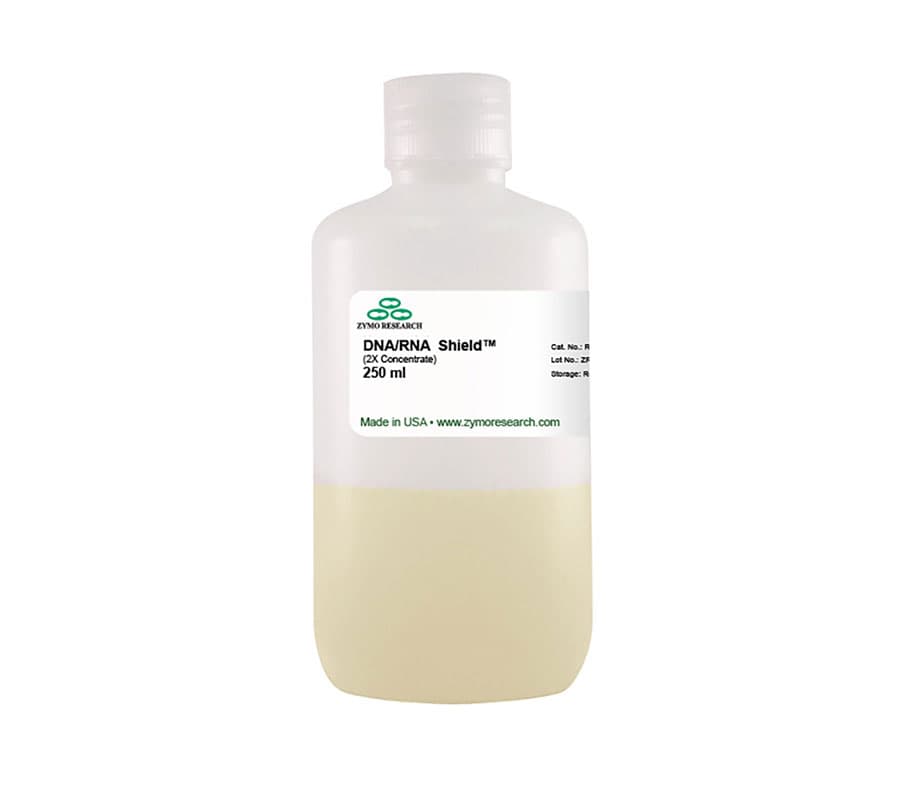
Stabilization reagents are aqueous solutions that preserve DNA and RNA in biological samples at ambient temperature by inactivating nucleases and infectious agents immediately after collection, eliminating the need for cold-chain transport. DNA/RNA Shield (Zymo Research) is the most widely cited formulation, validated for swabs, tissue, blood, saliva, and fecal samples with 28-day ambient-temperature stability.
MBP supplies Zymo Research stabilization reagent lines with direct purchase order support for research institutions, clinical labs, and field research teams across the USA, Canada, and worldwide. Request a quote by contacting customerservice@mbpinc.net
Stabilization Reagents
Showing 1 to 4 of 4 results
What are Stabilization Reagents?
Stabilization reagents are aqueous solutions added to biological samples—tissue, blood, saliva, swabs, feces, or environmental specimens—immediately after collection to inhibit nuclease activity, inactivate infectious agents, and preserve nucleic acid integrity during storage and transport at ambient temperature. They replace immediate snap-freezing in workflows where cold-chain logistics are impractical or unavailable. Choose stabilization reagents when samples must be transported at room temperature, stored before processing, or collected in remote or field settings where freezing is impossible.
What you will find:
- DNA stabilization reagents for genomic DNA preservation
- RNA stabilization reagents for transcriptomics and gene expression studies
- Dual DNA/RNA stabilization buffers for broad molecular workflows
- Blood stabilization solutions for clinical and diagnostic sampling
- Tissue stabilization reagents for biopsy and solid sample preservation
- Stool and microbiome stabilization solutions for sequencing studies
- Pre-filled stabilization reagent tubes (1 mL–10 mL formats)
How to Choose Stabilization Reagents
Nucleic Acid Target (DNA, RNA, or Both)
DNA-stabilizing reagents preserve genomic and microbial DNA during storage and transport. RNA-stabilizing reagents must rapidly inactivate RNases to maintain RNA integrity for transcriptomics and gene expression studies. For workflows requiring both DNA and RNA, select reagents validated for dual preservation, and confirm they maintain suitable RNA integrity over your anticipated storage period.
Sample Matrix Compatibility
Reagent choice depends on sample type. Liquid blood, tissue, stool, saliva, and environmental samples each require appropriate stabilization protocols and reagent volumes recommended by the manufacturer. Using insufficient reagent volume or an incompatible stabilization protocol can reduce preservation efficiency.
Downstream Compatibility
Verify that the stabilization reagent is compatible with your intended nucleic acid extraction kit and downstream applications, including PCR, qPCR, NGS, or transcriptomic analysis. Some stabilization reagents can be processed directly with compatible extraction kits, while others require removal before extraction.
Infectious Agent Inactivation
For potentially infectious clinical or environmental samples, select stabilization reagents that have been validated to inactivate relevant pathogens while preserving nucleic acid quality. Confirm any regulatory clearances or pathogen-specific validation claims for the exact product being used.
Storage Duration
Select a stabilization reagent validated for your expected storage time and temperature. Some products support short-term ambient storage, while others are designed for extended preservation at room temperature, refrigerated, or frozen conditions. Always follow the manufacturer's validated storage recommendations.
Specifications Context
Stabilization reagents should be added immediately after sample collection because delayed stabilization can reduce RNA integrity, particularly in tissue samples. Products are available in multiple formulations and container sizes for laboratory and field use. Always verify the recommended reagent concentration, sample-to-reagent ratio, storage conditions, and compatibility with your downstream workflow according to the manufacturer's documentation.
MBP can help align the stabilization system with your exact workflow. Contact the MBP team for bulk pricing and PO ordering.
FAQ