Automation Consumables for Automated Laboratory Workflows
Automation consumables are the liquid-contact single-use plasticware components designed to ANSI/SLAS dimensional standards for reliable, robot-repeatable handling on automated liquid-handling platforms — including instrument-specific robotic pipette tips, deep-well plates, reagent reservoir plates, and sealing mats. Tight dimensional tolerances (typically ±0.1 mm on critical features), conductive tip options for liquid-level detection, and purity certifications (DNase-free, RNase-free, non-pyrogenic, endotoxin-free) are the defining quality requirements.
MBP Inc. stocks Nest Scientific automation consumables, with PO and bulk-case pricing for high-throughput labs across the USA and Canada. Contact customerservice@mbpinc.net to request a quote today!
Automation Consumables



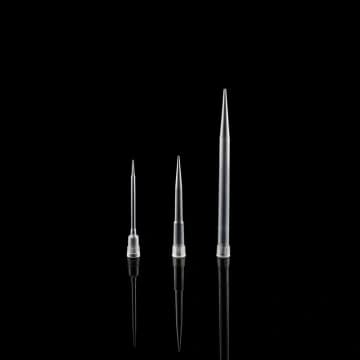
Showing 1 to 9 of 9 results
What Are Automation Consumables?
Automation consumables are plasticware items engineered to the tight tolerances required for consistent, unattended operation on robotic liquid-handling systems. Unlike manual-use consumables, automation consumables require tighter moulding tolerances, consistent tip-collar geometry for reproducible robotic tip pick-up and ejection, and barcode compatibility for LIMS-integrated workflows. Automation consumables are not interchangeable with manual-use plasticware — tip geometry and dimensional tolerance requirements differ, and substituting manual tips in robotic tip seats causes pick-up failures and run aborts.
What you will find:
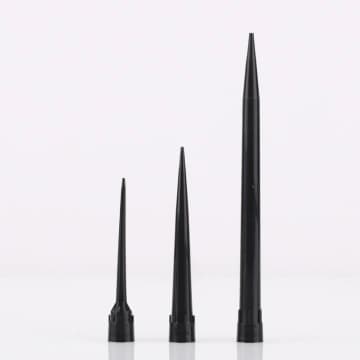
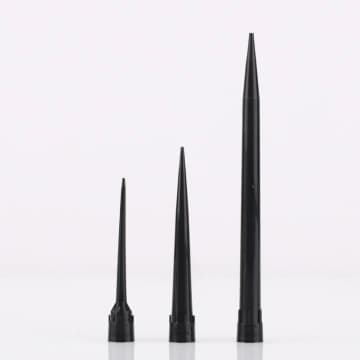
- Robotic Pipette Tips – Precision-molded for high-speed and accurate liquid dispensing.
- Filter Tips – Specialized barriers to eliminate aerosol cross-contamination.
- Conductive Tips – Advanced engineering for reliable liquid level sensing.
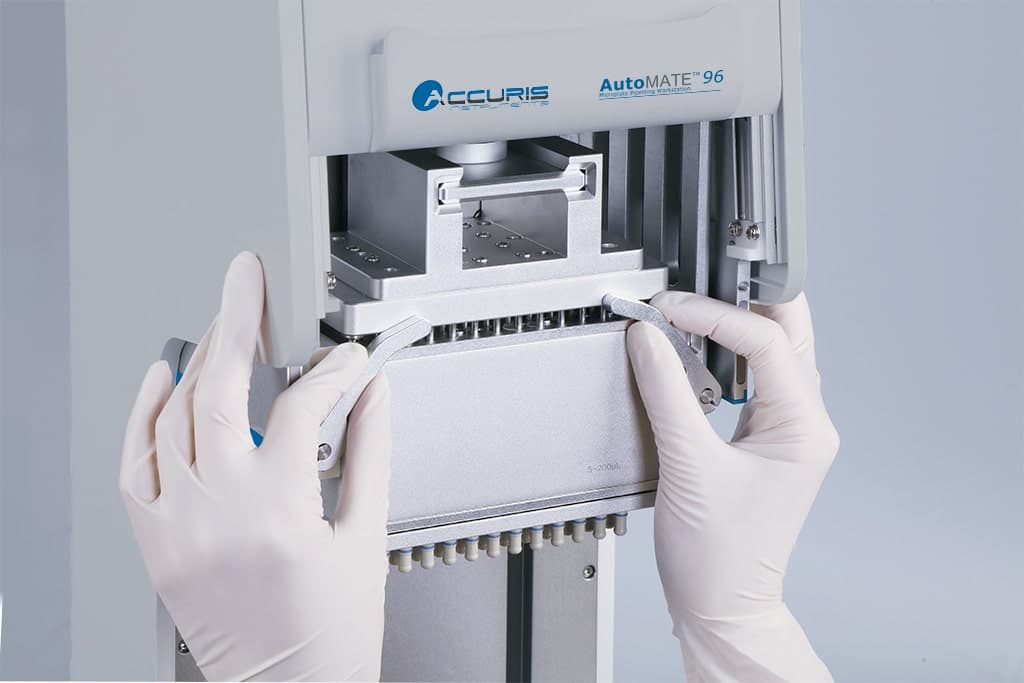
- System-Specific Tips – High-compatibility designs for Agilent, Tecan, Hamilton, and AutoMATE.
- Clear & Sterile Options – Medical-grade, contamination-free builds for demanding diagnostic runs.
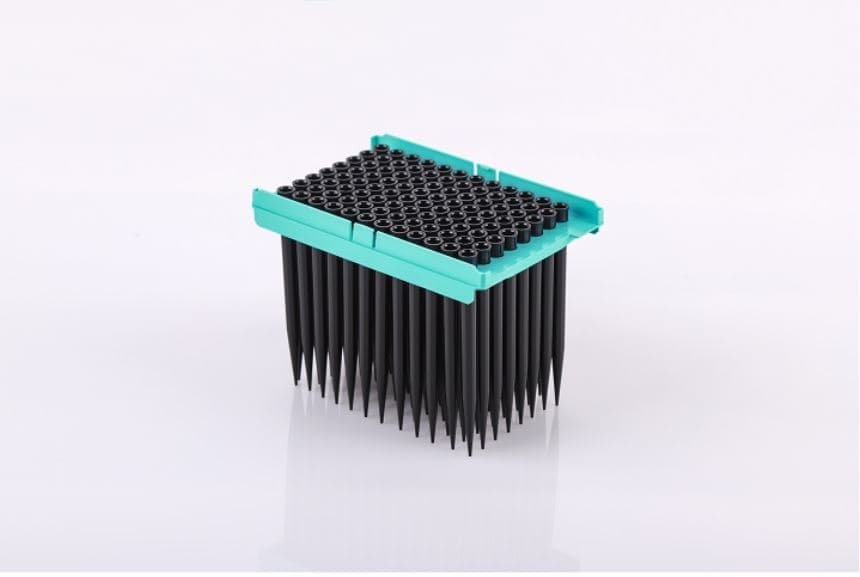
- Racked Consumables – Ready-to-use formats for seamless integration into automated workflows.
How to Choose Automation Consumables
Instrument-Specific vs Universal Robotic Tips
Robotic pipette tips are typically instrument-specific: Hamilton STAR uses Hamilton CO-RE tips; Tecan Freedom EVO uses Tecan Te-PS tips; Beckman Coulter Biomek uses Beckman-specific tips. Third-party compatible robotic tips from Nest Scientific and equivalent manufacturers provide equivalent dimensional tolerances at lower cost and are certified DNase/RNase-free. Conductive robotic tips (carbon-doped polypropylene) are required on instruments using capacitive liquid-level detection (Hamilton CO-RE cLLD, Tecan cLLD) to confirm tip immersion depth.
Deep-Well Plates
Standard automation deep-well plates are 96-well, 2 mL per well (round- or square-bottom) in polypropylene, ANSI/SLAS footprint, with a fully skirted base for robotic gripper handling. Square-well formats maximise working volume and are preferred for DNA/RNA extraction automation. Round-bottom wells facilitate pipette tip access to the well base and pellet resuspension.
Reagent Reservoir Plates
Reagent reservoirs supply bulk reagent to the robotic arm in a format sized for 8-channel, 12-channel, or 96-channel head aspirations. Single-well troughs (290 mL) supply volumes for large-scale reagent additions. 12-channel troughs (22 mL per channel) and 8-channel troughs (32 mL) allow different reagents in adjacent channels for parallel dispensing. Confirm reservoir dead volume against your platform's minimum aspiration height specification.
Sealing Mats
Pierceable aluminium foil seals protect samples during processing and allow robotic needle or tip-based piercing for closed-tube aspiration. Silicone sealing mats provide resealable access to individual wells for sequential robotic access without contamination of adjacent wells.
Specifications Context
Automation consumables from Nest Scientific conform to ANSI/SLAS 1-4:2004 footprint and well-position standards. Conductive robotic tips use carbon-doped polypropylene with surface resistivity in the 10²–10⁶ Ω range for reliable capacitive liquid-level detection. All Nest Scientific automation consumables are certified DNase-free, RNase-free, non-pyrogenic, and endotoxin-free under ISO-certified cleanroom production. Hamilton STAR, Tecan Freedom EVO, Beckman Coulter Biomek i-Series, and PerkinElmer JANUS remain the dominant liquid handling automation platforms in North American research labs.
Bring precision and speed to every run—Contact MBP today to find the best fit for your automation needs.
FAQ