Microscope Cover Glass for High-Resolution Imaging
Cover glass (coverslips) are thin flat glass slips placed over mounted specimens to protect the sample and create a uniform optical path for sharp imaging. Available in square, rectangular, and circular formats in No. 1 (~150 µm) and No. 1.5 (~175 µm) thickness, pre-cleaned and lint-free. MBP stocks cover glass in formats compatible with standard and high-NA objectives for fluorescence, brightfield, and phase-contrast microscopy, available in bulk quantities for labs across the US, Canada, and worldwide.
Need help selecting the right cover glass for your microscopy workflow? — Contact our team at customerservice@mbpinc.net for product recommendations, bulk pricing, and purchasing assistance.
Cover Glass
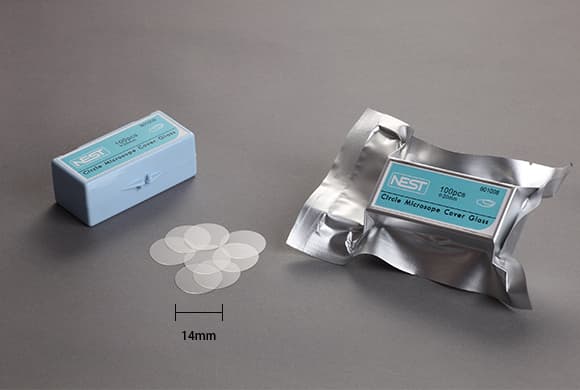
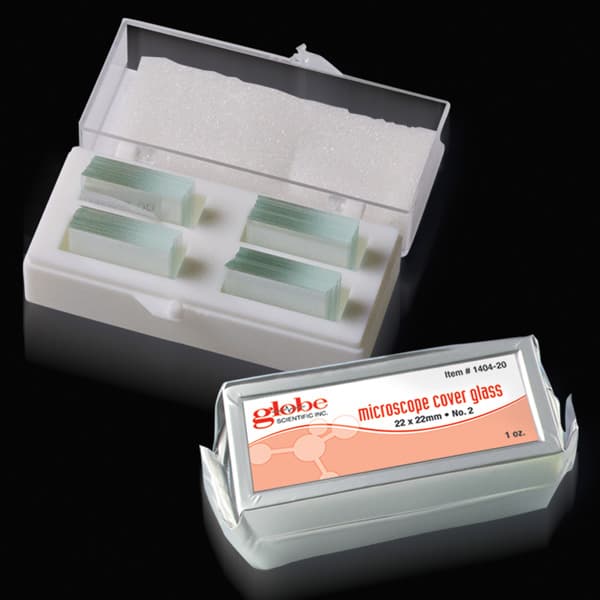
Showing 1 to 2 of 2 results
What Is Cover Glass?
Cover glass (also called coverslips or cover slips) are ultra-thin glass slips placed over a specimen mounted on a microscope slide. They may be rectangular, square, or circular depending on the application. Their main function is to protect the specimen from contamination and physical damage while also creating a uniform optical surface for high-quality imaging.
A critical factor in cover glass selection is thickness, since microscope objectives are optically corrected for specific coverslip standards. The two most common grades are No. 1 (nominal 150 µm, range 130–170 µm) and No. 1.5 (nominal 175 µm, ±15 µm). In most modern microscopy systems, No. 1.5 cover glass is preferred, especially for high-numerical aperture (high-NA) objectives used in fluorescence and confocal microscopy. Using the wrong thickness can introduce spherical aberration and reduce image sharpness.
What you will find:
-
Square coverslips for standard slide preparations and routine pathology.
-
Rectangular cover glass for large tissue sections and smears.
-
Circular glass coverslips for specialized cell culture and imaging.
-
No. 1 thickness slips optimized for most microscope objectives.
-
No. 1.5 high-precision glass for high-numerical aperture lenses.
-
Pre-cleaned lint-free glass to eliminate imaging artifacts.
How to Choose Cover Glass
Thickness: No. 1 vs No. 1.5
No. 1.5 cover glass (175 µm nominal) is the standard choice for most modern objectives because it matches the optical correction of high-NA lenses used in advanced imaging. No. 1 cover glass (150 µm nominal) should only be used when the microscope objective is specifically designed or labeled for that thickness. Mismatching cover glass thickness and objective correction leads to image distortion and reduced resolution, particularly at higher magnifications.
Shape: Square, Rectangular, or Circular
Square coverslips (commonly 18 × 18 mm or 22 × 22 mm) are used for routine microscopy and tissue sectioning. Rectangular coverslips (such as 24 × 50 mm or 24 × 60 mm) are preferred for larger specimens like extended tissue sections or blood smears. Circular coverslips are used in specialized applications such as glass-bottom culture dishes and live-cell imaging systems.
Surface Quality: Standard vs Pre-Cleaned vs Low-Autofluorescence
Standard cover glass may require cleaning before use, while pre-cleaned coverslips are ready for immediate mounting and help reduce particulate artifacts that interfere with imaging. For fluorescence and advanced imaging applications, low-autofluorescence or precision-grade cover glass is preferred because it reduces background signal and improves contrast and signal-to-noise ratio.
Quantity and Packaging
Cover glass is typically supplied in packs based on count or weight, with common packaging sizes ranging from 100 to 500 pieces per box. High-throughput laboratories often purchase in case quantities for cost efficiency and consistent supply management. MBP can assist with selecting appropriate pack sizes based on laboratory workflow and volume requirements.
Specifications Context
Cover glass thickness is defined by industry standards rather than exact uniform measurement: No. 1 typically ranges from 130–170 µm (nominal 150 µm), while No. 1.5 typically ranges from 160–190 µm (nominal 175 µm). High-precision No. 1.5H cover glass offers tighter tolerances (approximately ±5 µm) and is used in high-resolution confocal and super-resolution microscopy where optical consistency is critical. Standard borosilicate cover glass has a refractive index of approximately 1.515–1.523, which matches the correction assumptions of most microscope objectives.
Ready to see the difference? Contact the MBP Team for a quote right now.
FAQ