Plastic Beakers for Safe Laboratory Mixing and Liquid Handling
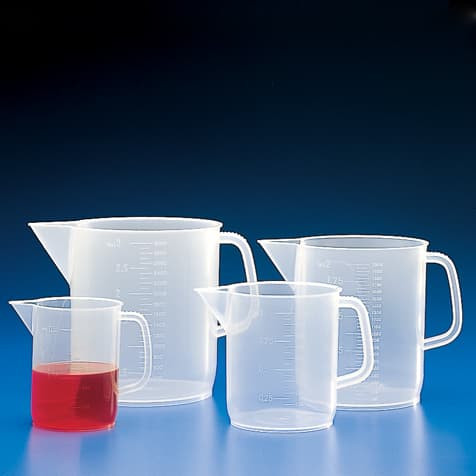
Plastic beakers are shatterproof polymer vessels — primarily high-clarity polypropylene (PP) — used for buffer preparation, dilution, reagent weighing, and general liquid handling in labs where glass breakage is a safety concern. MBP stocks PP plastic beakers from 5mL to 10,000mL with molded-in graduations that resist fading and drip-free spouts for clean pours, including tri-corner beaker options. Available in individual units and case packs for lab managers across the US, Canada, and worldwide ordering by PO or Quick Order.
Need help selecting the right plastic beakers for your laboratory workflow? — Contact our team at customerservice@mbpinc.net for product recommendations, bulk pricing, and purchasing assistance.
Plastic Beakers
Showing 1 to 7 of 7 results
What Are Plastic Beakers?
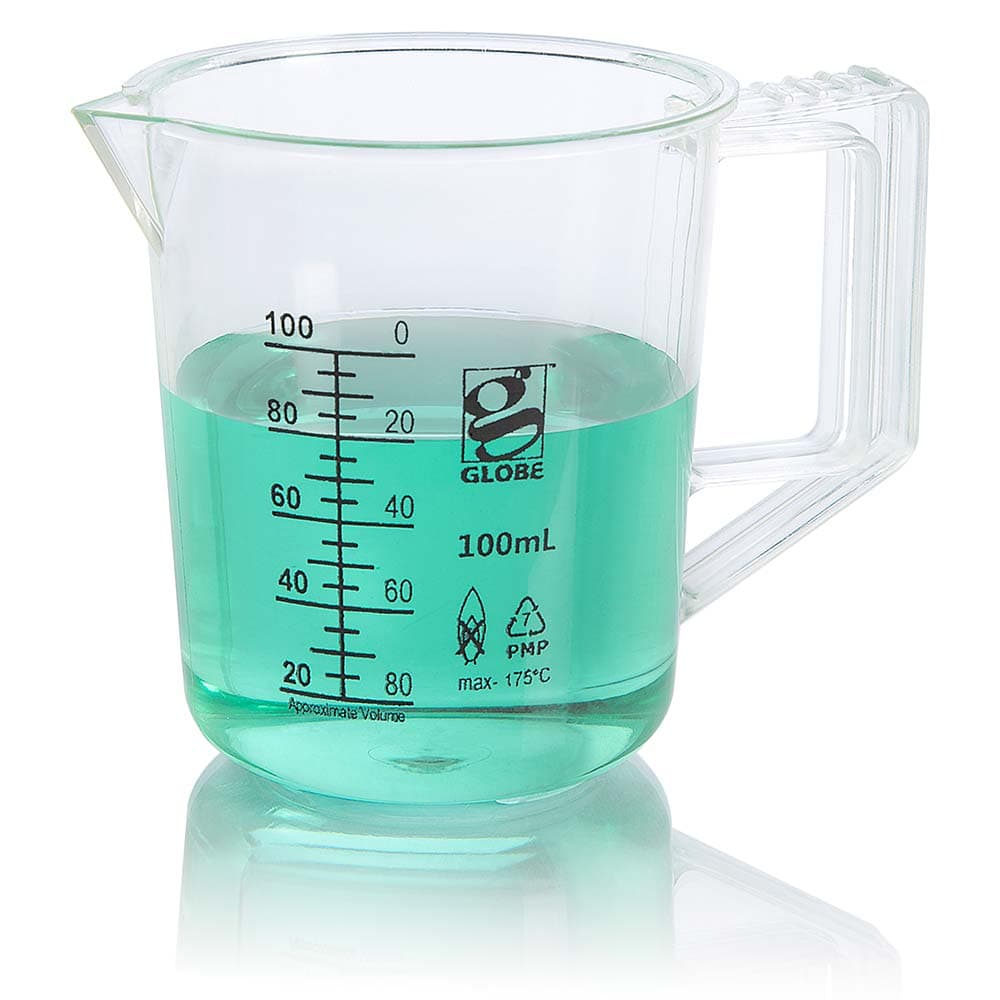
Plastic beakers are shatterproof cylindrical laboratory vessels manufactured from polypropylene (PP) or polymethylpentene (PMP), designed for safe and lightweight liquid handling in environments where glass breakage is a concern. Polypropylene (PP) is the most commonly used material due to its strong chemical resistance to dilute acids, bases, alcohols, and most aqueous reagents, along with autoclavability at 121°C and permanently molded graduations that do not fade with use. Polymethylpentene (PMP) offers higher optical clarity and better heat tolerance, making it suitable for applications requiring visual monitoring of solutions. Choose PP plastic beakers for routine buffer preparation, aqueous reagents, teaching labs, and field use; choose glass beakers when working with organic solvents, high temperatures above ~135°C, or when maximum optical clarity is required.
What you will find:
-
Options from 5mL for micro-work to 10,000mL for bulk prep.
-
High-clarity polypropylene built for heavy reagent use.
-
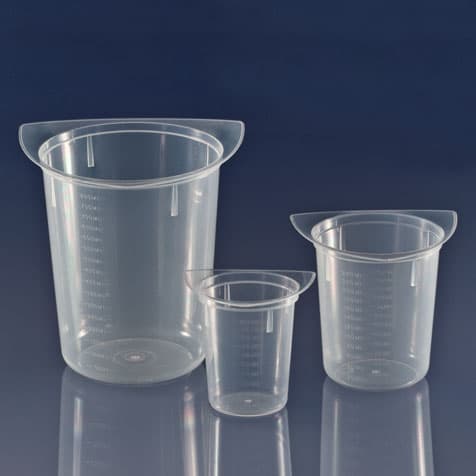
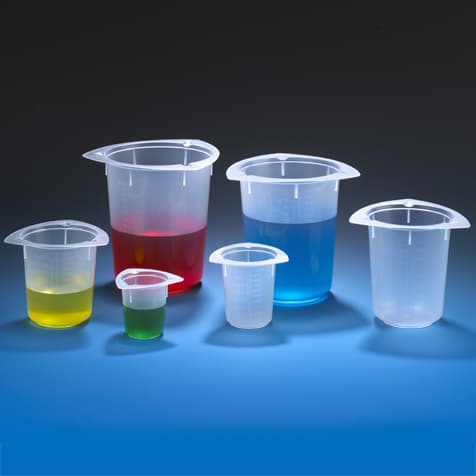
Options for Tri-corner beaker are also available.
-
Molded-in graduations that never fade or rub off.
-
Engineered for drip-free pouring and zero-waste transfers.
-
Stock up with Case Packs or grab a single unit.
How to Choose Plastic Beakers
Material: Polypropylene vs. Polymethylpentene
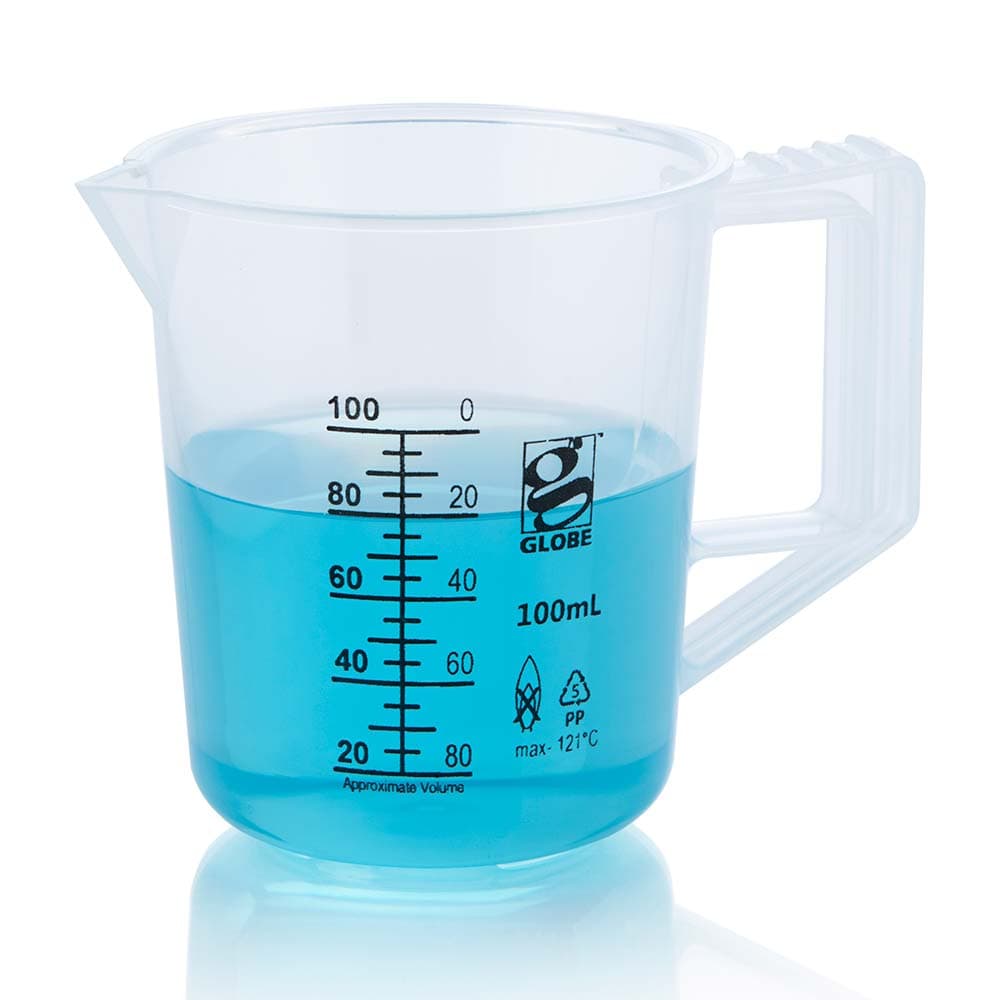
Polypropylene (PP) beakers are the standard choice in most laboratories because they are autoclavable at 121°C, cost-effective, and resistant to a wide range of aqueous reagents including dilute acids and bases. They are typically translucent and designed for general-purpose laboratory workflows. Polymethylpentene (PMP) beakers, on the other hand, offer near-glass optical clarity (approximately 90% light transmission) and can tolerate higher temperatures up to around 175°C, making them suitable for applications where visibility of the solution is important during mixing or heating.
Graduation Type: Molded-In
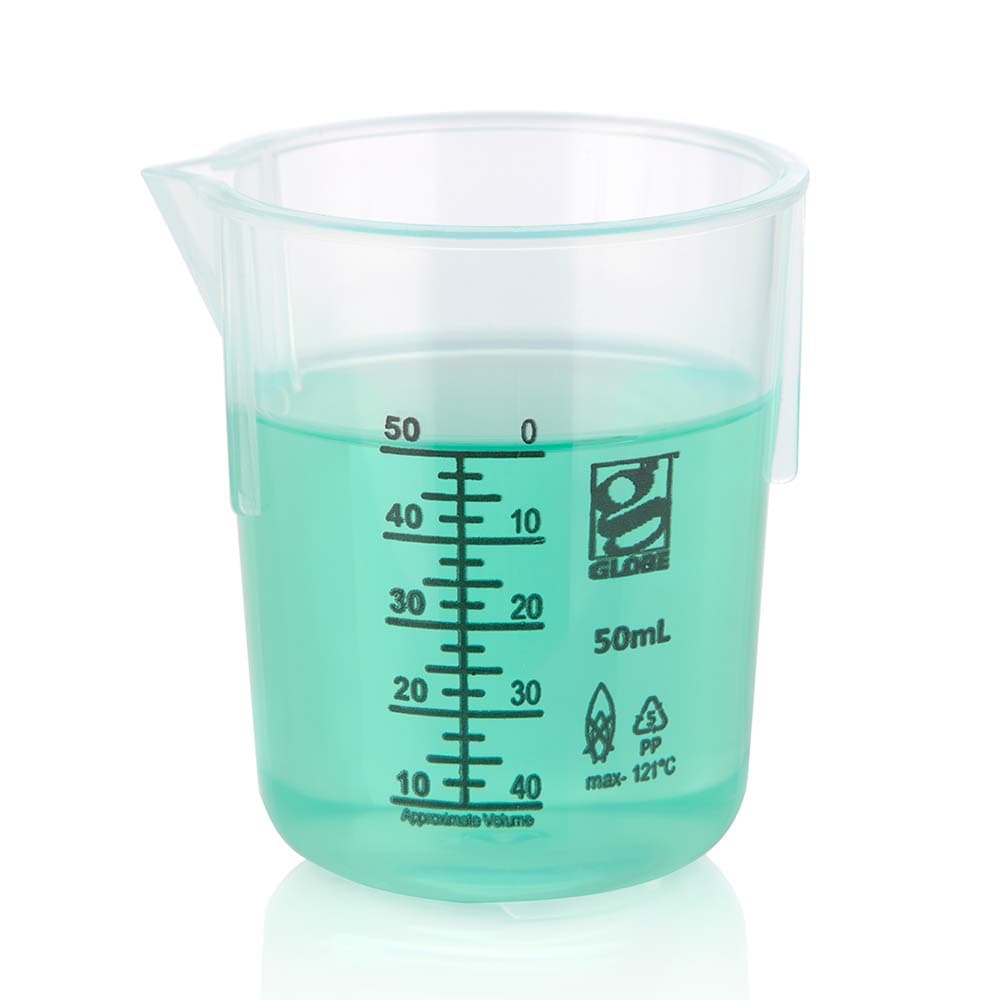
Plastic beakers at MBP feature molded-in graduations that are permanently embossed into the wall of the vessel. These markings remain legible even after repeated autoclaving, chemical exposure, and washing cycles, making them more durable than printed alternatives and ideal for long-term reuse.
Volume Range
MBP supplies plastic beakers in sizes ranging from 5 mL to 10,000 mL. Small-volume beakers (5–50 mL) are used for micro-scale reagent preparation, while mid-range sizes (250 mL–1,000 mL) are standard for routine buffer preparation. Large-capacity beakers (2,000–10,000 mL) are used for bulk reagent mixing, media preparation, and large-scale laboratory workflows.
Tri-Corner Beaker Option
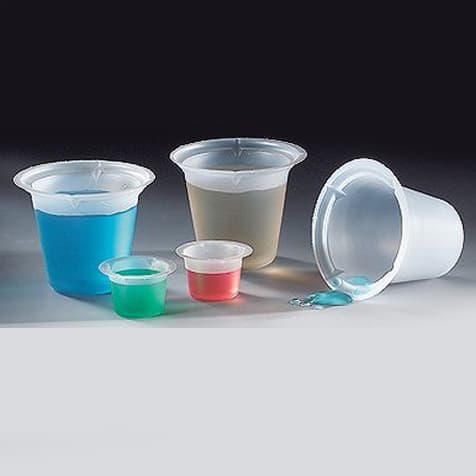
Tri-corner (tri-pour) beakers are a specialized plastic format designed with three pour spouts for controlled dispensing and reduced dripping. These are commonly used in reagent distribution stations, waste handling, and workflows requiring frequent liquid transfer. They are typically made from polypropylene and complement standard round-form beakers.
Specifications Context
Polypropylene (PP) has a density of approximately 0.91 g/cm³ and is chemically resistant to dilute acids (HCl, H₂SO₄), bases (NaOH, KOH), alcohols, and most aqueous buffers. However, it is not compatible with concentrated oxidizing acids (such as concentrated nitric or sulfuric acid) or halogenated organic solvents (such as chloroform, methylene chloride, or xylene). Molded graduations typically maintain an accuracy of ±5% of total capacity. PMP provides higher transparency and improved heat resistance compared to PP but is generally more expensive.
MBP stocks plastic beakers in a full range of sizes from 5 mL to 10,000 mL, including standard round-form and tri-corner designs for institutional laboratory use.
Upgrade to equipment that truly lasts the lab life. Look through our website and contact the MBP team for a quote to get lab supplies that won't let you down.
FAQ