Laboratory Beakers for Mixing, Heating, and Liquid Handling
Laboratory beakers are wide-mouth cylindrical glass or plastic vessels used for heating, mixing, stirring, and general liquid handling across chemistry, microbiology, and clinical labs. MBP stocks beakers in borosilicate glass and polypropylene formats from 5mL to 10,000mL, in Griffin style (low form) and standard configurations with molded or printed graduations, available as individual units or case packs. Lab managers across the US, Canada, and worldwide can order by PO or Quick Order for reliable supply.
Need help selecting the right laboratory beakers for your application? — Contact our team at customerservice@mbpinc.net for product recommendations, bulk pricing, and purchasing assistance.
Beakers
Showing 1 to 12 of 12 results
What Are Laboratory Beakers?
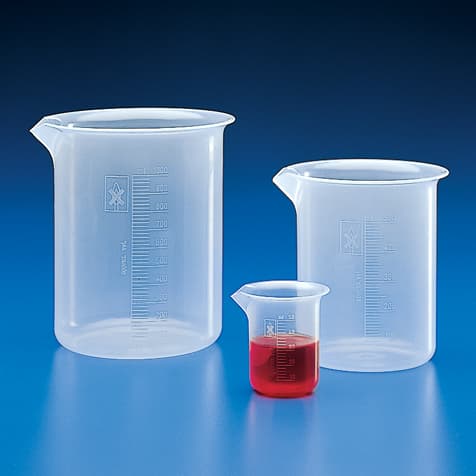
Laboratory beakers are wide-mouth cylindrical vessels with a flat bottom, pour spout, and volume graduation markings, used for heating liquids, mixing reagents, preparing buffers, and performing titrations. Beakers are available in two material groups—borosilicate glass and polymer plastics such as polypropylene (PP) and polymethylpentene (PMP)—and two standard forms: Griffin (low form) and Berzelius (tall form). Choose borosilicate glass beakers for heat resistance and chemical compatibility; choose plastic beakers when shatter resistance and lightweight handling are priorities.
Featured Products at MBP:
-
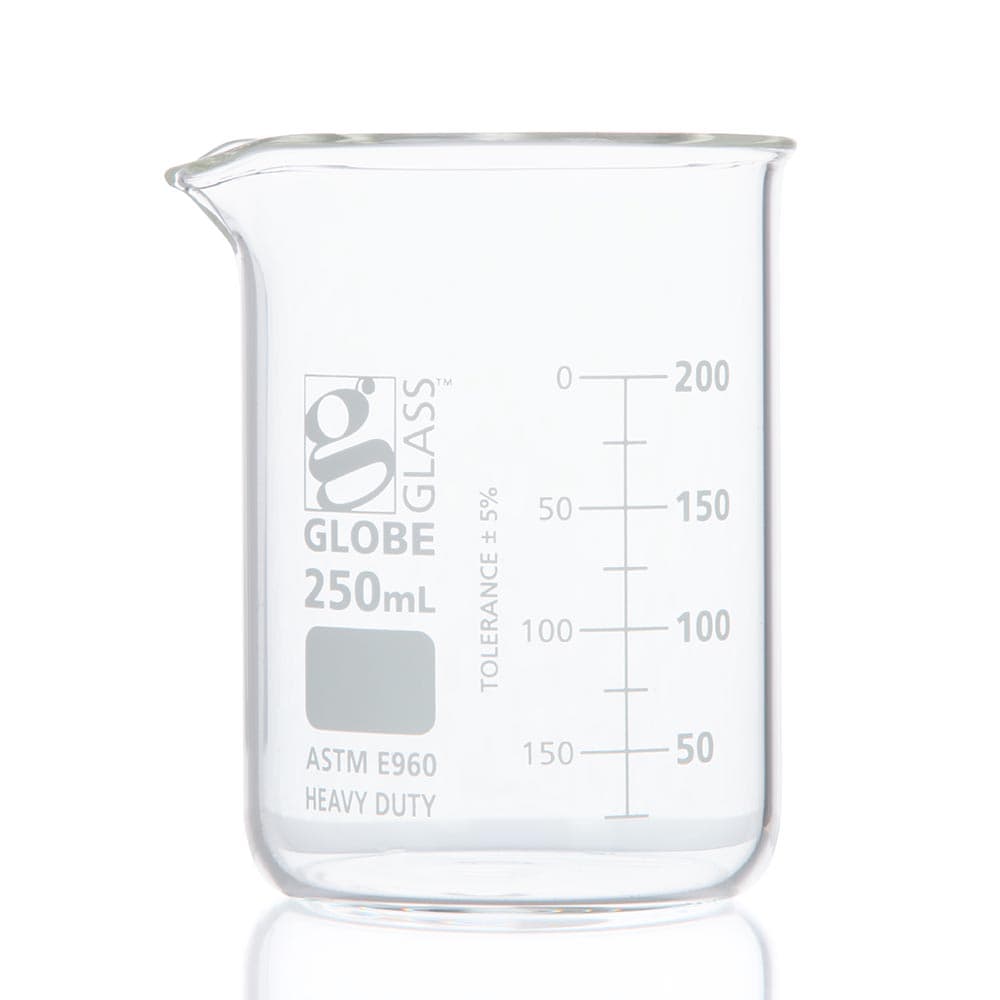
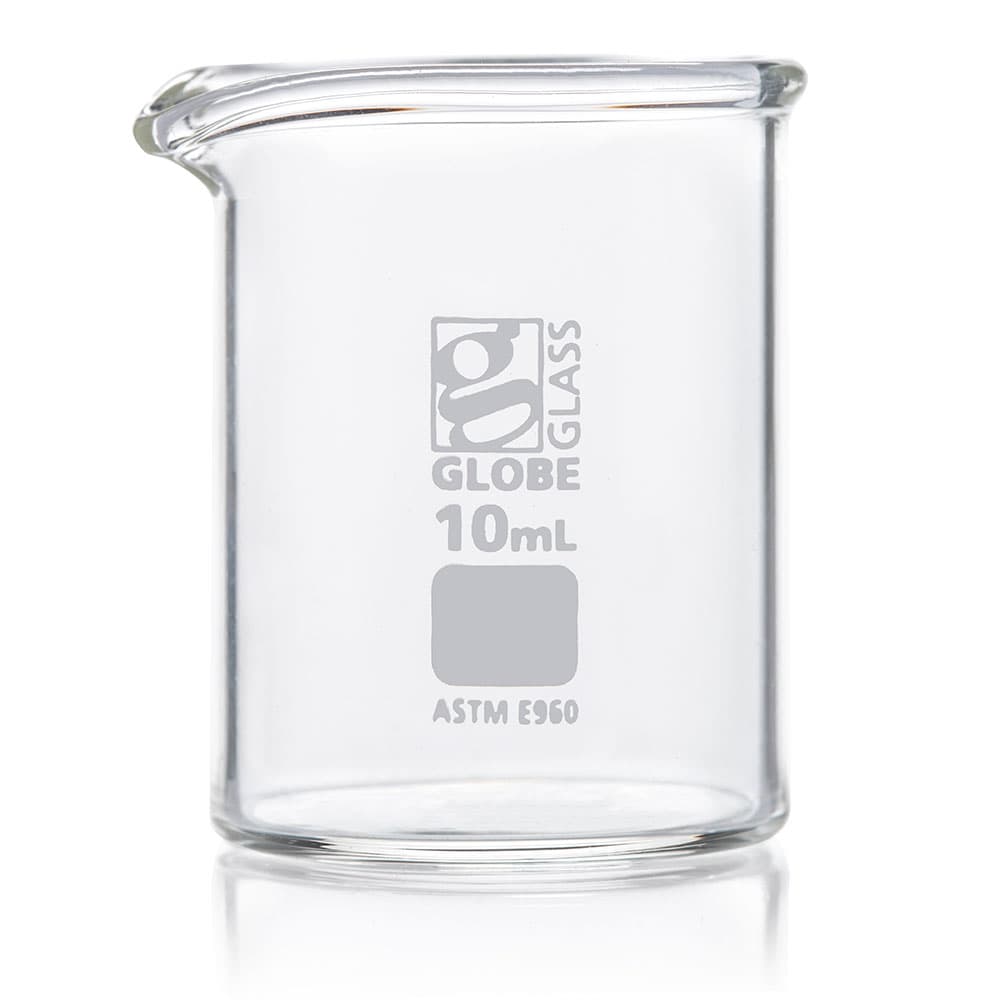
Glass Beakers for high-heat applications and chemical purity.
-
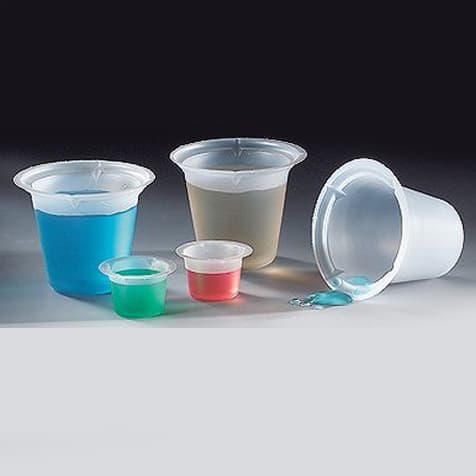
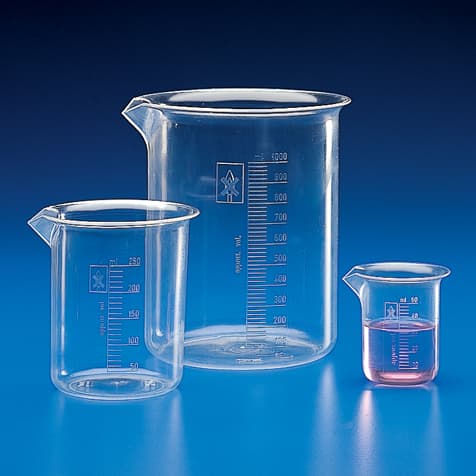
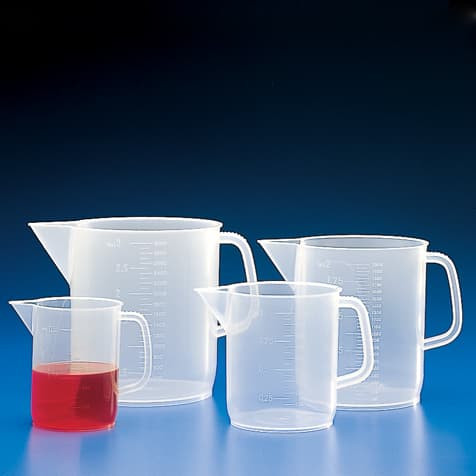
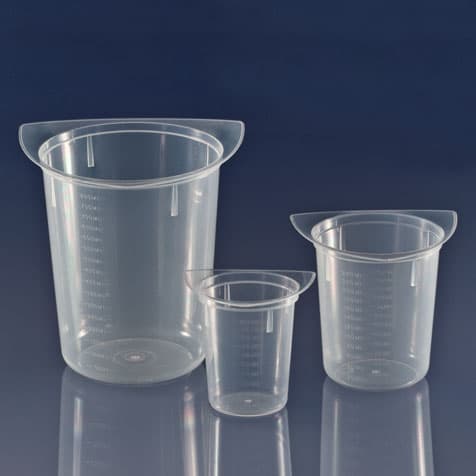
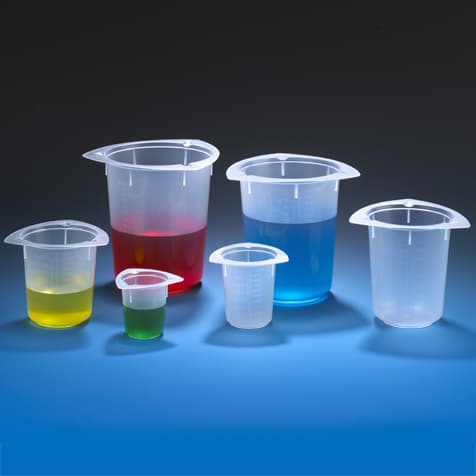
Plastic Beakers for shatterproof safety and lightweight handling.
-
Griffin Style Beakers options for standard low-form versatility.
How to Choose Laboratory Beakers
Material: Glass vs. Plastic
Borosilicate glass beakers withstand high temperatures, autoclaving, and exposure to a broad range of laboratory chemicals, including many acids, bases, and organic solvents. Polypropylene beakers are lightweight, durable, and resistant to breakage, making them suitable for routine aqueous solutions and safety-focused laboratory environments.
Form Factor: Griffin vs. Berzelius
Griffin-style beakers feature a low-form design with a wide, stable base, making them ideal for general mixing, stirring, and heating applications. Berzelius-style beakers are taller and narrower, providing a deeper liquid column that is useful for titrations, distillation procedures, and applications requiring reduced evaporation.
Graduation Type: Molded vs. Printed
Molded graduations are permanently formed into the beaker wall and remain readable after repeated washing, autoclaving, and chemical exposure. Printed graduations offer enhanced visibility and contrast but may gradually fade with extensive use or exposure to harsh solvents.
Volume and Pack Format
Laboratory beakers are available in capacities ranging from 5 mL to 10,000 mL. Individual units are suitable for occasional laboratory use, while case-pack quantities support high-volume purchasing and institutional procurement programs.
Specifications Context
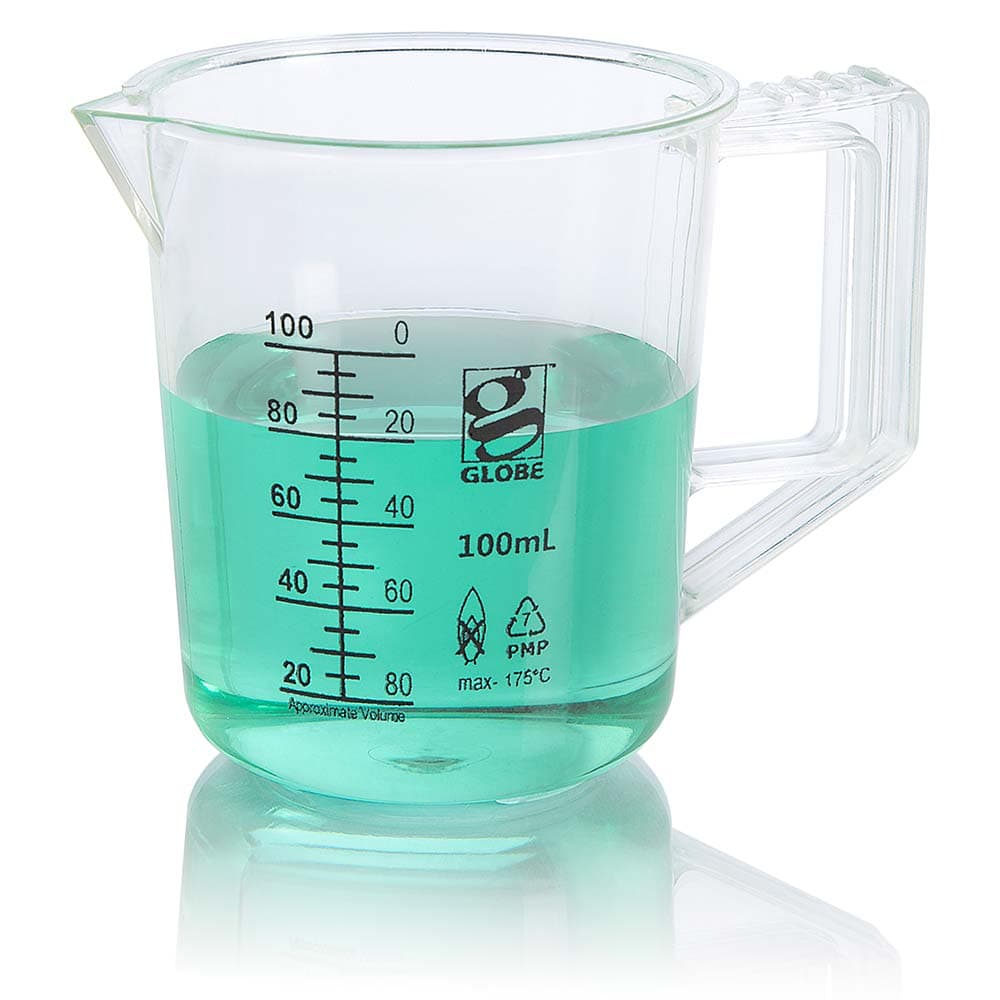
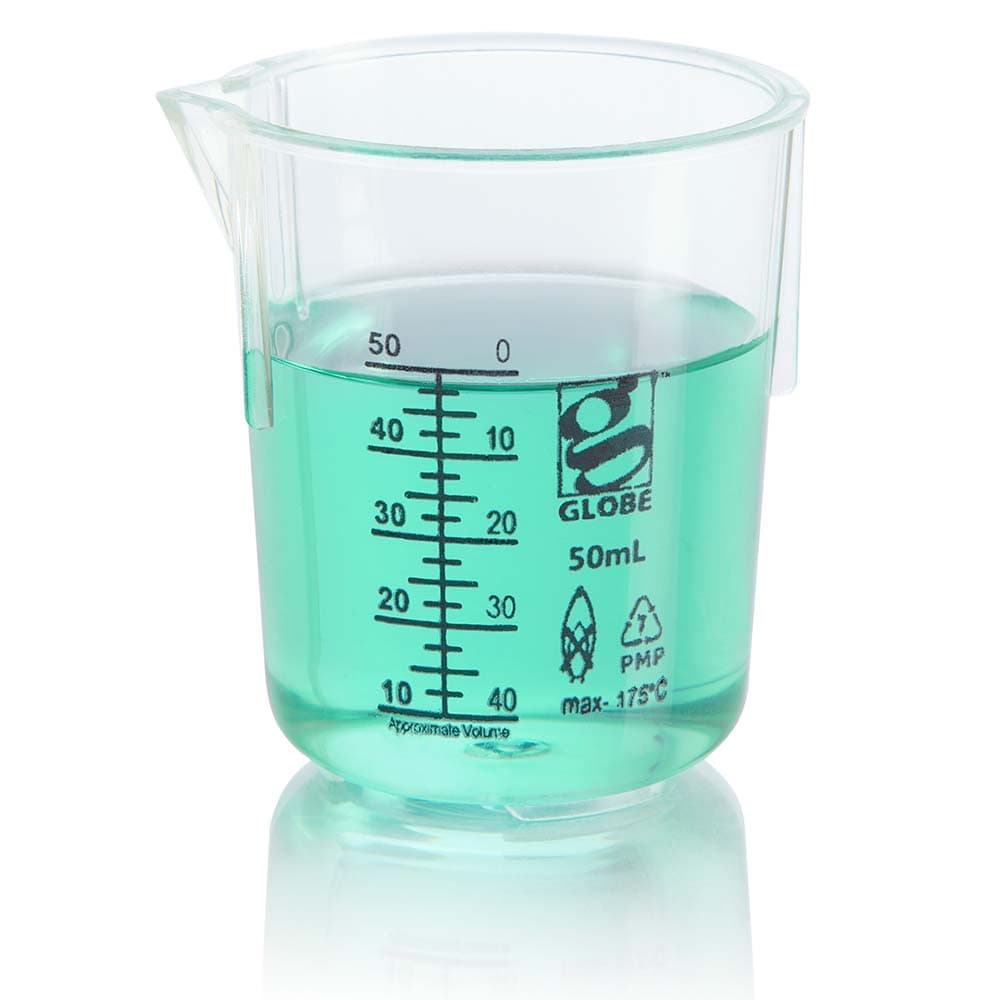
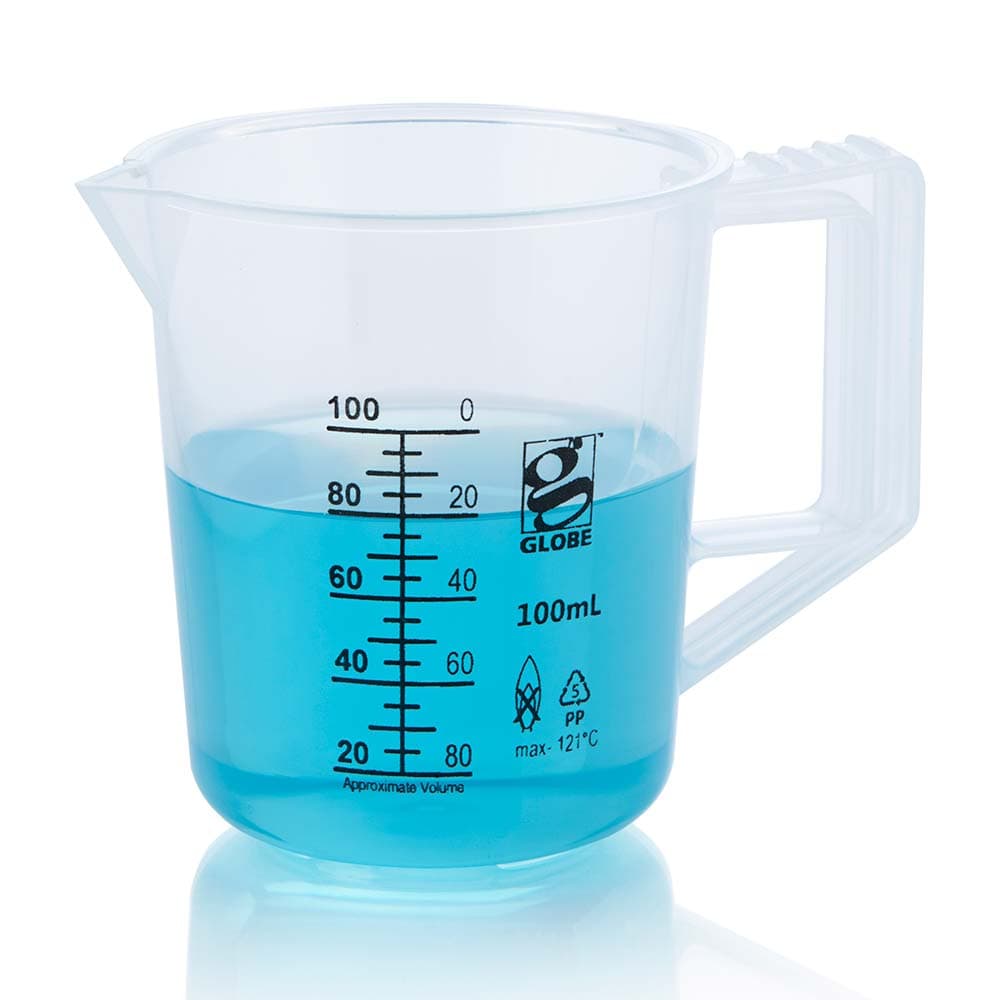
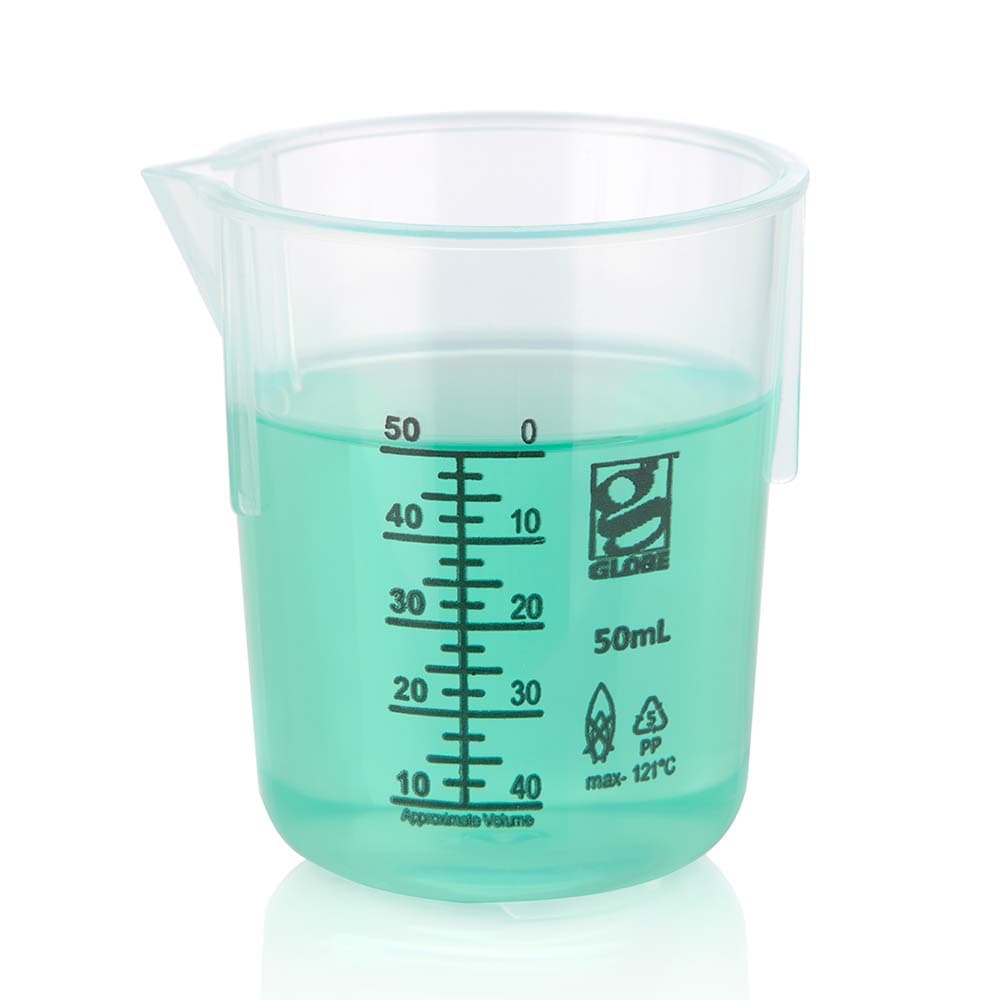
Borosilicate glass beakers manufactured to ASTM E960 and USP Type I standards typically provide graduation accuracy within approximately ±5% of total capacity. Griffin-style beakers feature a low-form geometry with a height-to-diameter ratio of approximately 1.4:1, providing stability during heating and stirring. Polypropylene beakers are autoclavable at 121°C but should not be exposed to dry heat above approximately 135°C. PMP beakers offer greater optical clarity than polypropylene while maintaining excellent impact resistance.
MBP stocks glass and plastic laboratory beakers in a wide range of sizes and case-pack quantities for laboratories throughout the United States, Canada, and worldwide.
Upgrade your bench with quality you can trust. Browse our full catalog and reach out to the MBP team for a quote today to secure your supplies.
FAQ