Round Well Deep Well Plates for Nucleic Acid Extraction and Sample Processing
Round well deep well plates are 96-well polypropylene microplates with cylindrical or conical round-bore wells holding 1.2 mL, 2.0 mL, or 2.2 mL per well, preferred for magnetic bead-based nucleic acid extraction, orbital mixing, bacterial culture, and workflows requiring hemispherical or conical well geometry. Available in U-bottom and V-bottom configurations; certified DNase-free, RNase-free, and PCR-inhibitor-free; autoclavable at 121 °C. MBP ships to labs across the United States, Canada, and internationally with PO ordering at mbpinc.net.
Need help selecting the right round well deep well plates for your workflow? Contact customerservice@mbpinc.net for product recommendations, pricing, and procurement support.
Round Well Deep Well Plates

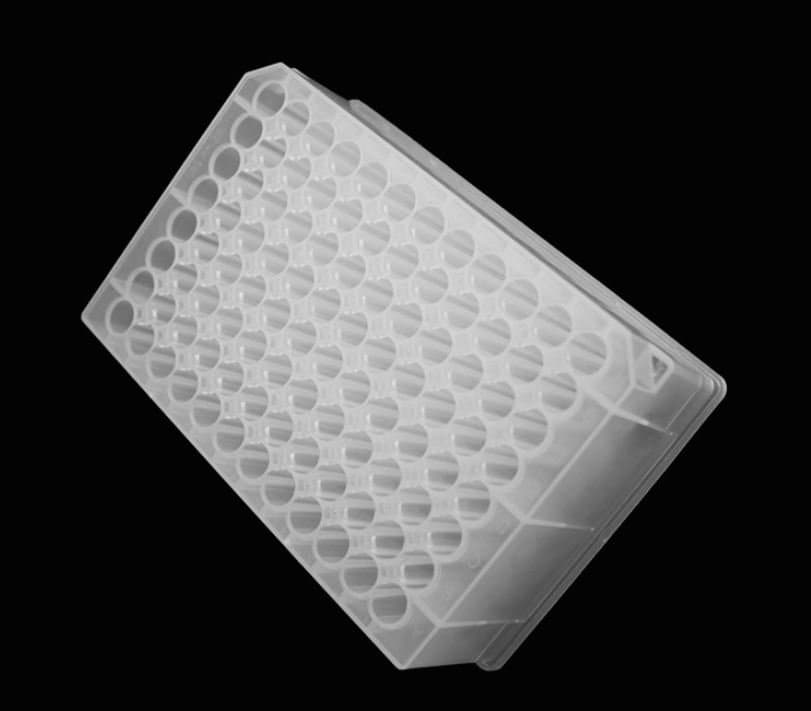
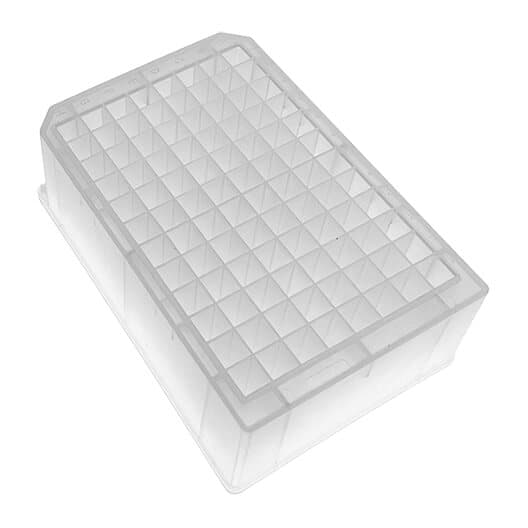
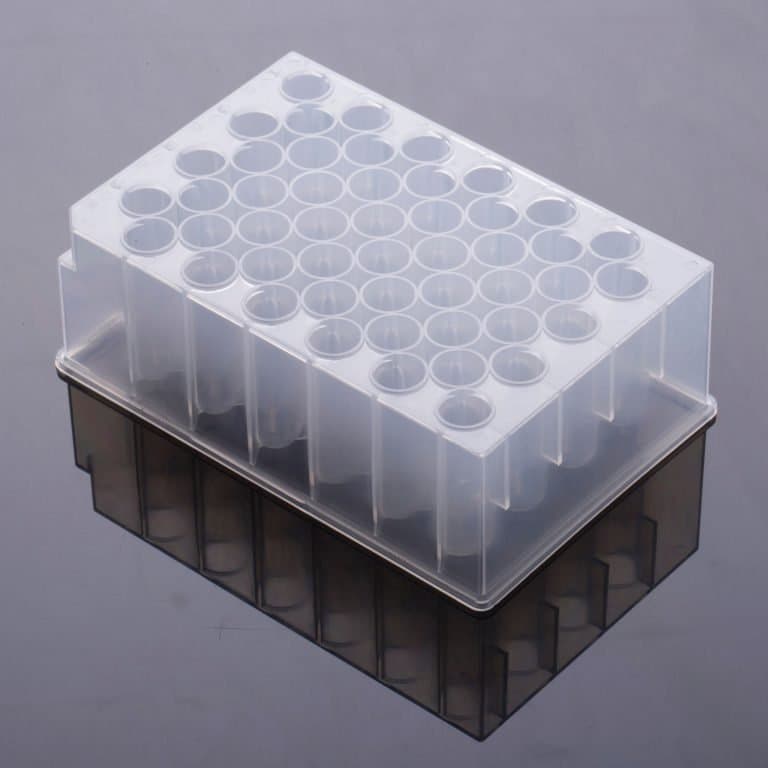
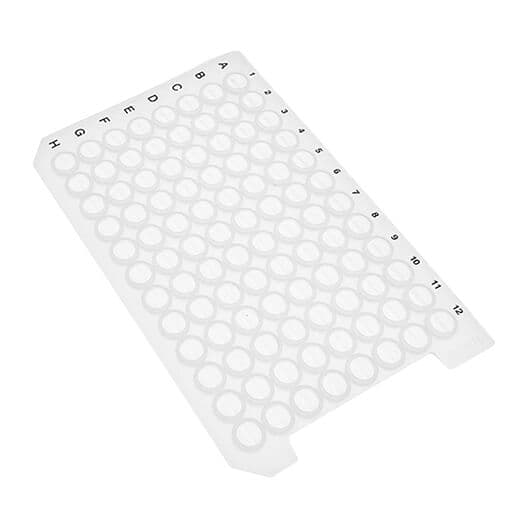
Showing 1 to 5 of 5 results
What are Round Well Deep Well Plates?
Round well deep well plates are polypropylene microplates manufactured to ANSI/SLAS (SBS) footprint standards, featuring cylindrical wells that provide greater sample volumes than standard PCR or assay plates. Typical formats include 96-well plates with capacities of 1.2 mL, 2.0 mL, or 2.2 mL per well, designed for automated sample processing, nucleic acid extraction, microbial culture, compound storage, and high-throughput laboratory workflows.
The round well geometry promotes uniform mixing, consistent liquid movement during shaking, and efficient magnetic bead collection during automated extraction procedures. Unlike square well plates, which maximize storage volume, round well plates are preferred when sample recovery, mixing performance, and magnetic bead handling are critical.
What you will find:
-
96-round well storage plates
-
1.2ml deep well plates
-
2.0ml round well plates
-
Sterile deep well microplates
-
DNase and RNase-free plates
-
U-bottom deep well plates
-
Polypropylene storage plates
-
Automation-compatible round well plates
-
Silicone sealing mats
How to Choose Round Well Deep Well Plates
Well Volume
The 1.2 mL round well plate is specified for smaller-input nucleic acid extraction protocols (blood, plasma, swab) and fits automated deck formats with restricted Z-height clearance. The 2.0 mL round well format accommodates larger sample input volumes for high-yield extractions and is the standard format for Nest Scientific deep well plates used in nucleic acid processing. Confirm working volume versus total well volume in the product specification — a 2.0 mL plate typically has a total volume of 2,200–2,400 µL.
Bottom Geometry
U-bottom (hemispherical) round wells are standard for sample storage, bacterial and cell culture, and general liquid handling where complete aspiration is not required. V-bottom (conical) round wells concentrate liquid and pellet to the lowest point for complete aspiration and enhanced pellet recovery, preferred in enzymatic assay and precipitation protocols. Flat-bottom round well plates are used when an optical flat surface is needed for absorbance-based assay measurement.
Sterility Requirements
Non-sterile round well deep well plates manufactured in ISO 8 cleanrooms satisfy most nucleic acid extraction and sample processing workflows. Sterile options (gamma-irradiated, SAL 10⁻⁶) are required for cell culture, bacterial culture, and RNA extraction from live cells. Autoclavable polypropylene formats provide a cost-effective reusable sterile option for labs with autoclave access.
Centrifugation and Sealing
Standard round well deep well plates are rated 4,000–6,000 × g. Raised well rims ensure consistent sealing with adhesive films, heat-seal foils, and pre-slit silicone mats. Nest Scientific 96-well round well silicone sealing mats (pre-slit, 7 mm diameter) are compatible with 0.35–1.35 mL round well plates.
Automation Compatibility
Specify virgin polypropylene, lot-certified DNase-free, RNase-free, DNA-free, and PCR inhibitor-free for nucleic acid extraction. Nest Scientific deep well plates use USP Class VI polypropylene material with high chemical stability for demanding extraction workflows.
Specifications Context
Round well deep well plates are manufactured from high-purity polypropylene and are commonly rated for temperatures from −80°C to +121°C, supporting freezer storage and autoclave sterilization. Premium plates are produced from USP Class VI resins and tested for DNase, RNase, DNA, and PCR inhibitor contamination.
The 96-well 2.0 mL U-bottom round well plate remains one of the most widely used formats for automated nucleic acid extraction, biobanking, bacterial culture, and sample preparation workflows due to its balance of volume capacity, automation compatibility, and reliable magnetic bead performance.
Browse our range and request a quote from the MBP team to find the right fit for your lab.
FAQ