ELISA Plates for Quantitative Immunoassays and Protein Detection
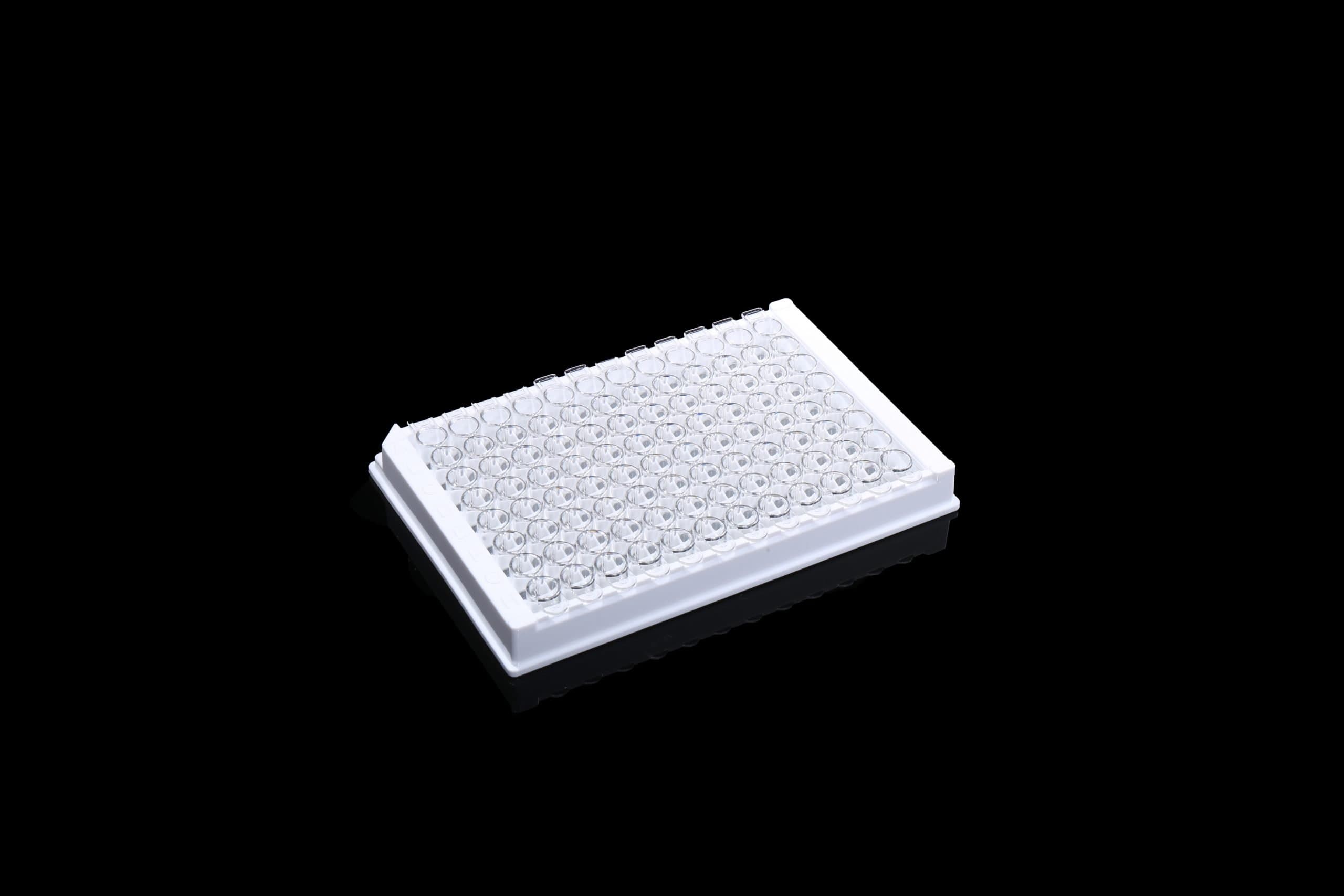
ELISA plates are 96-well flat-bottom polystyrene microplates with surface-treated wells that bind capture antibodies and antigens above 400 ng IgG/cm² per well, enabling quantitative immunoassays across colorimetric (450 nm HRP/TMB), chemiluminescent, and fluorescent detection modes. Available in high-binding and medium-binding treatments, clear, white, and black, in solid and detachable 8-well strip formats. MBP carries Nest Scientific ELISA plates certified from USP Class VI polystyrene, manufactured in cGMP facilities.
Need help selecting the right ELISA plates for your assay requirements? Contact customerservice@mbpinc.net for product recommendations, pricing, and procurement support.
ELISA Plates
Showing 1 to 3 of 3 results
What Are ELISA Plates?
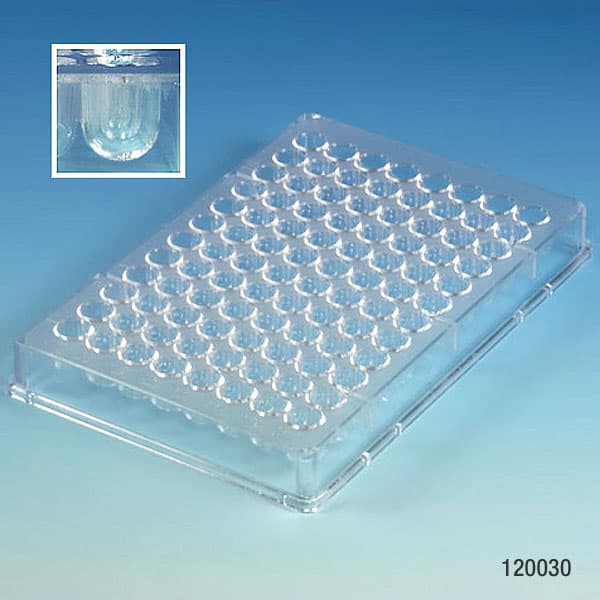
ELISA plates are specialized 96-well flat-bottom polystyrene microplates designed specifically for enzyme-linked immunosorbent assays (ELISA) and related immunodetection applications. Each well features a surface treatment that promotes efficient adsorption of proteins such as capture antibodies and antigens, creating a stable solid-phase platform for binding, washing, detection, and signal generation steps within an ELISA workflow.
These plates are engineered with optical-grade flat bottoms to provide accurate absorbance, fluorescence, or luminescence measurements and conform to SBS/ANSI microplate standards, ensuring compatibility with automated plate washers, liquid handling systems, incubators, and microplate readers. Typical well capacities range from 300–400 µL, making them suitable for both manual and high-throughput laboratory testing.
At MBP, you can find:
-
96 Well ELISA Plates with high-optic clarity for precise readings
-
Microtitration 96-Well Plates for versatile incubation and testing
-
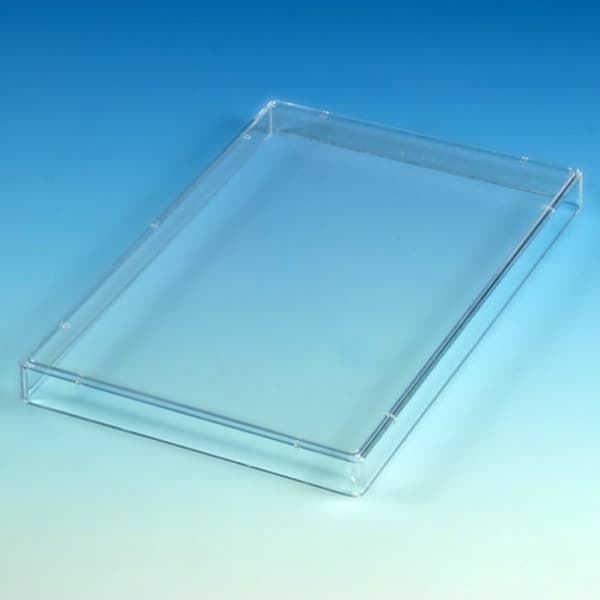
Lids for Microtitration Plates available in sterile and non-sterile options
-
Standard 12x8 configuration plates for easy workflow integration
-
Alpha-numeric indexed wells for accurate sample tracking
-
Polystyrene assay plates optimized for antigen-antibody complexes
-
Surface-treated plates for reliable in-vitro diagnostic results
-
Clear-bottom plates for enhanced signal detection
How to Choose ELISA Plates
Surface Binding Capacity
The surface binding characteristic is one of the most important selection criteria. High-binding plates are the standard choice for sandwich ELISA, indirect ELISA, and most commercial assay kits because they efficiently immobilize antibodies and antigens. Medium-binding plates are better suited for smaller proteins and peptides that may lose activity on highly adsorptive surfaces. Ultra-high-binding plates are available for low-abundance biomarker detection where maximum protein capture improves assay sensitivity.
Plate Color
Plate color should be matched to the assay detection method. Clear plates are the industry standard for colorimetric ELISA assays using substrates such as TMB that are measured at 450 nm. White plates enhance signal intensity in chemiluminescent assays by reflecting emitted light, increasing sensitivity. Black plates minimize background fluorescence and light scatter, making them ideal for fluorescence-based ELISA and immunoassay applications.
Detachable vs. Solid-Frame Format
Detachable strip plates contain individual 8-well strips that can be removed and used independently. This format reduces reagent consumption and lowers costs when processing fewer than 96 samples. Solid-frame plates provide greater structural rigidity and are preferred for automated workflows involving robotic washers and readers where consistent positioning is critical.
Lot Consistency and Quality Control
For validated methods, regulated environments, and diagnostic applications, consistent plate performance is essential. Laboratories should consider plates supplied with lot-specific quality documentation and low well-to-well variation. Parameters commonly evaluated include protein-binding capacity, background absorbance, and coefficient of variation (CV) across wells and manufacturing lots.
Instrument Compatibility
Most ELISA plates are manufactured to standard SBS dimensions and are compatible with major microplate readers and automated washers. Laboratories using automated systems should verify compatibility with specific washer manifolds, readers, and robotic platforms, particularly when using detachable strip formats.
Specifications Context
ELISA plates are typically manufactured from high-quality USP Class VI polystyrene and undergo specialized surface treatment to achieve consistent protein adsorption across all wells. Standard 96-well formats generally provide working volumes of approximately 300 µL per well and include alphanumeric indexing to support sample tracking and laboratory workflow management.
High-binding ELISA plates commonly achieve protein adsorption capacities exceeding 400 ng IgG/cm², while ultra-high-binding variants may approach 800 ng/cm². These characteristics help ensure strong analyte capture and reproducible assay performance across research, clinical, pharmaceutical, biotechnology, and diagnostic laboratories.
The MBP range provides the mechanical strength and surface consistency required to ensure your high-stakes diagnostic data that must remain error-free. Contact us and get your quote now.
FAQ