Cell Culture Inserts — Permeable PET and PC Membrane Supports for Co-Culture and Migration Assays
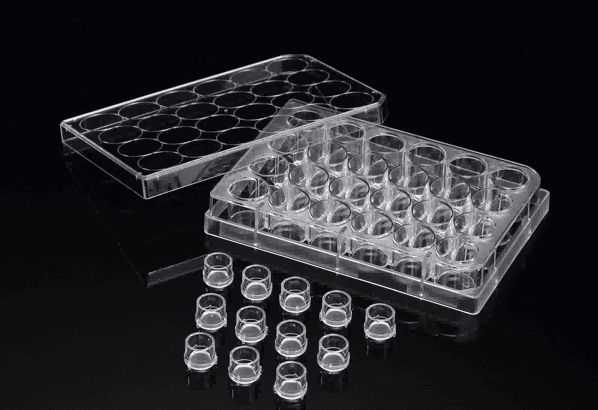
Cell culture inserts (Transwell-style permeable supports) suspend cells above a multi-well plate bottom with a PET or PC membrane floor, creating separate apical and basolateral compartments for epithelial barrier function, drug permeability, migration, invasion, chemotaxis, and co-culture assays. NEST Scientific inserts have PET and PC (opaque, for primary cell attachment) membranes in 0.4 µm (barrier/TEER), 1 µm (exosome transport), 3 µm (slow migration), and 8 µm (tumor invasion, chemotaxis) pore sizes; packed in 6-, 12-, and 24-well plate formats.
MBP carries Nest Scientific cell culture inserts and offers direct PO ordering for labs across the USA, Canada, and worldwide. Request a quote today by contacting customerservice@mbpinc.net
Cell Culture Inserts
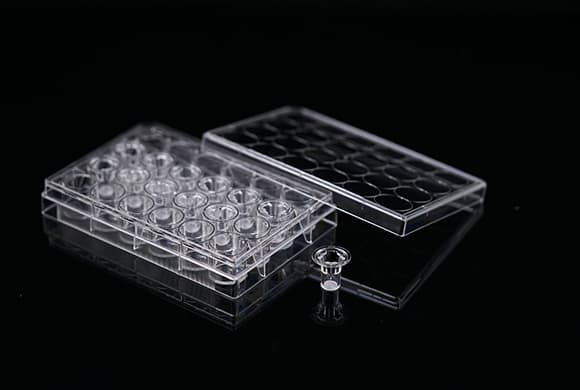
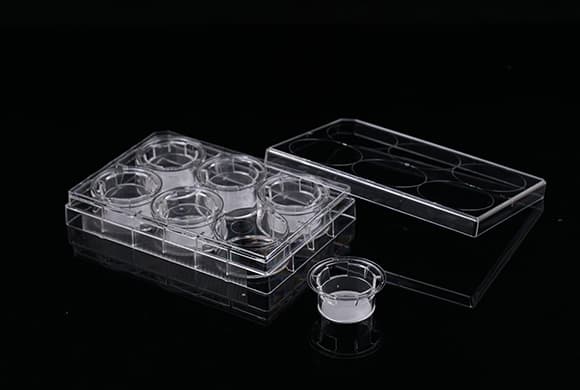
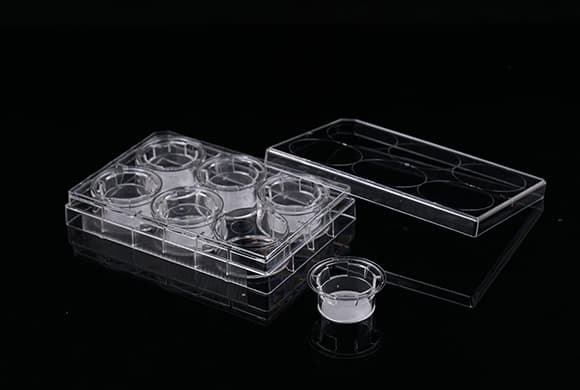
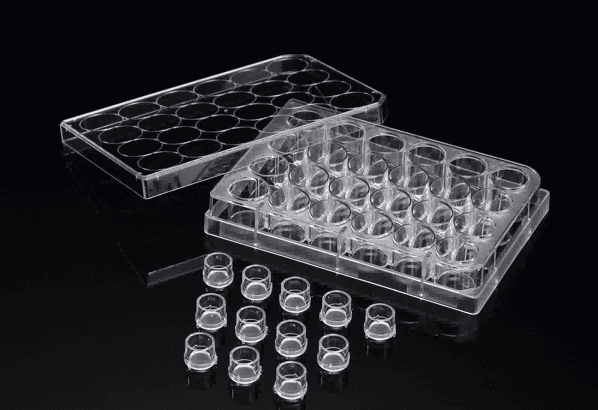

Showing 1 to 10 of 10 results
What are Cell Culture Inserts?
Cell culture inserts (also called Transwell inserts or permeable supports) are sterile, single-use polystyrene well inserts with a permeable membrane floor that suspend cells above the bottom of a standard multi-well plate, creating separate apical (upper, inside insert) and basolateral (lower, outside insert in the well below) compartments. The membrane allows diffusion of media, nutrients, metabolites, and signaling molecules between the two compartments while physically separating the two cell populations. Choose PET membranes for imaging and clear-bottom visualization; choose PC membranes for superior cell attachment; choose pore size based on whether cells need to migrate through the membrane (≥3 µm) or be retained on it (0.4 µm and 1 µm).
What you will find:
- 6 Inserts / 6-Well Plate for Tissue Engineering - Ideal for skin models and complex cell differentiation where a larger surface area is required.
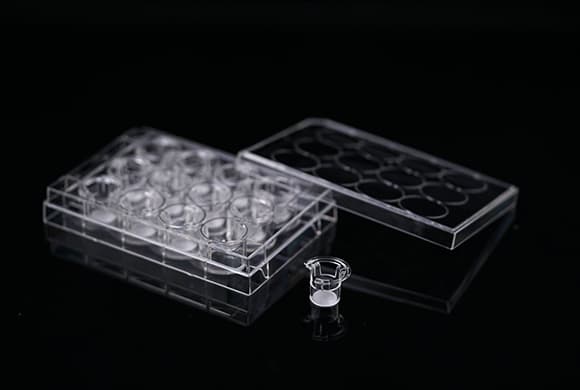
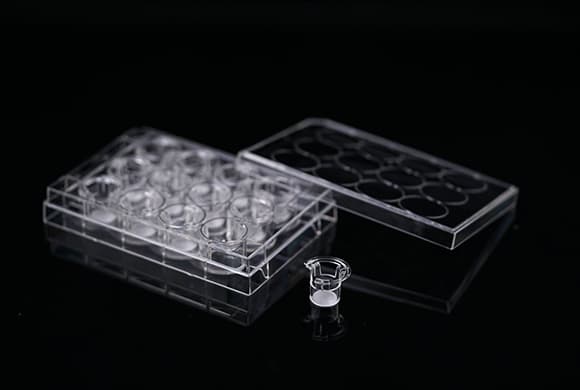
- 12 Inserts / 12-Well Plate for Transport Assays - Balanced format for nutrient diffusion studies and metabolic monitoring.
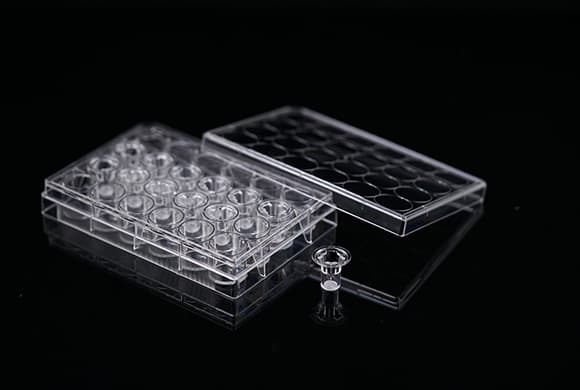
- 12 Inserts / 24-Well Plate for High Throughput Screening - Designed for migration and chemotaxis assays with efficient reagent use.
- SPLInsert™ Hanging formats with transparent, sterile PC or PET membranes.
- SPLInsert™ Standing format for cell culture insert applications.
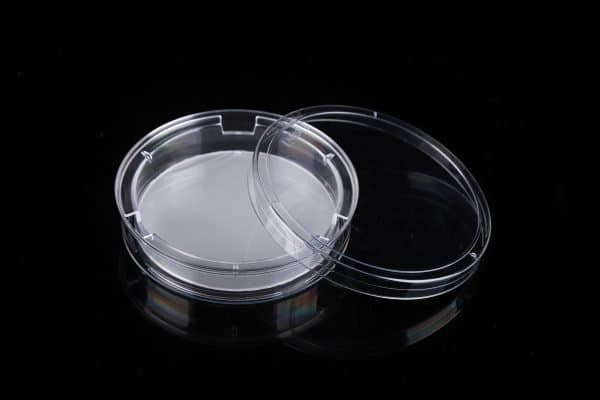
- 100 mm cell culture insert dishes with 3.0 μm PC membranes, translucent construction, tissue-culture treatment, and sterile packaging.
How to Choose Cell Culture Inserts
PET vs. PC Membrane
PET (polyethylene terephthalate) membranes are optically transparent, allowing direct visualization of cells growing on the membrane by standard phase-contrast and fluorescence microscopy without removing the insert. PET is the first choice when imaging cells on the membrane is part of the experimental readout (tight-junction immunofluorescence, GFP localization, wound-healing on the membrane). PC (polycarbonate) membranes provide superior cell attachment due to their higher surface energy — often used for primary epithelial, endothelial, and intestinal cells that are difficult to culture on PET. PC membranes are opaque, blocking transmitted light microscopy through the membrane.
Pore Size by Application
0.4 µm pore inserts prevent cell migration and cell-cell contact between apical and basolateral compartments while allowing free diffusion of molecules <0.4 µm (nutrients, cytokines, small molecules, metabolites). Standard for epithelial barrier function assays (TEER measurement, permeability assays), secretion studies (measuring cytokine secretion from the basolateral side), and any co-culture where cell-cell contact must be prevented. 1 µm pore inserts similarly prevent cell migration but allow slightly larger molecule diffusion — used for exosome transport studies. 3 µm pore inserts allow poorly migratory cells (some endothelial, fibroblast lines) to migrate through. 8 µm pore inserts support tumor cell migration, invasion, chemotaxis, and hematotaxis assays — the standard pore size for Boyden chamber–style migration and invasion assays.
Plate Format and Insert Configuration
NEST Scientific inserts are pre-packed in multi-well plates: 6-well plate format (6 inserts per plate), 12-well plate format (12 inserts per plate), 24-well plate format (12 inserts per plate). Inserts are centered in wells by their flange geometry, preventing the membrane from touching the well sides and creating a wicking path. The apical-basolateral gap (distance from membrane floor to well bottom) is designed to allow media access to the basolateral face and pipette access to the lower chamber for sampling.
TC-Treated vs. Non-Treated Membrane
TC-treated membrane inserts promote adherent mammalian cell monolayer formation on the insert membrane. Non-treated membrane inserts (some PC formats) are used for migration and invasion assays where cells in the apical chamber must actively migrate through the membrane pore to reach the basolateral side — a non-treated surface reduces passive cell adhesion that would produce false-positive migration signals.
Transferability
NEST Scientific cell culture inserts can be transferred from one plate to a fresh plate for media changes, cumulative secretion studies, and time-course experiments — a key advantage over the non-insert well format. Transfer the insert using sterile forceps or the insert flange.
Specifications Context
NEST Scientific cell culture inserts are manufactured from polystyrene with PET or PC membranes in TC-treated (vacuum plasma, contact angle <10°) or non-treated formats. Inserts are packed in individually sealed, peelable Tyvek film and blister packaging for sterility assurance — one plate per pack, sterile. E-beam sterilized to SAL 10⁻⁶; DNase/RNase-free and non-pyrogenic per lot. The insert flange geometry is designed to center the insert in the well, preventing membrane-wall contact and wicking. NEST Scientific cell culture inserts in PET and PC membranes across the four pore sizes (0.4, 1, 3, 8 µm) and three plate formats (6-, 12-, 24-well) are available from MBP.
Bridge the gap between routine culture and physiological discovery. Optimize your laboratory procurement with Molecular Biology Products Inc. Connect with our specialists for a customized quote today.
FAQ