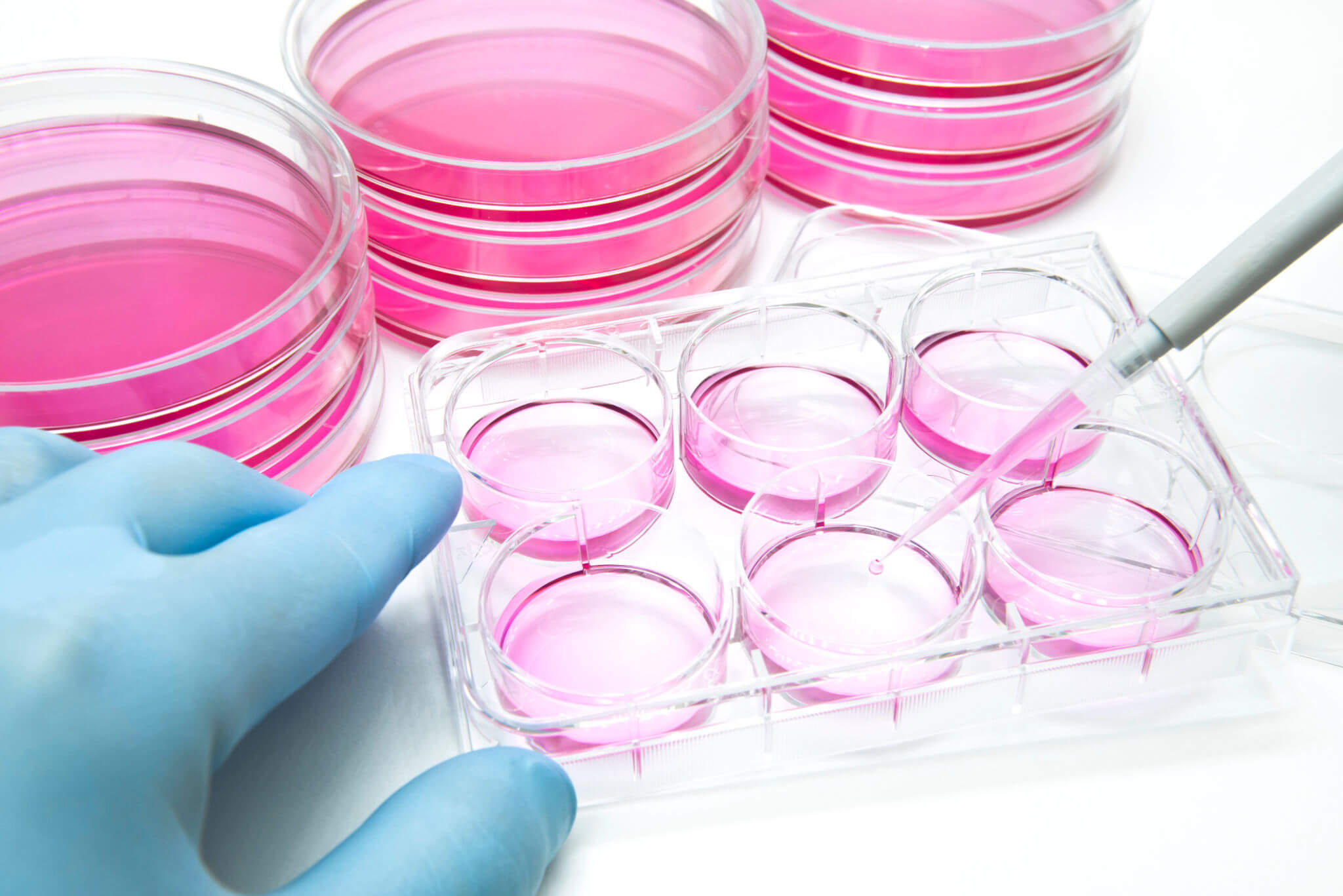
Cultured tissue can be a single cell, a population of cells, or an entire or part of an organ. Cells in culture can multiply, change size, shape, or function, exhibit specialized activity (for example, muscle cells can contract), and interact with other cells. Keep reading for some really interesting information about tissue culture.
Interesting Details about Tissue Culture
Historical Occurrences
Wilhelm Roux, a German zoologist, made an early attempt at tissue culture in 1885, cultivating tissue from a chick embryo in a warm salt solution. However, the first real breakthrough occurred in 1907, when American zoologist Ross G. Harrison demonstrated the growth of frog nerve cell processes in a medium of clotted lymph.
Following Harrison's technique, French surgeon Alexis Carrel and his assistant Montrose Burrows improved on it, reporting their initial advances in a series of papers published in 1910–11. Tissue culture was coined and defined by Carrel and Burrows. Following that, many researchers successfully cultivated animal cells using a variety of biological fluids as culture media, including lymph, blood serum, plasma, and tissue extracts. (Britannica)
Methods were developed in the 1980s and 1990s that allowed researchers to successfully grow mammalian embryonic stem cells under artificial conditions.
Cultural Environments
Cells can be grown in a biologically defined culture medium, such as blood serum or tissue extract, a chemically defined synthetic medium, or a combination of the two. A medium must contain the proper proportions of nutrients for the cells being studied, as well as be appropriately acidic or alkaline. Cultures are typically grown as single layers of cells on glass or plastic Tissue Culture Plates or as suspensions in a liquid or semisolid medium.
A tiny sample of the tissue is dispersed on or in the medium to begin a culture, and the flask, tube, or plate containing the culture is then incubated, usually at a temperature close to that of the tissue's normal environment. To prevent microorganism contamination, sterile conditions are maintained. Cultures are sometimes started from single cells, resulting in the formation of clones, which are uniform biological populations. Single cells usually form colonies within 10 to 14 days of being placed in culture conditions. (Britannica)
Processing of Cultured Cells and Tissues
Live cultures can be examined directly with a microscope or through photographs and motion pictures taken through the microscope. Cells, tissues, and organs can all be killed, fixed (preserved), and stained for further study. Following fixation, samples can be embedded (for example, in resin) and cut into thin sections to reveal additional details under a light or electron microscope.
Tissue culture cells are subjected to a variety of experimental treatments. Viruses, drugs, hormones, vitamins, disease-causing microorganisms, or suspected cancer-causing chemicals, for example, may be added to the culture. Scientists then examine the cells for changes in cell behavior or function, as well as changes in specific molecules, such as changes in the expression of a specific protein or gene.
Biological Understanding
Tissue culture has aided in the discovery of numerous biological phenomena. Tissue culture research has aided in the identification of infections, enzyme deficiencies, and chromosomal abnormalities, as well as the classification of tumors and the development and testing of drugs and vaccines.
Since the discovery that certain viruses grow in tissue culture, the technique has been used to develop vaccines for poliomyelitis, influenza, measles, mumps, and other infectious diseases. Viral inhibitors, such as interferon have also been produced in cell cultures. Hormones can also be produced from cell or organ cultures.
The compatibility of potential donors and recipients of tissue transplants can be determined using cultured white blood cells from two individuals. It is possible to tell whether a pregnant woman's fetus has certain chromosomal defects, such as those associated with Down syndrome and other trisomies, by removing and culturing cells from her. (Britannica)
To Wrap Up:
This was some really useful information about tissue culture that you must know as a molecular biologist. If you find it useful, you can share it with your fellow microbiologists. Also, if you’re looking for tissue culture plates or other testing equipment like 200ul Filter Tips or serological pipettes, Molecular Biology Products.References
Britannica, The Editors of Encyclopedia. "tissue culture". Encyclopedia Britannica, 7 Jul. 2015, https://www.britannica.com/science/tissue-culture. Accessed 8 March 2022.