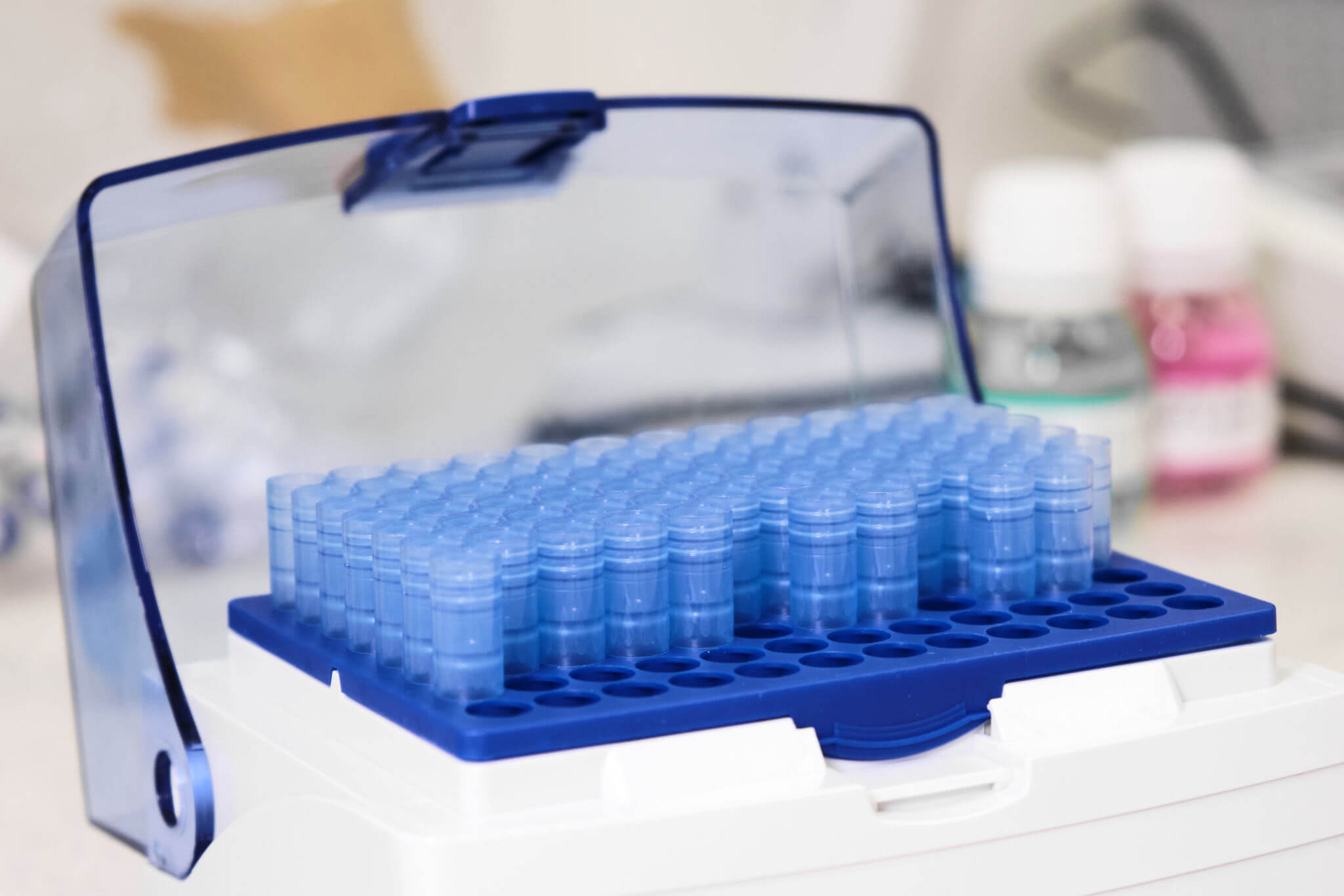
Liquid handling is one of the most widely used methods in laboratories. Though dealing with massive quantities and the appropriate lab materials, such as beakers, graduated cylinders, volumetric flasks, and so on, is usually simple. However, working with smaller or minute fluid volumes can be challenging. There are two crucial aspects to consider for successful laboratory practices and experiments:
- Measurements accuracy
- Efficient use of apparatus in lab experiments
WHAT ARE PIPETTE TIPS?
Pipette tips are molded plastic tips that are tiny and disposable. The scientist attaches a pipette tip to the end of a pipettor, which is shaped like a cone, and uses it to transfer liquid.
The unit of measurement for the liquid used in the pipette tip is microliters (μL), or one-thousandth of a milliliter (mL). Pipette tips are essential lab supplies for a variety of purposes.
WHY PIPETTE TIPS ARE NECESSARY FOR LAB EXPERIMENTS?
Pipette tips are essential laboratory equipment, despite how often they are neglected. Here are a few reasons why:
ACCURATE RESULTS
Any lab experiment requires a high level of precision and accuracy. Therefore, each substance in the experiment must be measured as precisely as possible to provide the best results. Pipette tips allow scientists to precisely quantify liquid levels in their research. Pipette tips allow you to focus on the details and make your measurements as precise as possible. For that reason, the results are more accurate.
EASY TO USE
Pipetting is a method that every scientist should be aware of. Because of the importance of this technique, even high school students learn fundamental pipetting skills. Despite its importance, it is a simple task. Pipettes and pipette tips are vital and simple skills to learn. Any newbie may learn the pipetting technique. It's quite simple and easy to learn.
STERILE
If you're doing a sterile experiment, such as cell culture, make sure you utilize pipette tips. Not only do they prevent cross-contamination, but they also help you achieve better outcomes if you use the appropriate kind of tips. Sterility is not required in every scientific study. Therefore, non-sterile pipette tips are also frequently used. To keep your experiment free of contamination, you can obtain pre-sterilized pipette tips that don't contain any DNA, RNase, pyrogens, or ATP. This ensures that the outcomes are better and more accurate.
EFFICIENT
The factor of efficiency is vital to scientists, especially in the lab. Pipette tips make it simple for scientists to accomplish scientific research. They eliminate the need for more difficult and time-consuming tools. Pipette tips are supposed to be disposable, but they can also be reused. However, this is dependent on the tip's quality, your cleaning approach, and the nature of your experiment.
DIVERSE
In the lab, there may be different sorts of tasks. Each will employ a different set of circumstances, materials, and approaches. In this case, pipette tips have a significant advantage. Pipette tips come in a variety of shapes and sizes, and there are numerous applications for them. So, no matter what kind of experiment you're doing, you'll almost certainly be able to get the pipette tip you need.
FINAL WORDS
So, these are the reasons that Pipette tips play a vital role in every scientific experiment. The use of pipettes is wide in all scientific approaches. There is no doubt that pipettes are essential laboratory equipment. You can have a look at Molecular Biology Products’ collection of pipette tips to buy the best ones out there. Not only this, but we also offer different molecular biology products, including Serological Pipets. Work Cited MARATHON LS. “Pipette Tips Play a Key Role in Lab Experiment.” MARATHONLS, 1 September 2021, https://marathonls.com/blog/how-pipette-tips-play-a-key-role-in-lab-experiments/. Accessed 6 January 2022.