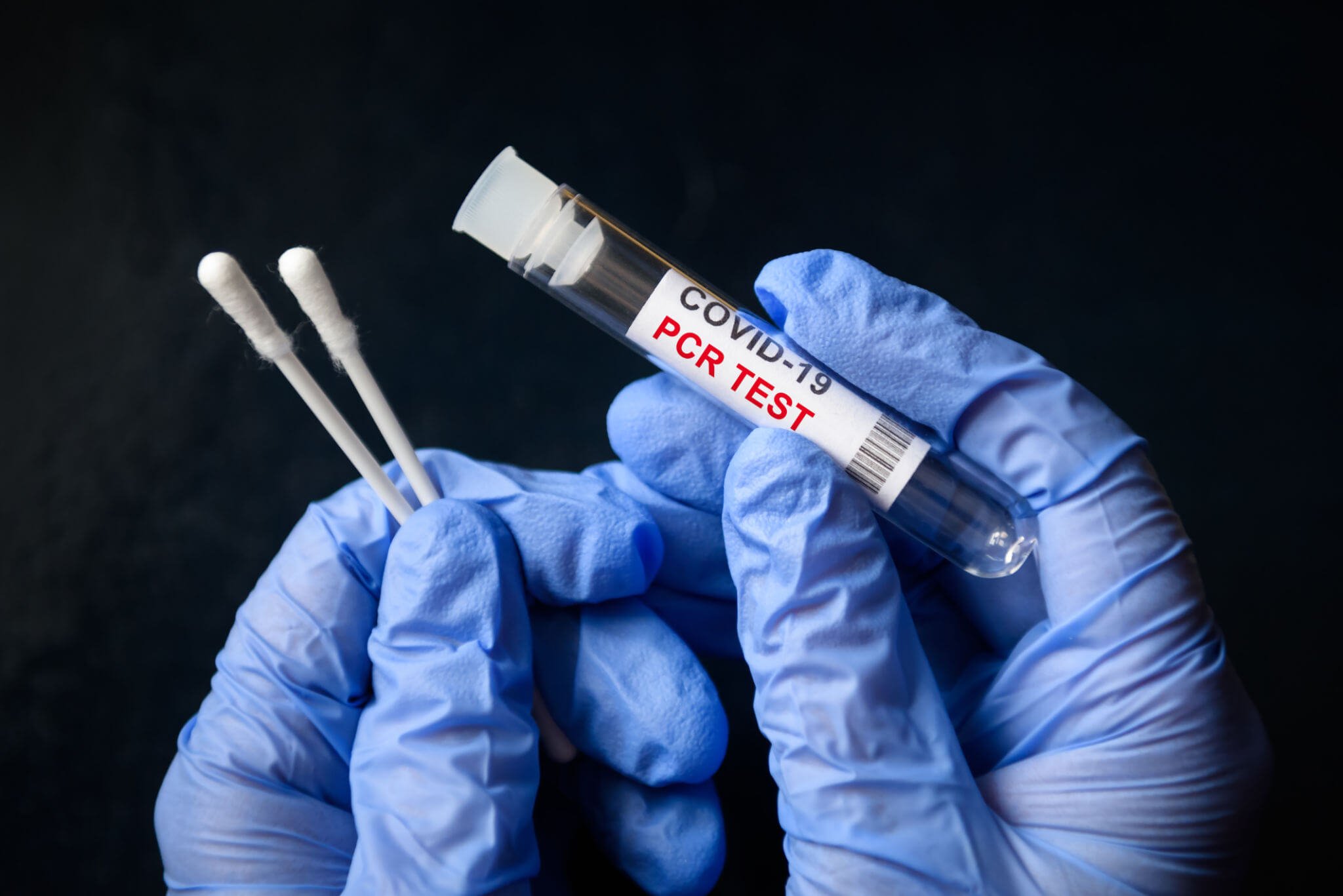
What is PCR?
The PCR “Polymerase Chain Reaction” is a method used in molecular biology that helps obtain many copies of a DNA fragment, starting from a tiny amount of this biomolecule. PCR is based on an enzymatic activity that normally occurs in human body cells. In cells, DNA polymerases replicate nuclear DNA to obtain two identical copies, which will later be distributed to daughter cells in mitosis. In this way, the polymerases in PCR will replicate, like a photocopier, a DNA fragment, in several cycles, to obtain a large number of identical copies.
RT-qPCR Test For The Covid-19 Detection
Currently, a variation of the PCR technique is carried out because the SARS-CoV-2 causing COVID-19 contains nucleic acid RNA (it has a single helix), which is reverse transcribed in Complementary DNA (cDNA) to then perform the quantitative PCR technique (qPCR). The qPCR is labeled with fluorescent compounds allowing data collection as the PCR advances. In each cycle, fluorescence is quantified, and the fluorescence signal increases proportionally to the replicated DNA amount. Therefore, we can quantify DNA in real time. The reliability of this test is more than 90%.
The Procedure Of The Real-Time PCR Test
The sample is taken from the person suspected of Covid-19. It is usually a nasopharyngeal sample obtained using a swab by inserting inside of the nose or the back of the throat. This sample is transported to a specialized laboratory for molecular biology tests. Viral RNA is then extracted, purified and transcribed into cDNA through reverse transcription.
DNA is mixed with components designed to replicate this fragment millions of times in equipment that allows heating cycles with high precision. While the copies are made, fluorescence is emitted, captured by special sensors and translated into data to interpret the number of copies generated. The test is positive when fluorescence exceeds a baseline threshold.
Implementation Of The PCR Lab Test
Below we present the equipment for executing the PCR test in the laboratory. These are various options depending on the budget.
COVID-19 Test Kits By qPCR
CentrifugesThe centrifugation, sonication and shaking of samples are procedures used to generate aerosols of fine particles. Therefore, perform them inside a type II biological safety cabinet.
5810R Refrigerated Centrifuge offers the most cost-effective solution for medium to high-performance applications. It conflates exceptional versatility and tube and plate capacity with an exceptional compact footprint.
The 5424 R Refrigerated Centrifuge is the laboratory standard ensuring efficient cooling performance. Its advanced cooling technology makes sure high-temperature accuracy for complete sample protection.
Eppendorf Personal Minispin Mini Centrifuge is small but powerful and extremely quiet. It is defined as a “personal” microcentrifuge ideal for carrying out a wide range of biomolecular separations and quick centrifugations.
Thermal Cyclers – Real-Time PCR Equipment
Real-time PCR protocols are suitable to get quantitative results while displaying the presence or absence of a DNA or RNA fragment or quantitative results by calculating the number of DNA copies. Compared to a standard curve, it establishes the number of microorganisms in a sample or ascertain the number of molecules of an RNA to designate its expression. For example.
- Accurate 96 DLAB Real-Time PCR System
- Accurate 16 DLAB Real-Time PCR System
- SLAN-96P Sansure Real-Time PCR System
- MA6000 Real-Time PCR System
- Real Time PCR System - Line-Gene K Plus Bioer
- Linegene9600 Plus Bioer Quantitative PCR Fluorescent Detection System
Reagents - PCR Test Kit
- Covid-19 SANSURE qPCR detection kit (includes RNA extraction agent, swabs, and transport media)
- Covid-19 BioPerfectus Technologies qPCR detection kit
- SARS-CoV-2 Detection Kit by qPCR - ANDIS
Need To Execute The Real-Time PCR Test?
MBPS INC presented the key equipment so that you can execute the real-time PCR test in the laboratory. If you need to perform the test correctly, you can get expert support from our qualified personnel who understand your requirements. We ensure equipment compatibility and align them with your facilities and special requirements
References
Mascuch, S., 2020. Buzz about RT-qPCR: An RT-qPCR formulation for SARS-CoV-2 detection using reagents produced at Georgia Institute of Technology. J Biol Chem,.