Product Filters

Hot Start Taq DNA Polymerase for Specific PCR Research


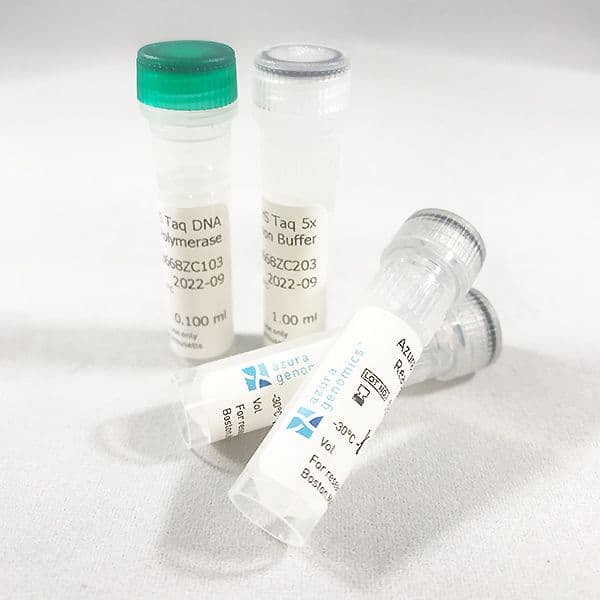
MBP Inc. supplies hot start Taq DNA polymerases from Zymo Research, Azura, Accuris, and BlasTaq for improved PCR specificity and reduced non-specific amplification in challenging PCR applications.

Available with supporting reaction buffers and compatible PCR reagents, these enzymes are suitable for routine PCR, multiplex PCR, and low-abundance template amplification across research laboratories in the USA and Canada. Request a quote today by contacting customerservice@mbpinc.net

Hot Start Taq DNA Polymerase
Per Page:
Sort By:

What Is Hot Start Taq DNA Polymerase?


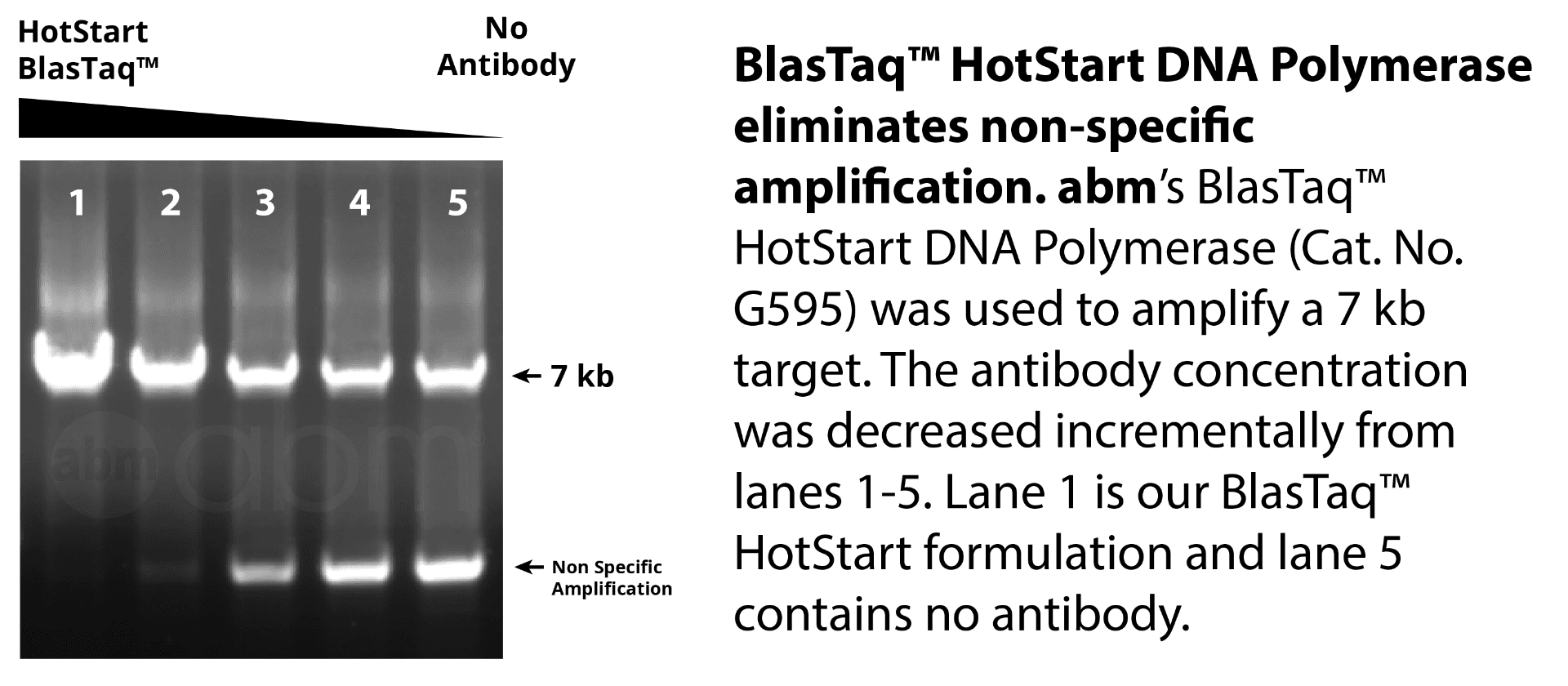
Hot start Taq DNA polymerase is the enzyme of choice for PCR applications where non-specific amplification or primer dimer formation has been problematic with standard Taq. By keeping the polymerase inactive until a high-temperature activation step, hot-start formulations prevent the room-temperature primer extension that drives non-specific products in standard Taq reactions. Choose a polymerase suited to your assay requirements.


What you will find:


  • Hot-start Taq DNA polymerases are designed to support multiplex PCR by reducing non-specific amplification and primer-primer interactions during reaction setup.
  • Formulations suitable for high-throughput PCR workflows requiring a stable room-temperature setup before thermal activation.
  • Improved specificity for amplification of low-abundance targets compared with conventional non-hot-start Taq polymerases.
  • Cleaner amplicon generation for downstream applications such as cloning, sequencing, and genotyping.
  • Enzyme and buffer systems formulated to support amplification of challenging templates, including GC-rich regions and complex genomic DNA samples.


How to Choose Hot Start Taq DNA Polymerase


Inactivation Mechanism
Antibody-mediated formulations use a heat-sensitive antibody that reversibly binds and inhibits the enzyme until denatured during the initial high-temperature step. Chemically modified formulations use covalent modifications to active-site residues that are reversed by heat during cycling.

Standard vs. Hot-Start Comparison
Standard Taq DNA polymerase is a formulation of recombinant Taq that remains active at ambient temperatures, permitting non-specific primer extension during reaction setup — hot-start formulations are reversibly inactivated at ambient temperature specifically to prevent this.

Buffer Compatibility
As with standard Taq, optimised 10x PCR buffer formulations are designed to complement the specific hot-start enzyme's activation and activity profile.

Activation Time Considerations
Confirm whether your chosen hot-start formulation activates within a standard initial denaturation step or requires an extended/dedicated activation incubation, as this affects total cycling protocol time.

Application Fit
Hot-start Taq is recommended wherever specificity is a concern: multiplex PCR, low-template-abundance amplification, diagnostic PCR, and any workflow where primer dimer formation has been observed with standard Taq.


Specifications Context


Hot start Taq DNA polymerase is a recombinant Taq formulation that remains inactive during reaction setup, preventing the non-specific primer extension that standard Taq can permit before thermal cycling begins. This improved specificity is particularly valuable for multiplex PCR, low-abundance templates, and applications where non-specific products could affect result interpretation. Hot-start enzymes are typically stored at −20 °C and commonly supplied with matched PCR buffer. Because antibody-mediated and chemically modified formats can require different activation conditions, initial denaturation parameters should be verified when introducing a new enzyme. Product availability reflects MBP's catalogue as of mid-2026.


Contact the expert team at MBP today to request a quote and identify the most suitable hot start Taq DNA polymerase for your workflow.

FAQ

Hot start Taq DNA polymerase is a formulation of recombinant Taq that is reversibly inactivated at ambient temperatures to prevent non-specific primer extension during reaction setup. Standard Taq is fully active at room temperature and can generate primer dimers and non-specific bands during setup. Hot-start Taq only becomes active after a high-temperature activation step (typically 2-15 minutes at 94-95 degrees Celsius), after which it amplifies the specific target with improved specificity and sensitivity.
Antibody-mediated hot-start Taq (JumpStart Taq, Platinum Taq) is produced by pre-mixing recombinant Taq with a monoclonal antibody (TaqStart Antibody) that binds the polymerase active site at room temperature, blocking DNA synthesis. When the PCR reaction reaches 70-95 degrees Celsius during initial denaturation, the antibody denatures within 1-2 minutes and dissociates from the enzyme, releasing fully active Taq. The enzyme itself is not modified, so post-activation performance is identical to standard Taq.
Chemically modified hot-start Taq (HotStarTaq, FastStart Taq) has heat-labile blocking groups covalently attached to the enzyme active site. These groups are removed by thermally triggered hydrolysis during a 2-15 minute incubation at 94-95 degrees Celsius, after which the enzyme is fully active. Chemical modification does not require a separate antibody component and eliminates any concern about antibody-derived DNA contamination. The trade-off is a longer activation time (5-15 minutes versus 1-2 minutes for antibody-mediated).
HotStarTaq DNA polymerase requires 15 minutes of initial incubation at 95 degrees Celsius for complete activation. This step is incorporated as the first step in the thermal cycler program before standard denaturation-annealing-extension cycles begin. FastStart Taq activates more rapidly, requiring approximately 2 minutes at 95 degrees Celsius, making it preferable for workflows where shorter run times are important.
Yes. Hot start Taq DNA polymerase from MBP is supplied with an optimised 10x PCR buffer at appropriate salt concentrations for the specific enzyme formulation. Separate 25 mM MgCl2 is available for Mg2+ titration. CoralLoad buffer variants containing orange and red loading dyes are available for some hot-start Taq products, allowing direct gel loading of PCR products without adding loading buffer.
Standard hot-start Taq formulations amplify targets up to approximately 5 kb -- the same limit as standard Taq. For amplicons above 5 kb, long-range enzyme blends incorporating both Taq and a proofreading polymerase are required. Hot-start versions of long-range blends are available for difficult long-range templates where non-specific amplification has been a problem with standard long-range formulations.
JumpStart Taq is an antibody-mediated hot-start Taq polymerase that uses the TaqStart Antibody technology first described by Kellogg et al. in Biotechniques in 1994. The antibody dissociates from the enzyme when heated to 70 degrees Celsius or above, making JumpStart Taq one of the fastest-activating hot-start formulations available. It is used for routine single-target hot-start PCR and multiplex applications.
Hot start Taq DNA polymerase should be stored at -20 degrees Celsius in a constant-temperature freezer. Most formulations retain full activity at room temperature (15-25 degrees Celsius) for up to 2 weeks without significant loss, making them suitable for ambient-temperature shipping. Repeated freeze-thaw cycles should be avoided by aliquoting upon receipt. Unlike standard Taq, hot-start formulations must be kept away from temperatures above 37 degrees Celsius before use, as partial activation can occur.
We provide the highest quality of products and anytime customer service.
LinkedIn
Featured Categories
online payment
online payment
fast delivery
fast delivery
technical support
technical support
24/7 support
24/7 support
copy right
2026 All Right Reserved