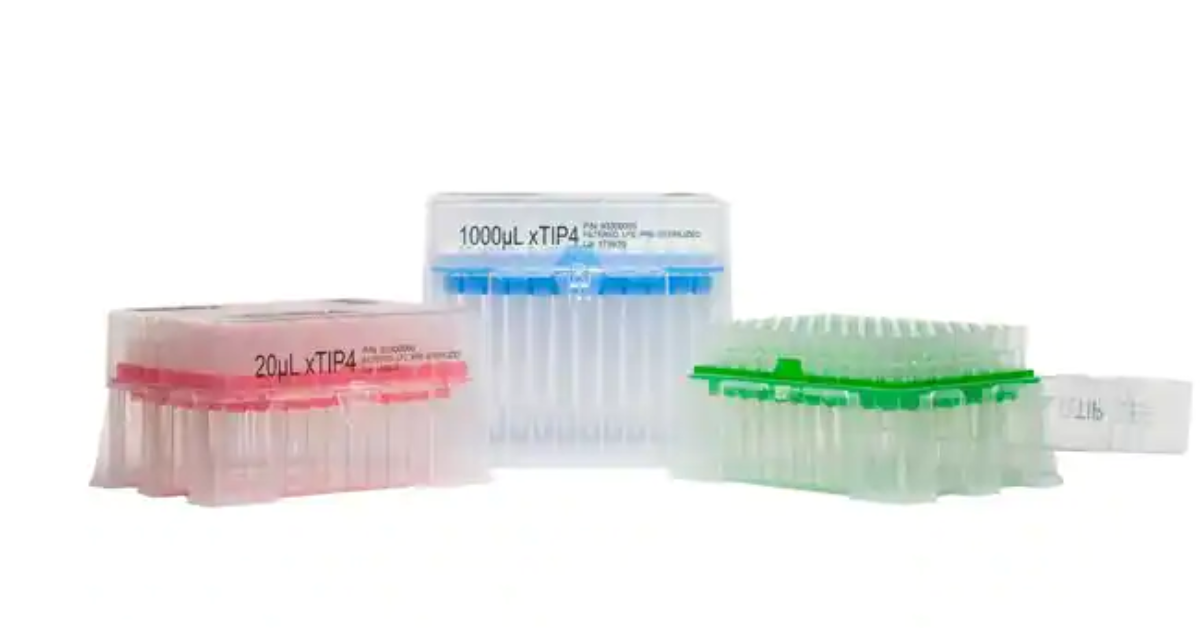
In this blog, we will discuss using Rainin LTS filters tips in four simple steps.
Step 1 – Choose the Right Filter for Your Application
When choosing filter tips for Rainin LTS, it's important to consider the type of liquid, its viscosity, and its particulate content. Rainin LTS filter tips come in different pore sizes, materials, and volumes to suit various liquid handling tasks. For instance, if you are handling a viscous sample or a sample with high particulate matter, you should choose a filter with a larger pore size, such as 10 or 20 microns. On the other hand, if you are handling a sensitive sample, such as DNA or RNA, you should choose a filter made of low-binding material, such as PTFE. Additionally, it is important to select the right filter volume to match your pipette volume. This avoids overloading or underloading the filter, which can affect the accuracy of your pipetting.
Step 2 – Install the Filter Correctly
Filter tops for Rainin LTS are designed to fit into the pipette tip cone and can be easily installed by following these steps:
- Remove the empty filter by gently pulling it off the pipette tip cone.
- Take the new filter and align it with the tip cone. Make sure the filter is straight and centered.
- Push the filter into the cone until you hear a click or feel resistance.
- Verify that the filter is securely attached by gently tugging it. If it comes off, discard it and install a new one.
It is crucial to use a new filter for each new sample to avoid cross-contamination and to ensure accurate results.
Step 3 – Prime the Pipette and Check for Air Bubbles
Before pipetting, it is essential to prime the pipette by aspirating and dispensing the liquid several times to ensure that the filter is wetted and the pipette is calibrated. To check for air bubbles in the filter, follow these steps:
- Hold the pipette vertically with the tip pointing up.
- Depress the plunger to expel a small volume of liquid into the filter.
- Observe the liquid flow through the filter. If you see air bubbles, expel the liquid and repeat the priming step until the filter is free of bubbles.
Step 4 – Pipette Carefully and Accurately
Once the filter is primed and free of air bubbles, you can begin pipetting the liquid. It is essential to follow good pipetting practices, such as:
- Use a slow and steady speed when aspirating and dispensing to avoid splashing or foaming the liquid.
- Always keep the pipette vertical and avoid tilting or shaking it during pipetting.
- Do not touch the filter or the liquid with the pipette tip, as this can contaminate the sample or damage the filter.
- Dispense the liquid completely and smoothly to avoid residual liquid on the tip or filter.
After pipetting, always eject the filter with the pipette tip to avoid touching the filter or the liquid with your hands, which can contaminate your samples.
So, this was all about using Rainin LTS Filters. If you are looking for filters or other high-quality molecular biology products, look no further than MBP Inc. We have a variety of quality laboratory products.