PETG Media Bottles for Cell Culture Media and Reagent Storage
PETG media bottles are BPA-free, optically clear copolyester containers used to store tissue culture media, biological buffers, and laboratory reagents in 250 mL, 500 mL, and 1000 mL sizes. Sterile variants are gamma-irradiated to SAL 10⁻⁶ and certified RNase-free, DNase-free, and non-pyrogenic. MBP serves research and institutional labs across the United States, Canada, and internationally, with PO and quick-order procurement available through mbpinc.net.
Contact our team at customerservice@mbpinc.net for product recommendations and purchasing assistance.
PETG Media Bottles
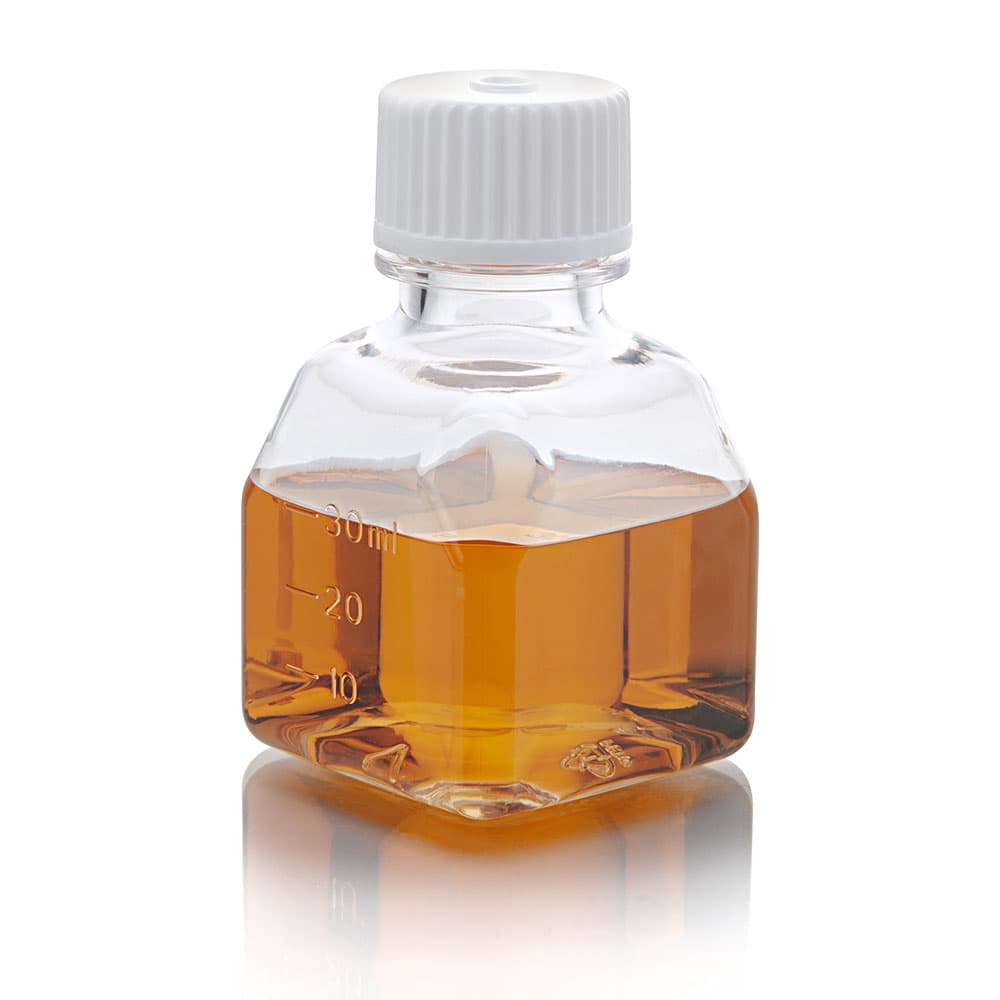
Showing 1 to 1 of 1 results
What Are PETG Media Bottles?
PETG media bottles are laboratory storage containers manufactured from polyethylene terephthalate glycol-modified (PETG) copolyester, a material known for combining glass-like optical clarity with excellent impact resistance. These bottles are widely used in cell culture, tissue culture, biopharmaceutical production, molecular biology, and general laboratory workflows for storing media, buffers, sera, reagents, and other biological solutions. Compared with standard PET, the glycol modification improves flexibility and durability while maintaining transparency, and the material is BPA-free. PETG media bottles provide a safer alternative to glass when breakage risks must be minimized while still allowing clear visual inspection of contents.
Choose PETG media bottles when you need crystal-clear visibility, BPA-free construction, freezer compatibility, and greater durability than glass.
What you will find:
-
Small PETG media bottles (30–125 mL) for aliquots and small reagent storage
-
Medium bottles (250–500 mL) for routine media and buffer preparation
-
Large PETG bottles (1 L–2 L) for bulk solution storage
-
Square PETG bottles for space-efficient storage and stacking
-
Round PETG bottles for general-purpose lab use
-
Sterile PETG bottles for contamination-sensitive workflows
-
Graduated PETG bottles for easy volume tracking
How to Choose PETG Media Bottles
Sterility Requirements
Sterile PETG media bottles are recommended for tissue culture media, serum storage, biological reagents, and other applications where maintaining sterility is critical. These bottles are typically gamma-irradiated to a Sterility Assurance Level (SAL) of 10⁻⁶ and certified RNase-free and DNase-free. Non-sterile PETG bottles are suitable for workflows where solutions will be filter-sterilized before use or where sterility is not required during storage.
Volume and Bottle Format
PETG media bottles are commonly available in capacities ranging from 250 mL to 1000 mL, with some product lines extending from 30 mL up to 2000 mL. A 500 mL bottle is often the preferred choice for routine media preparation, buffer storage, and laboratory reagent handling. The 1000 mL format is commonly used for larger culture systems and bulk reagent storage. Round bottles are convenient for general laboratory use, while square bottles maximize refrigerator and shelf space by reducing unused gaps between containers.
Temperature Compatibility
Most PETG media bottles are designed for use between approximately –40°C and +70°C, making them suitable for refrigerated and freezer storage. They can safely be used in standard laboratory refrigerators and –20°C freezers. PETG is not autoclavable and should not be exposed to steam sterilization temperatures of 121°C. Applications requiring repeated autoclaving should use polypropylene or borosilicate glass bottles instead.
Vacuum Applications
Some PETG media bottles are designed to work with bottle-top filtration systems and vacuum-based filtration workflows. When using bottles under vacuum conditions, verify that the bottle is specifically rated for vacuum use and compatible with the required closure and filtration system. Not all PETG bottles are designed to withstand full vacuum pressure.
Closure Design
Most PETG media bottles are supplied with HDPE screw caps that provide a secure, leak-resistant seal. Many sterile versions include tamper-evident bands for additional assurance during shipping and storage. Some models also feature drip-free pouring designs that help reduce spills and improve liquid handling accuracy during dispensing.
Specifications Context
PETG media bottles used in laboratory and biopharmaceutical environments are commonly manufactured in ISO Class 8 cleanroom facilities and may meet USP Class VI requirements for biocompatibility and extractables testing. Sterile bottles are typically gamma-irradiated to achieve a Sterility Assurance Level of 10⁻⁶ and are supplied with lot-specific documentation covering sterility and quality control testing. As of 2026, PETG media bottles remain one of the most widely used alternatives to glass for cell culture media, buffer preparation, reagent storage, and bioprocessing applications due to their combination of clarity, durability, and ease of handling.
Don't let an inconsistent container be the weak link in your laboratory’s workflow. Connect with the MBP Team today.
FAQ