Nitrile Laboratory Gloves for Chemical, Biological, and Diagnostic Applications
Nitrile laboratory gloves are powder-free, latex-free disposable exam gloves manufactured from nitrile butadiene rubber (NBR) to ASTM D6319 with AQL ≤ 2.5, available in 3–8 mil thicknesses for molecular biology, chemical handling, pharmaceutical, and clinical diagnostic applications. Approximately three times more puncture-resistant than latex at equivalent thickness. Standard: 100 gloves per box, 1,000 per case. MBP supplies labs across the United States, Canada, and internationally with PO and Quick Order procurement at mbpinc.net.
Need help selecting the right nitrile laboratory gloves for your application? Contact customerservice@mbpinc.net for product recommendations, pricing, and procurement support.
Nitrile Gloves



Showing 1 to 10 of 10 results
What are nitrile laboratory gloves?
Nitrile laboratory gloves are single-use disposable hand protection items made from nitrile butadiene rubber (NBR), a fully synthetic material that contains no natural rubber proteins. Because of this, they are inherently latex-free and are widely used as the standard glove type in modern research, clinical, pharmaceutical, and diagnostic laboratories.
They are designed to provide a strong balance between chemical resistance, puncture resistance, and tactile sensitivity. Compared to natural rubber latex, nitrile gloves are typically around three times more resistant to punctures at the same thickness. Most nitrile gloves used in laboratories are medical-grade with AQL ≤ 2.5, meaning they meet strict quality control limits for defects and are suitable for regulated environments. ASTM D6319 defines their performance requirements, including minimum tensile strength, elongation, and barrier integrity.
What you will find:
-
Powder-free nitrile gloves for clean laboratory use and reduced particulate risk
-
Examination-grade nitrile gloves for research, diagnostics, and clinical applications
-
Medical-grade nitrile gloves for highly sensitive and sterile applications
-
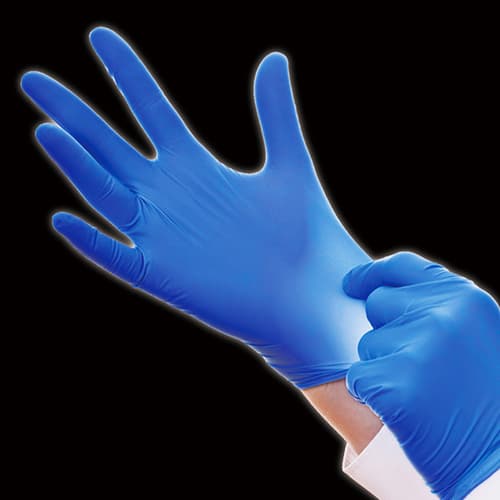
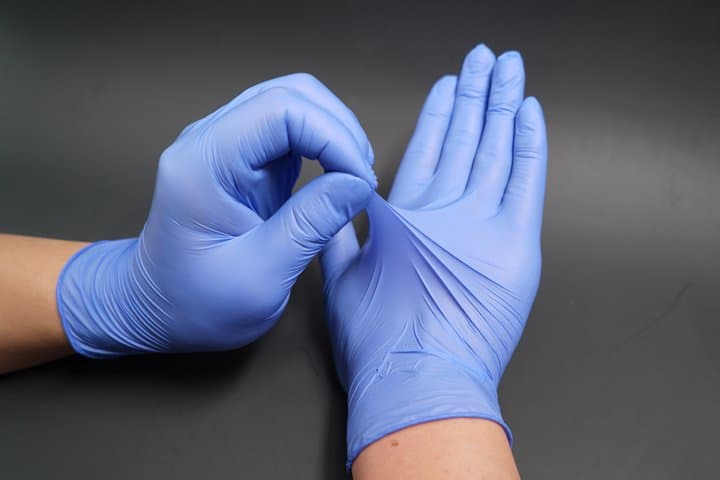
Blue nitrile gloves for standard lab workflows and easy visibility
-
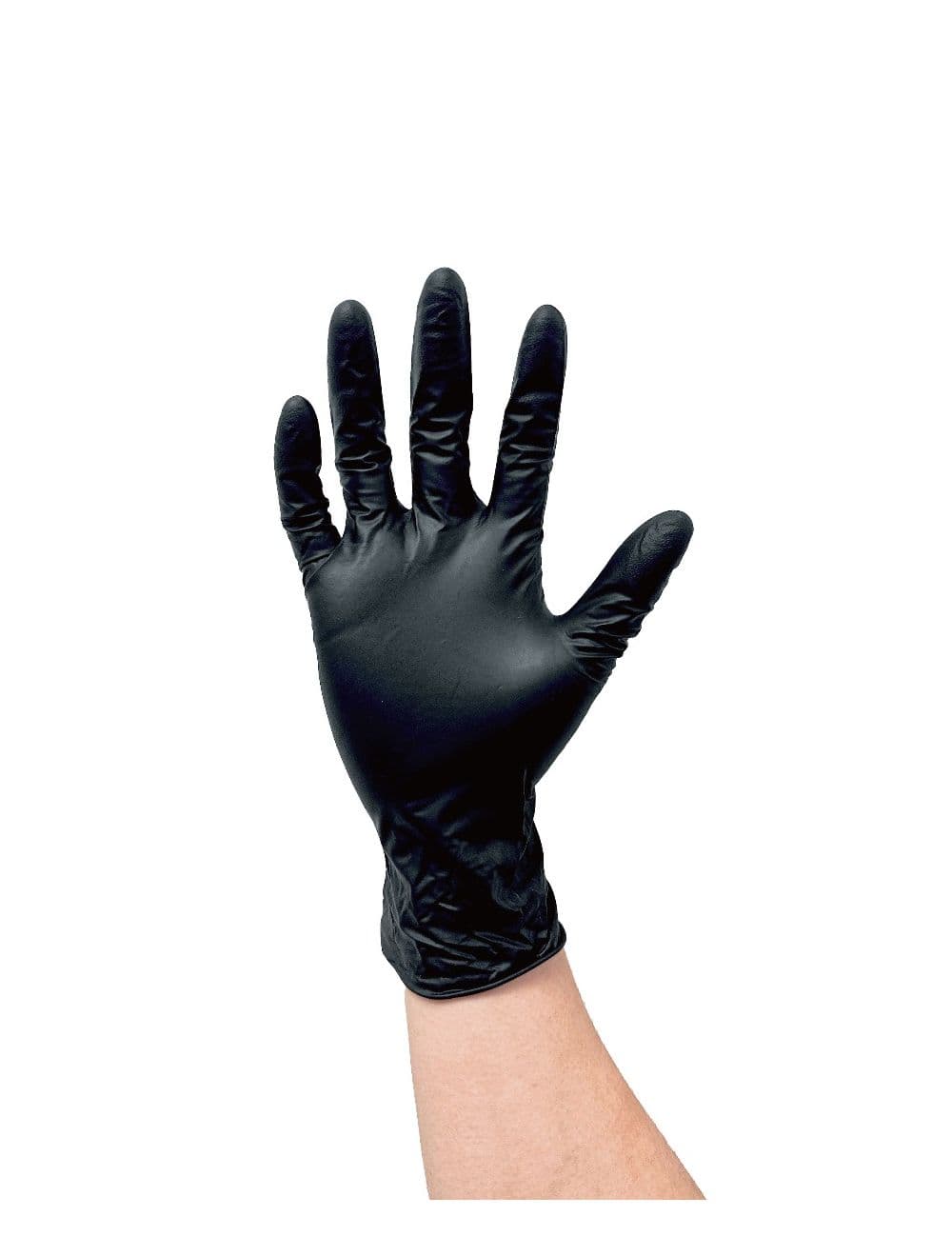
Black nitrile gloves for contamination-sensitive tasks and masking stains
How to choose nitrile laboratory gloves
Thickness and application
Nitrile gloves come in different thicknesses depending on the task. Thinner gloves (around 3 mil) are used for high-dexterity work such as pipetting, PCR setup, and delicate cell culture tasks where precision is important. Medium thickness gloves (4–5 mil) are the standard choice for general laboratory work, clinical diagnostics, and pharmaceutical handling because they balance protection and flexibility. Thicker gloves (6 mil and above) are used when handling stronger chemicals, hazardous reagents, or when additional puncture resistance is needed.
AQL grade
AQL (Acceptable Quality Level) indicates defect rate. Medical-grade nitrile gloves typically have an AQL of 2.5 or lower and are required for work involving biological samples, pathogens, or pharmaceutical materials. Industrial-grade gloves with higher AQL values are not suitable for regulated laboratory or clinical use.
Color selection
Nitrile gloves are available in different colors such as blue, black, and purple. Blue is the most common because it provides strong visibility and easy detection of tears or contamination. Black gloves are often used in industrial or chemical environments, while purple gloves are sometimes used in clinical settings to differentiate them from latex products. Color does not affect chemical protection or performance at the same thickness.
Chemotherapy and hazardous drug resistance
Some nitrile gloves are specifically tested under ASTM D6978 for resistance to chemotherapy drugs and hazardous pharmaceuticals. These are required in oncology, compounding pharmacies, and laboratories handling cytotoxic agents. Standard nitrile gloves without this certification should not be assumed to provide protection against these compounds.
Chemical resistance limits
Nitrile gloves provide good resistance to oils, alcohols, dilute acids, and many aqueous solutions. However, they are not suitable for strong solvents such as acetone, toluene, chloroform, or other highly aggressive organic chemicals. For those, specialized glove materials must be selected based on chemical compatibility charts.
Specifications context
Nitrile examination gloves are governed by ASTM D6319, which defines mechanical strength, elongation, and quality standards for medical-grade nitrile products. FDA-regulated exam gloves require 510(k) clearance for clinical use. Standard packaging typically includes 100 gloves per box and 1,000 gloves per case. As of 2026, 4–5 mil powder-free blue nitrile gloves with AQL 2.5 remain the most widely used glove type across global research and pharmaceutical laboratories due to their balance of safety, durability, and chemical resistance.
Choose MBP nitrile gloves to maintain safety, precision, and confidence in every task you handle. Reach out to the MBP team for a personalized quote and keep your laboratory protected with the best in class.
FAQ