Thermal Laboratory Printer Paper for Analytical Instruments
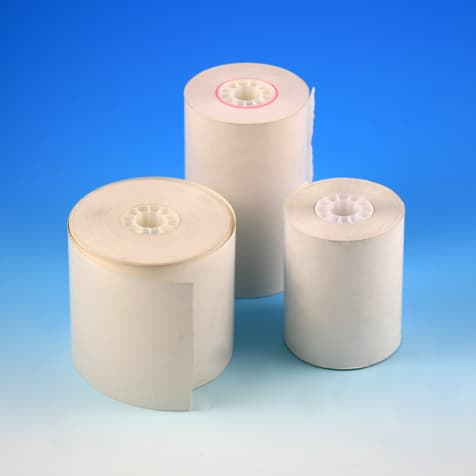
Laboratory printer paper consists of thermal paper rolls used in analytical balance printers, centrifuge controllers, and other bench-top instruments to record measurement data without ink or toner. Rolls are available in 57 mm and 80 mm widths with roll lengths of 15–30 m to match a range of instrument models. MBP supplies labs across the US, Canada, and internationally and is a registered vendor for leading research institutions including Howard Hughes Medical Institute and Vanderbilt University.
Need help selecting the right laboratory printer paper for your instruments? — Contact our team at customerservice@mbpinc.net for product recommendations, bulk pricing, and purchasing assistance.
Printer Paper
Showing 1 to 1 of 1 results
What Is Laboratory Printer Paper?
Laboratory printer paper refers to heat-sensitive thermal paper rolls used in analytical balance printers, fraction collectors, centrifuge controllers, and other bench-top instrument printers that produce hard-copy output directly from measurement systems. Unlike standard office paper, this material uses a heat-reactive coating that darkens when exposed to the thermal printhead, meaning no ink or toner is required. Most laboratory applications use roll widths of 57 mm or 80 mm. If your instrument prints on a roll instead of sheets, it requires thermal paper rather than standard copy paper.
What you will find:
-
Thermal printer rolls compatible with major chemistry analyzer brands.
-
High-sensitivity paper for smudge-free diagnostic reporting.
-
Solvent-resistant paper for durability in active chemical environments.
-
Lint-free rolls to extend the life of your printer’s thermal head.
-
Fade-resistant paper for permanent long-term specimen archiving.
-
Continuous-feed rolls for high-volume automated testing platforms.
How to Choose Lab Printer Paper
Roll Width and Core Diameter
Selection begins with roll width and core size compatibility. The most common widths in laboratory instruments are 57 mm and 80 mm. In addition, the internal core diameter must match the printer spindle—typically 12 mm or 25 mm depending on the instrument model. If the core size is incorrect, the roll will not seat properly and printing cannot proceed.
Printer Compatibility
Different instrument manufacturers specify different paper formats. For example, compact analytical balance printers such as Sartorius YDP40 and Mettler-Toledo RS-P25 typically use 57 mm rolls, while larger station-based or multi-channel systems often require 80 mm rolls. Compatibility should always be confirmed against the printer model specification rather than only the paper width.
Print Longevity and Archival Grade
Standard thermal paper generally retains readable output for approximately 5–7 years under normal storage conditions. For regulated environments such as GMP or GLP laboratories, archival-grade thermal paper is used, with stability ratings that can extend up to 25 years when stored in controlled conditions. Many labs still maintain physical printouts as part of audit or compliance requirements despite increasing digital integration.
Temperature and Chemical Resistance
Thermal paper is sensitive to environmental conditions. Exposure to heat, UV light, solvents, or plasticizers (such as PVC contact) can cause premature darkening or degradation of printed data. In chemical laboratory environments, overcoated thermal paper variants are preferred, as they provide improved resistance without requiring special handling or storage conditions.
Specifications Context
Laboratory thermal printer paper is defined by roll width (mm), roll length (m), and core inner diameter (mm). Print density is determined by the printer’s thermal head (dpi), but paper surface smoothness plays a key role in clarity—lower surface roughness (typically Ra ≤ 15 µm for general-grade stock) produces sharper print output. For regulatory documentation such as balance calibration records or weight traceability logs, archival-grade thermal paper should be selected to ensure long-term readability and compliance retention.
Is your data looking a bit blurry? Ask the friendly staff at MBP for a quote right now—we help you keep the record straight.
FAQ