Product Filters

Formaldehyde Control Products for Laboratory Safety Monitoring


Formaldehyde control products are passive monitoring badges, indicator strips, and ventilation-check consumables used in histopathology, surgical pathology, and anatomy laboratories to measure employee airborne formaldehyde exposure against OSHA's Formaldehyde Standard (29 CFR 1910.1048). Annual monitoring is legally required in any lab where formalin is routinely used. MBP supplies formaldehyde control consumables to research and clinical labs across the US and Canada.

Need help selecting the right formaldehyde control products for your laboratory? — Contact our team at customerservice@mbpinc.net for product recommendations, bulk pricing, and purchasing assistance.

Formaldehyde Control

productListingPage:PER_PAGE:
productListingPage:SORT_BY:

What Are Formaldehyde Control Products?


Formaldehyde control products are workplace safety tools used to monitor and manage exposure to airborne formaldehyde in laboratory and healthcare environments. These products are commonly used in histology, pathology, anatomy, and research laboratories where formalin-based fixatives are routinely handled during specimen preparation and preservation.

Because formalin is widely used as a tissue fixative, monitoring employee exposure is an important part of laboratory safety programs. Formaldehyde control products help laboratories assess exposure levels, document monitoring activities, and support compliance with workplace safety requirements.

Laboratories that routinely use formalin should implement formaldehyde monitoring programs, with passive badge dosimeters being one of the most common methods for measuring employee exposure over a work shift.


What you will find:


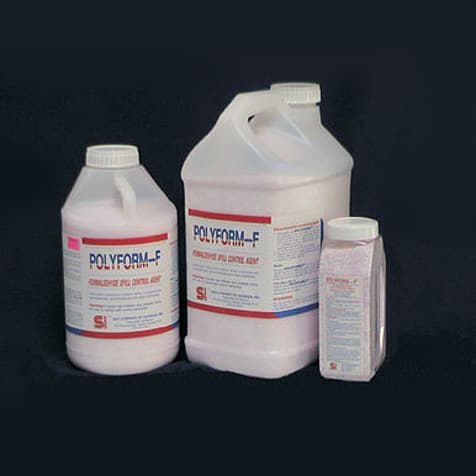
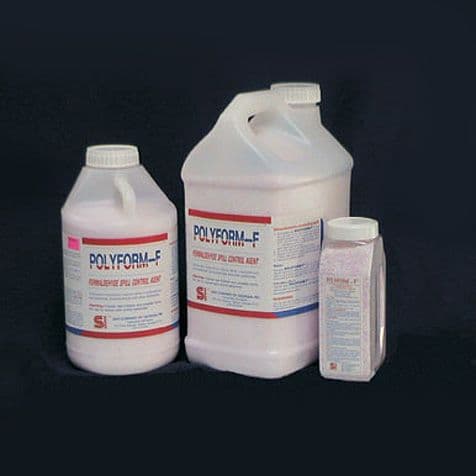
  • Formalin Neutralizers for safe liquid-to-non-toxic conversion.

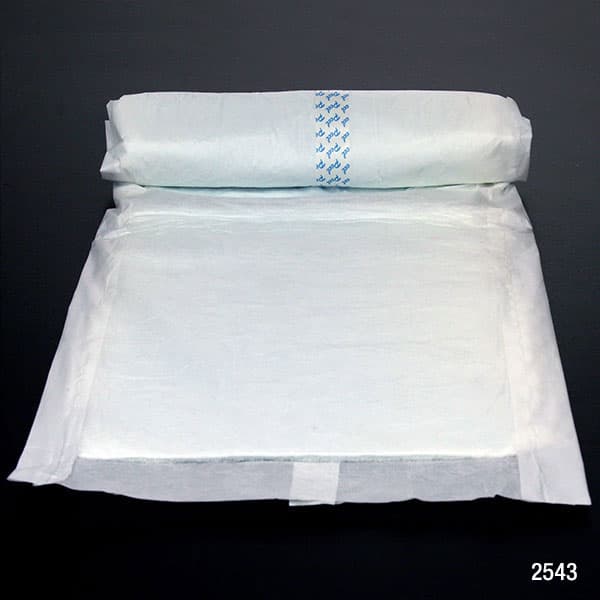
  • Vapor Suppressant Pads for rapid absorption and odor capture.

  • Decontamination Sprays to eliminate residual chemical traces.

  • Spill Response Kits for immediate laboratory emergency management.

  • Absorbent Granules designed for high-capacity chemical containment.

  • Protective Bench Mats to trap drips before they spread.


How to Choose Formaldehyde Control Products


Passive Badges vs Real-Time Monitors

Passive dosimeter badges are designed to measure employee exposure over an extended sampling period, typically a full work shift. These badges are worn by personnel and provide time-weighted average (TWA) exposure data that can be used for workplace monitoring and documentation.

Real-time monitors provide immediate readings of airborne formaldehyde concentrations. They are useful for investigating ventilation issues, evaluating work areas, and assessing conditions after spills or other incidents. However, they are generally used as supplemental monitoring tools rather than replacements for long-term exposure measurements.


Detection Range

When selecting a monitoring product, it is important to ensure that the detection range is appropriate for the expected workplace environment. Products designed for laboratory use typically measure concentrations across ranges relevant to occupational exposure monitoring programs.


Monitoring Frequency

Routine monitoring schedules help laboratories track exposure levels over time. Additional monitoring may be appropriate when laboratory procedures, equipment, staffing, ventilation systems, or formalin usage patterns change significantly.


Personnel Monitoring

Employees who regularly handle formalin-containing materials or work in areas where formaldehyde may be present are commonly included in monitoring programs. Monitoring helps laboratories evaluate workplace conditions and identify opportunities for improving safety controls.


Documentation and Recordkeeping

Accurate recordkeeping is an important component of formaldehyde monitoring programs. Laboratories often maintain records that include monitoring dates, employee assignments, badge identification numbers, sampling locations, and analytical results. Certificates of analysis and related documentation may also be retained as part of quality and compliance programs.


Formaldehyde Monitoring Methods


Passive Badge Dosimeters are commonly used for measuring employee exposure over a work shift and are widely adopted in laboratory safety programs.


Short-Term Exposure Monitoring Badges are designed to evaluate exposure over shorter sampling periods when specific tasks or activities require additional assessment.


Handheld Real-Time Monitors provide immediate concentration readings and are useful for ventilation studies, troubleshooting, and environmental assessments.


Colorimetric Indicator Tubes offer rapid spot-check measurements and are often used as screening tools for workplace evaluations.


Specifications Context


Formaldehyde monitoring products are widely used in histology and pathology laboratories where formalin-based tissue fixation is performed. Passive monitoring systems commonly use chemically treated collection media to capture airborne formaldehyde during the sampling period, followed by laboratory analysis.

Workplace exposure monitoring programs help laboratories evaluate ventilation effectiveness, document employee exposure levels, and support occupational safety initiatives. Many laboratories incorporate formaldehyde monitoring into their broader environmental health and safety programs.

As of 2025, formaldehyde monitoring remains a routine component of workplace safety practices in laboratories that handle formalin-containing solutions. MBP supplies formaldehyde control products and related safety consumables for histology and pathology environments.

Tired of harsh fumes slowing down your team? Upgrade to a safer lab environment; browse our inventory now and hit up the MBP team for a quote.

FAQ

OSHA's Formaldehyde Standard (29 CFR 1910.1048) sets a PEL of 0.75 ppm as an 8-hour TWA, a STEL of 2 ppm for any 15-minute period, and an action level of 0.5 ppm. At or above the action level, mandatory employee monitoring, medical surveillance, and documented control measures are required. Annual monitoring is the minimum frequency for all labs where formalin is routinely used.
Histopathology labs most commonly use passive dosimeter badges containing bisulfite-impregnated paper; the badge is worn by the employee for a full 8-hour shift and analyzed by chromotropic acid chemistry to yield a TWA result across a validated range of 0.2–4.9 ppm. Real-time monitors and colorimetric tubes are used for spot-checking ventilation or post-spill assessment, but do not substitute for TWA badge documentation under OSHA 1910.1048.
Annual monitoring of each potentially exposed employee is the minimum requirement under OSHA 1910.1048. Additional monitoring must be conducted whenever there is a change in production volume, equipment, personnel, or ventilation controls that could increase exposure. Labs where results fall at or above the 0.5 ppm action level must implement a continuous monitoring program.
OSHA requires monitoring in every area where formalin is used or where vapor may accumulate: gross dissection and grossing stations, frozen section areas, tissue processor rooms, autopsy suites, and any manual or automated coverslipping areas not served by local exhaust ventilation. Coverslipping areas are especially prone to accumulation because they are often not separately ventilated.
The International Agency for Research on Cancer (IARC) classifies formaldehyde as a Group 1 human carcinogen based on evidence linking occupational inhalation exposure to nasopharyngeal cancer and leukemia. OSHA's Formaldehyde Standard acknowledges the carcinogenic risk and requires exposure controls, PPE, medical surveillance, and hazard communication for all lab workers with regular formalin exposure.
Ventilation (local exhaust, back-vented grossing stations with 60–100 fpm face velocity) is the primary engineering control under OSHA 1910.1048, but it does not eliminate the requirement for personal monitoring. Badge monitoring is required to document actual employee exposure levels regardless of ventilation status; ventilation test records and badge results are both required for a compliant safety program.
Labs must retain exposure monitoring records for 30 years under OSHA 1910.1048. Required documentation includes: the employee name and job classification, the monitoring date and area, the badge lot number, the analytical result and method, and the laboratory that performed the analysis. Certificates of analysis (COA) for monitoring consumables should also be retained to demonstrate method validation.
MBP supports institutional purchase orders and quote-list procurement for formaldehyde monitoring consumables. Procurement teams can submit orders or quote requests at mbpinc.net/quickorder. MBP is a registered vendor for Howard Hughes Medical Institute, Vanderbilt University, and MD Anderson Cancer Center, and routinely supports safety officers and lab managers at academic medical centers.
Formalin is the aqueous solution used as a tissue fixative; a product labeled '10% buffered formalin' contains approximately 4% formaldehyde (the active aldehyde) dissolved in water with a phosphate buffer. Formaldehyde (HCHO) is the volatile gas that evaporates from formalin solutions and creates the inhalation hazard. OSHA's exposure limits refer to airborne formaldehyde concentration, not the formalin solution strength.
We provide the highest quality of products and anytime customer service.
LinkedIn
Featured Categories
online payment
online payment
fast delivery
fast delivery
technical support
technical support
24/7 support
24/7 support
copy right
2026 All Right Reserved