Glass Erlenmeyer Flasks for Laboratory Mixing and Culturing
Glass Erlenmeyer flasks are conical borosilicate vessels — wider at the base, tapering to a narrow neck — used for cell culture media preparation, microbial growth, titration, vacuum filtration, and general liquid mixing.
MBP stocks Globe Scientific Erlenmeyer flasks in narrow-mouth, wide-mouth, heavy-duty, screw-cap, and filter-flask (side-arm) formats, all borosilicate glass and autoclavable. Available in bulk case quantities for lab managers in the US, Canada, and worldwide ordering by PO or Quick Order. Contact customerservice@mbpinc.net to request a quote today!
Glass Erlenmeyer Flasks



Showing 1 to 12 of 12 results
What Are Glass Erlenmeyer Flasks?
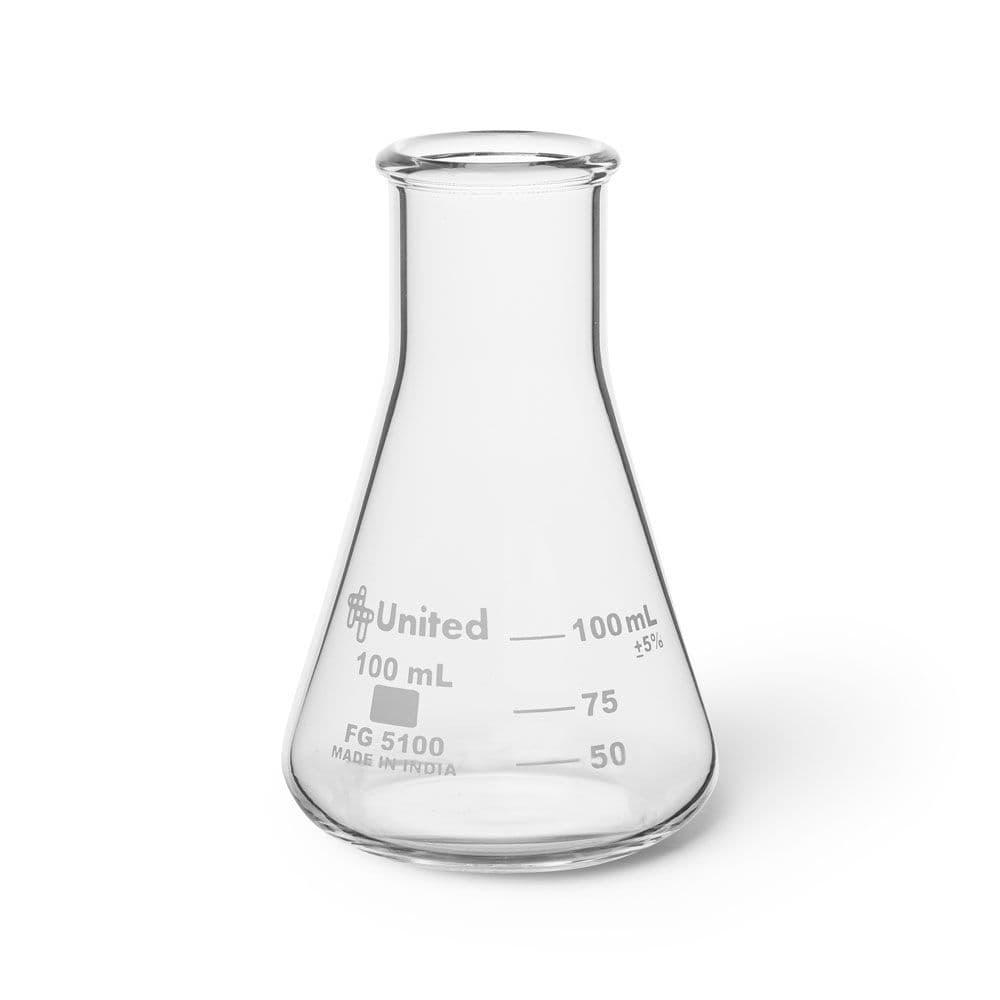
Glass Erlenmeyer flasks (conical flasks) are wide-base, tapered-neck borosilicate glass vessels designed for swirling liquids without spillage, growing microbial cultures, performing titrations, and conducting vacuum filtration. The conical shape concentrates swirled liquid toward the base, keeping it away from the narrow neck during vigorous mixing — preventing splashing that would occur in a straight-sided beaker. Globe Scientific borosilicate Erlenmeyer flasks at MBP are manufactured to ISO 9001:2015 standards, are autoclavable at 121°C, and are chemically resistant to the full range of laboratory reagents. Choose narrow-mouth for most bench workflows; wide-mouth for solid addition; screw-cap for sealed culture or transport; filter flasks for vacuum filtration.
What you will find:
-
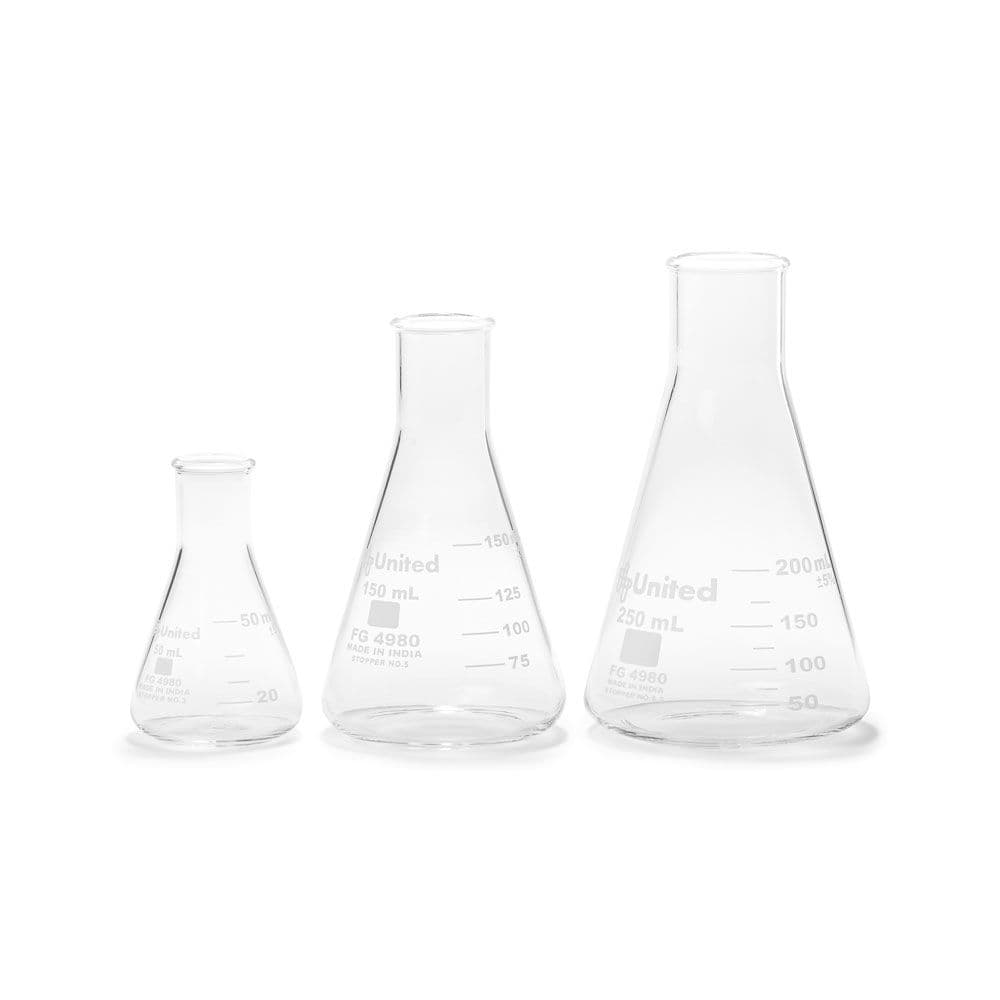
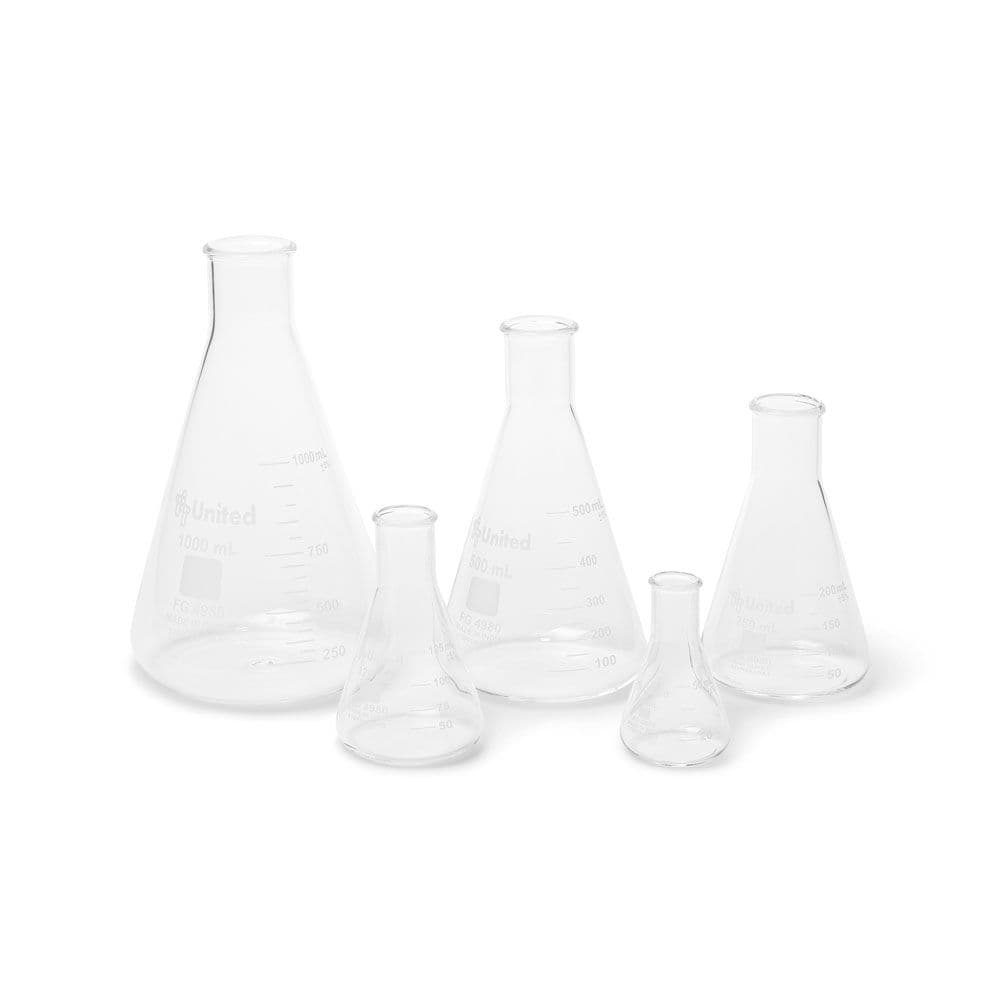
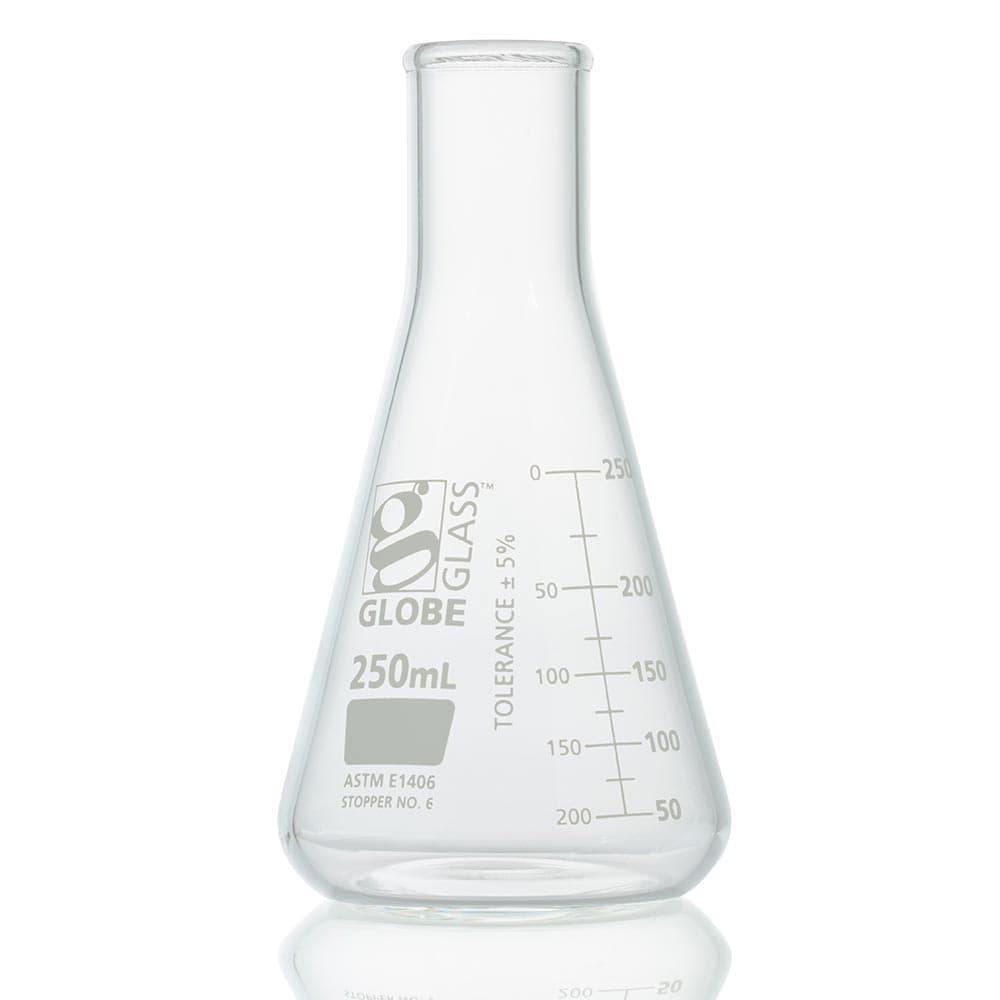
Narrow-mouth Erlenmeyer Flasks for controlled pouring and reduced evaporation.
-
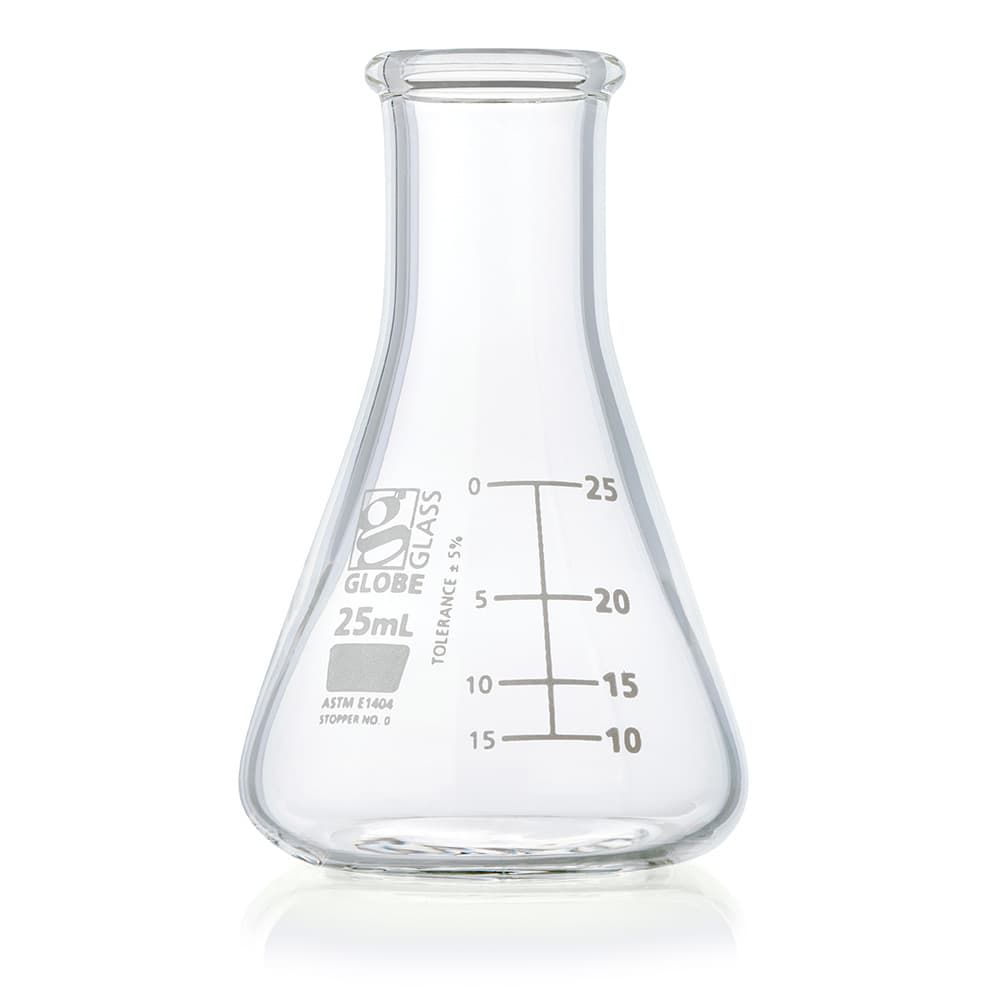
Wide-mouth Erlenmeyer Flasks for easy filling and convenient pipette access.
-
Heavy Duty Flasks with reinforced rims for maximum mechanical strength.
-
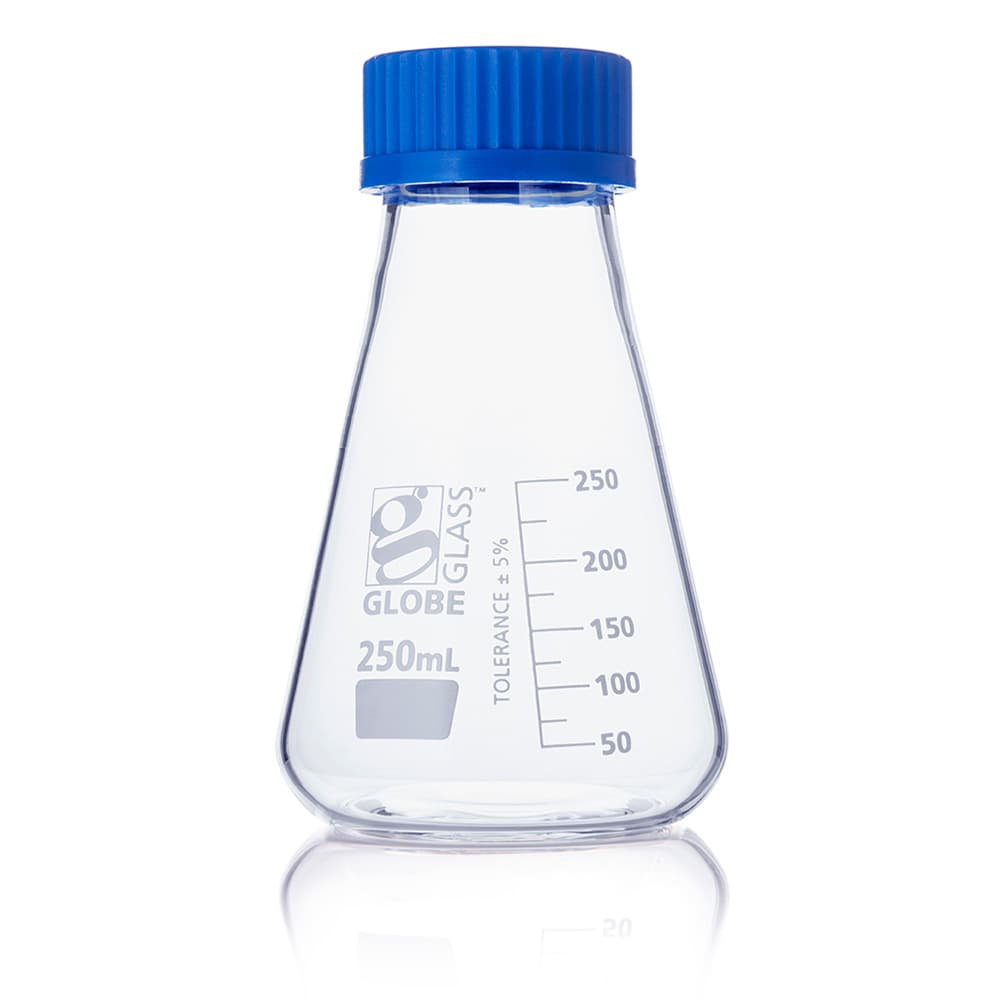
Screw Cap Erlenmeyer Flasks to ensure airtight storage and safe transport.
-
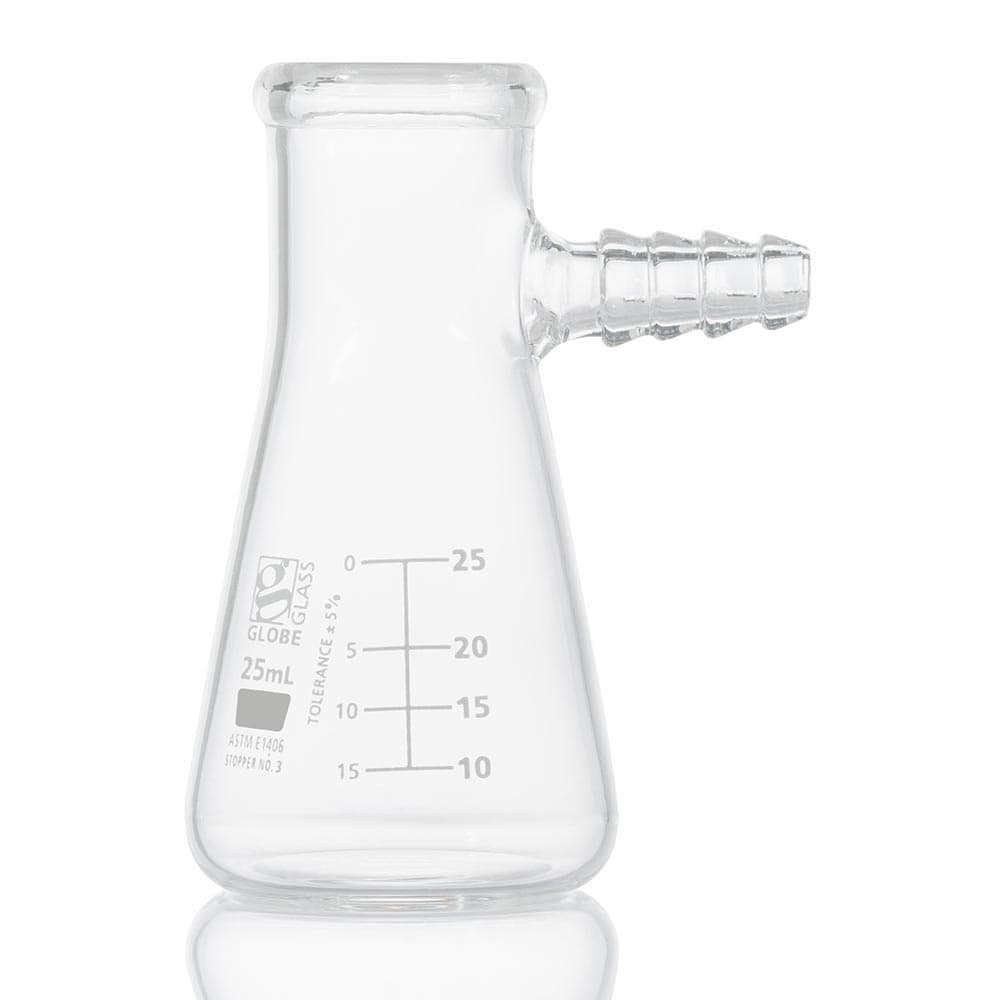
Filter Flasks designed with side arms for rapid vacuum filtration.
How to Choose Erlenmeyer Flasks
Narrow Mouth vs. Wide Mouth
Narrow-mouth Erlenmeyer flasks are the standard format — the restricted opening reduces evaporation during prolonged incubations, accepts foam stoppers, cotton plugs, and standard rubber bungs, and provides a pouring lip for controlled transfers. Wide-mouth flasks are used when solid materials (agar powder, media granules, solid substrates) need to be added through the neck — the wider opening prevents solid-to-neck contact and residue loss.
Heavy Duty
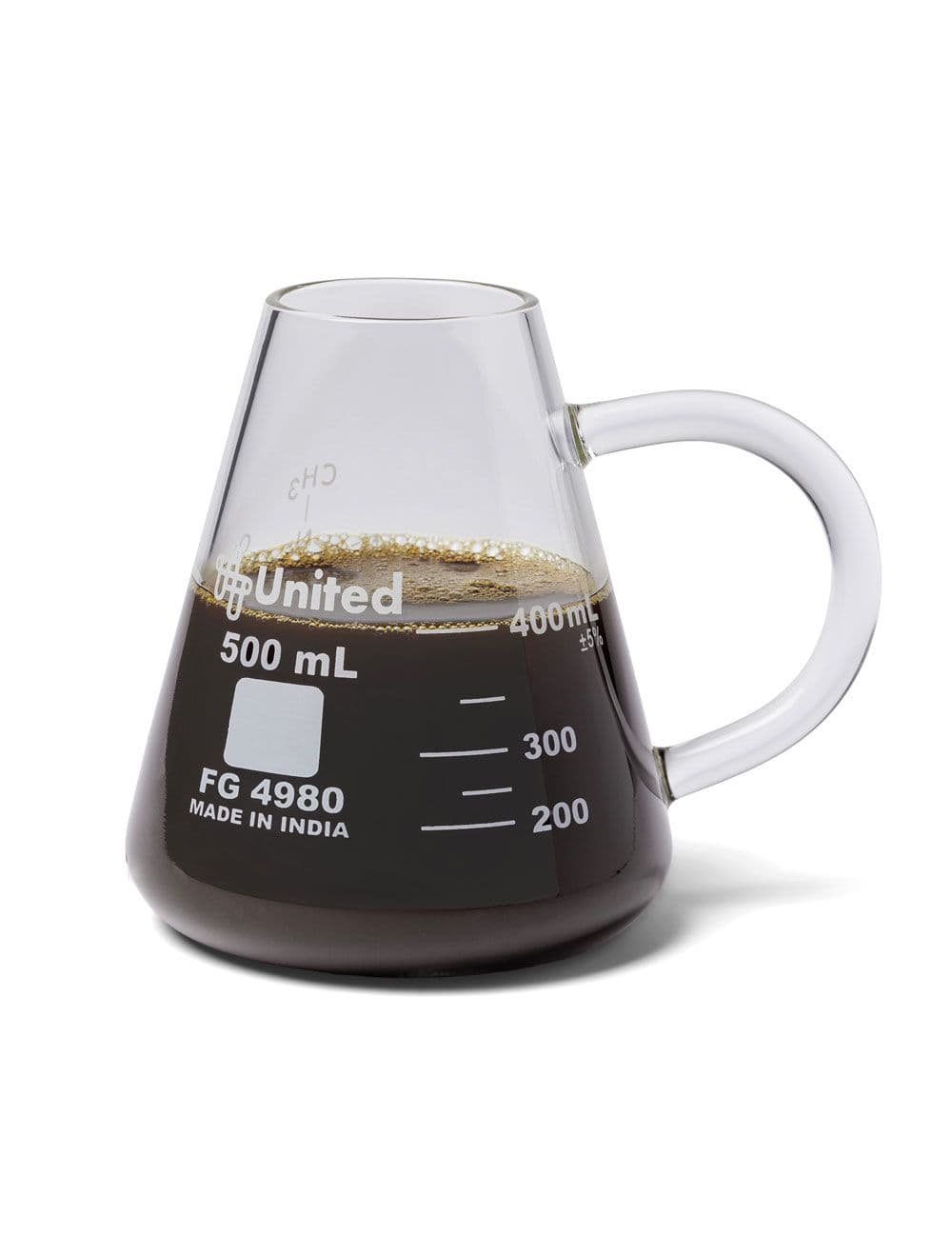
Heavy-duty Erlenmeyer flasks have reinforced rims and thicker walls — suited to labs with high breakage rates, high-throughput autoclaving, or handling of large-volume flasks where the weight of flask plus contents stresses the neck during handling and transport.
Screw Cap vs. Foam/Bung Closure
Screw-cap Erlenmeyer flasks with polypropylene caps allow sealed incubation, safe transport of sterile media, and controlled-atmosphere storage. Standard flasks with foam or cotton closures allow gas exchange — appropriate for aerobic microbial culture. For transport or anaerobic conditions, a screw-cap is the correct choice.
Filter Flask (Side Arm)
Filter flasks have a tubular side arm on the neck used to connect a vacuum line during vacuum filtration. A Buchner or Hirsch funnel seated in the neck draws liquid through a filter medium into the flask body under vacuum. Use filter flasks for rapid filtration of biological suspensions, precipitate collection, and membrane filtrations.
Specifications Context
Globe Scientific borosilicate glass Erlenmeyer flasks are manufactured under ISO 9001:2015 quality standards from borosilicate glass conforming to ASTM E438 Type I (USP Type I). Autoclave tolerance: 121°C for standard sterilisation cycles; do not autoclave fully sealed screw-cap flasks — loosen one quarter-turn to allow steam pressure equalisation. Common volumes: 25mL to 5,000mL (standard); filter flasks typically 125mL to 4,000mL. As of June 2026, MBP stocks all five Erlenmeyer flask formats from Globe Scientific.
By using these industrial-grade conical flasks, you may spend more time on your actual research and require fewer replacements. Get a quote today by contacting the MBP Team.
FAQ