Microplate Readers for ELISA and Multi-Mode Assay Detection
Microplate readers are bench-top instruments that measure optical signals, including absorbance, fluorescence, and luminescence—from samples in standard microplates, enabling rapid, parallel analysis for ELISA, enzyme activity assays, cell viability studies, protein and nucleic acid quantification, and other research applications. Absorbance readers support colorimetric and UV-Vis assays, while multi-mode readers add fluorescence and luminescence detection for a broader range of biological and biochemical workflows.
MBP provides purchase order procurement for microplate readers for research institutions across the USA and Canada. Request a quote by contacting customerservice@mbpinc.net.
Microplate Reader


Showing 1 to 12 of 19 results
What Are Microplate Readers?
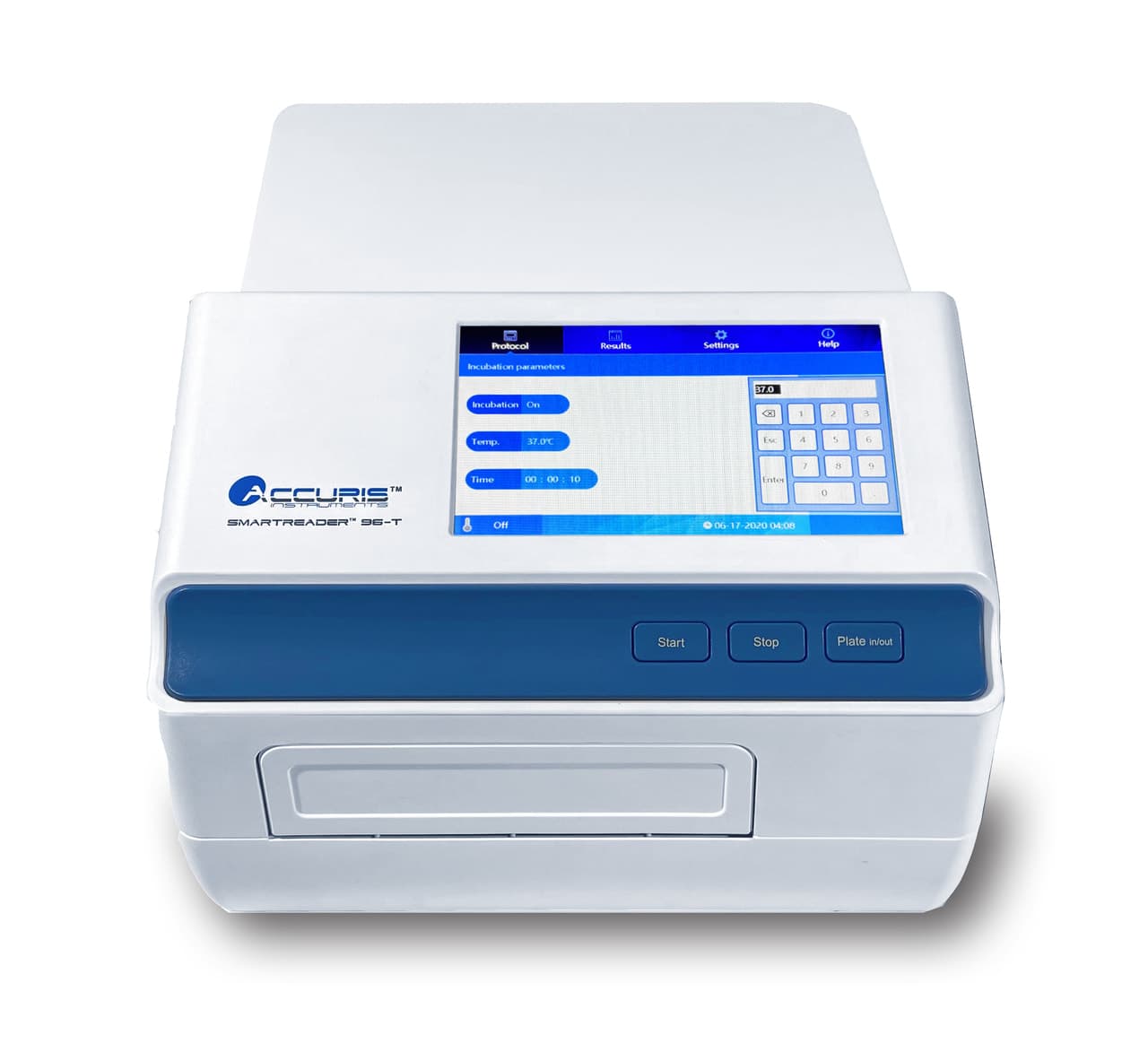
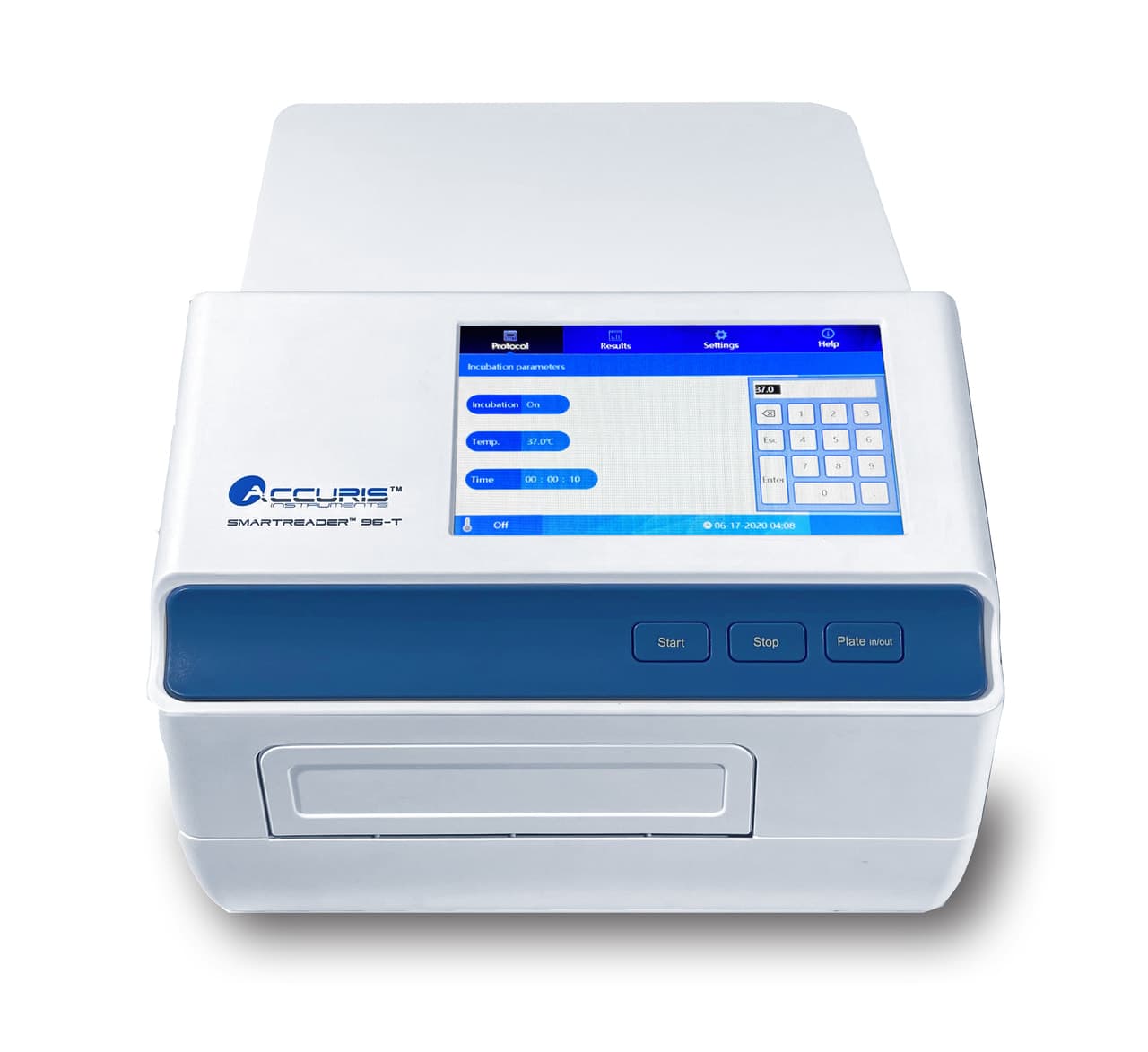
A microplate reader (also called a plate reader or microplate photometer) is a laboratory instrument that optically measures the contents of each well in a microplate by passing light through or from the sample and recording the resulting signal. Detection modes available in microplate readers include absorbance (transmission of light through the sample at a defined wavelength), fluorescence intensity (excitation of a fluorescent molecule and measurement of emission), luminescence (detection of light emitted from a chemiluminescent or bioluminescent reaction), time-resolved fluorescence (TRF, using lanthanide chelates for low-background assays), and fluorescence polarization (FP, for homogeneous binding assays). The 96-well plate is the standard format in academic research, with typical assay volumes of 50 to 200 microliters per well; 384-well plates reduce reagent consumption and are standard in drug discovery.
What you will find:
- Absorbance Microplate Readers: Instruments for ELISA, enzyme assays, and routine colorimetric measurements.
- UV-Vis Microplate Readers: Readers for nucleic acid, protein, and other UV-Vis absorbance assays.
- Multi-Mode Microplate Readers: Systems combining absorbance, fluorescence, and luminescence detection for advanced assay workflows.
- Automatic Injection Modules: Optional injectors for kinetic assays requiring reagent addition during measurement.
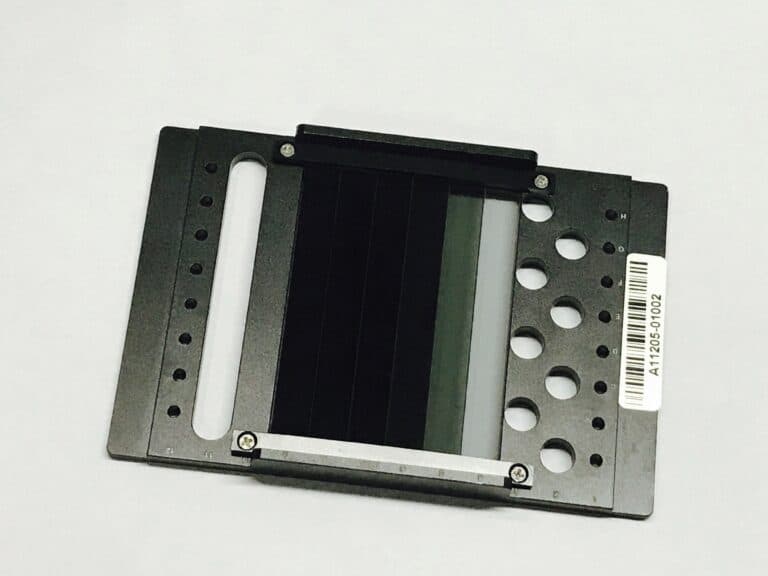
- Microplate reader accessories including Filters, calibration plates, software, SmartDrop accessory plates, and other compatible accessories.
How to Choose a Microplate Reader
Single-mode absorbance vs. multi-mode reader
Single-mode absorbance readers cover colorimetric and UV-based assays across 340 to 850 nm and are lower cost, simpler to operate, and adequate for labs whose primary workflows are ELISA, protein assays, and OD-based quantification. Multi-mode readers add fluorescence intensity, luminescence, and optionally TRF and FP detection in one instrument. Choose a multi-mode reader when the lab regularly runs luciferase reporter assays, CellTiter-Glo or ATP viability assays (luminescence), Hoechst or SYBR Green fluorescent DNA quantification (fluorescence), or any assay that requires a detection mode beyond colorimetry.
Filter-based vs. monochromator systems
Filter-based readers use discrete bandpass filters for wavelength selection; one or a small set of filters defines the accessible wavelengths. They are less expensive, have faster reading speeds, and are sufficient when assay wavelengths are fixed and known in advance. Monochromator-based readers use a diffraction grating to continuously tune the excitation or emission wavelength across the full UV-Vis spectrum, providing complete spectral flexibility at a higher cost. Choose a filter-based reader for defined ELISA and standard colorimetric workflows; choose a monochromator system for novel assay development requiring custom wavelength selection.
Plate format and throughput
Most absorbance readers handle 6-well to 384-well SBS plates; high-throughput readers extend to 1536-well. Confirm that the plate carriage accepts both 96-well standard height and low-profile PCR plates if the instrument will be used for nucleic acid quantification. Reading speed matters in kinetic assays: confirm the reader's full-plate read time (seconds per plate at maximum sensitivity) and whether it supports top and bottom reading if cell-based fluorescence assays require bottom-read mode.
Incubation and shaking
For enzyme kinetics, cell viability assays, and microbial growth monitoring requiring temperature control, specify a reader with an integrated incubator (heating range ambient to 45 degrees C or 65 degrees C). On-board orbital or linear shaking is required for assays where sample mixing before or between reads improves signal quality (HTRF, homogeneous assays, turbid samples). Confirm whether the incubator and shaker function independently or require the reader to be stopped between reads.
Software and data management
Plate reader software ranges from simple endpoint reading with basic curve fitting (adequate for ELISA) to sophisticated kinetic analysis, data export to LIMS, 21 CFR Part 11 compliance, and custom protocol scripting. For high-throughput drug discovery or regulated pharmaceutical QC environments, confirm that the software meets the required data integrity and compliance standards before specifying the reader.
Specifications Context
Photometric accuracy for absorbance readers is specified as deviation from a certified absorbance reference standard at defined wavelengths; values of plus or minus 0.005 OD or better (at 1.000 OD) characterize research-grade readers. Well-to-well coefficient of variation (CV%) quantifies measurement consistency across a plate; below 1% CV at 1.0 OD is typical for quality absorbance readers. For fluorescence, sensitivity is expressed as signal-to-background ratio or limit of detection for a fluorescent standard (e.g., fluorescein at a defined concentration). For luminescence, background counts per well (counts per second on a dark, empty plate) determine sensitivity; lower background enables detection of dimmer luminescent signals from reporter assays with low expression or small cell numbers.
To discuss product availability or get selection guidance, contact the MBP team.
FAQ